Proliferating Giant Pilomatrixoma: A Case Report
Liliana Berenice Alcázar García, Zabdy Elienai Frayre García, Alejandra Zahaydé Grijalva Aguilar, Ernesto Velazco Manzo, Mercedes Hernández Torres

TL;DR
A 36-year-old woman had a large, fast-growing pilomatrixoma on her cheek, which was surgically removed and diagnosed as a rare giant and proliferative variant.
Contribution
This case report highlights a rare combination of giant and proliferative pilomatrixoma variants in an adult.
Findings
The tumor was classified as a giant pilomatrixoma due to its size (≥4 cm).
Histopathology confirmed a proliferative subtype, which is uncommon in adults.
Complete surgical excision is critical to prevent recurrence or malignant transformation.
Abstract
Pilomatrixoma is a benign adnexal tumor, frequently observed in pediatric and young adult populations, and originates from the hair follicle matrix. While the most common clinical presentation is a subcutaneous nodule, multiple clinicopathological variants have been identified. One such variant is the giant pilomatrixoma, defined by a size of 4 cm or greater, which may mimic malignant neoplasms such as angiosarcoma or amelanotic melanoma in adults. We present the case of a 36-year-old female patient who presented with an exophytic mass on the right cheek, which exhibited rapid growth following trauma. Due to the suspicion of malignancy, an excisional biopsy with a 5 mm margin was performed, and histopathological examination revealed a proliferating pilomatrixoma. This case is noteworthy for presenting two variants: classification by size (giant pilomatrixoma) and histological subtype…
Genes, proteins, chemicals, diseases, species, mutations and cell lines named across the full text — each resolved to its canonical identifier and authoritative record.
Click any figure to enlarge with its caption.
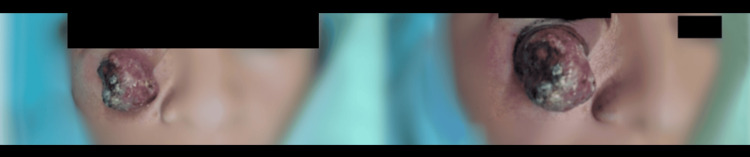 Figure 1
 Figure 2
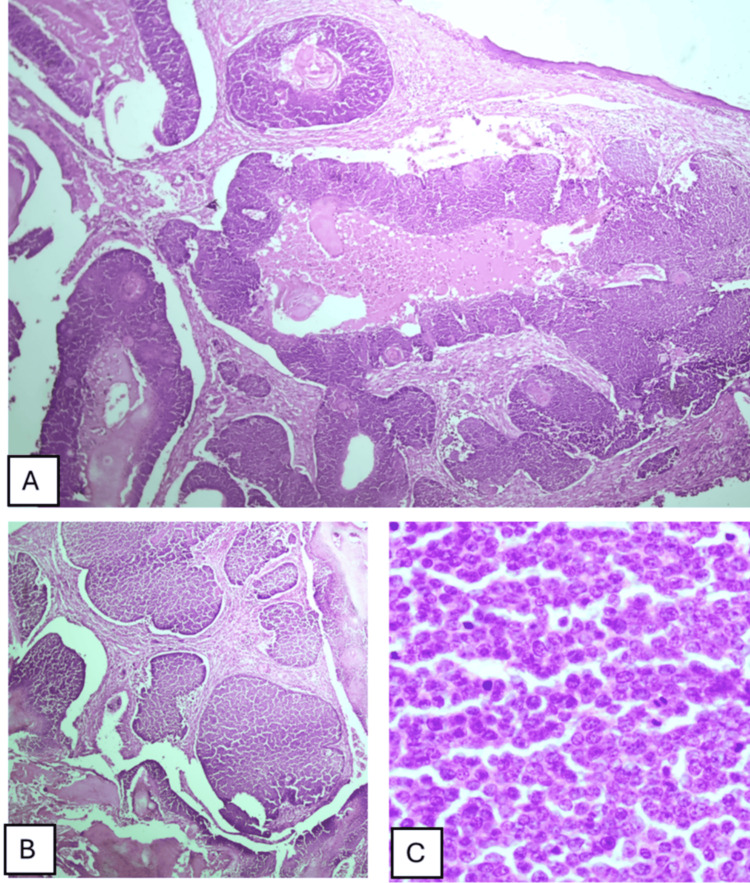 Figure 3
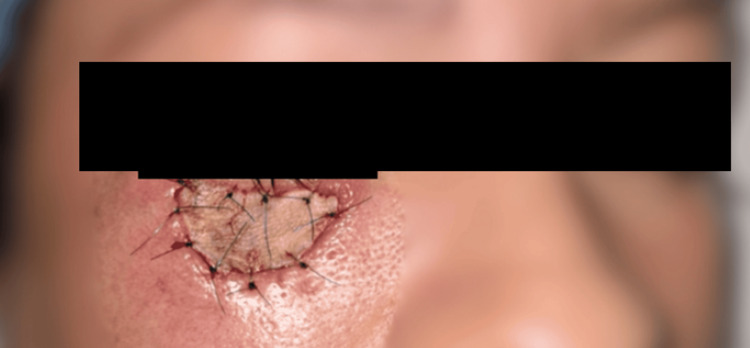 Figure 4
 Figure 5
Peer Reviews
No public reviews on file for this paper yet. If you reviewed it on a platform where reviews are public (OpenReview, ICLR, NeurIPS, ICML), you can paste yours below so the community can read it here.
Videos
No videos yet. Explain this paper in a talk, walkthrough, or lecture? Add one.
Taxonomy
TopicsCancer and Skin Lesions