Lipoprotein(a) levels in a sample of 115,197 subjects from the largest Brazilian private laboratory
Maria Helane Costa Gurgel Castelo, Isac de Castro, Priscila Raupp-da-Rosa, Patrícia Cristina Grenzi, Eduardo Gomes Lima, Andreza Almeida Senerchia, Érica Ferreira, Flavia Paiva Proença Lobo Lopes, Hean Teik Ong, Chiara Pavanello, Chiara Pavanello, Chiara Pavanello

TL;DR
This study analyzed lipoprotein(a) levels in over 100,000 Brazilians, revealing higher levels in women and a skewed distribution, with most under 30 mg/dL.
Contribution
The study provides the largest analysis of Lp(a) levels in Brazil, offering insights into its distribution and lack of correlation with metabolic conditions.
Findings
Women had significantly higher Lp(a) levels than men (13.90 vs 11.58 mg/dL).
70% of individuals had Lp(a) levels below 30 mg/dL, and 18% exceeded 50 mg/dL.
Lp(a) levels showed no correlation with diabetes, metabolic syndrome, HDL, or triglycerides.
Abstract
Lipoprotein(a) (Lp(a)) is an independent risk factor for atherosclerotic disease and is increasingly being incorporated into clinical algorithms of cardiovascular risk prediction. However, the epidemiology of Lp(a) in Brazil remains unknown. The objective of this study was to describe the distribution of Lp(a) levels and its association with laboratory parameters and clinical characteristics in a population of subjects submitted to blood tests in a private laboratory. Methods involved assessing Lp(a) levels from 115,197 subjects in a nationwide database from one Brazilian private laboratory, with Lp(a) measured using a nephelometric assay and expressed in mg/dL. Results showed that among the 115,197 subjects, the median age was 44 years. Women composed 61% of the sample and displayed higher Lp(a) levels in comparison to men (13.90 vs 11.58 mg/dL, p < 0.001). The distribution of Lp(a)…
Genes, proteins, chemicals, diseases, species, mutations and cell lines named across the full text — each resolved to its canonical identifier and authoritative record.
Click any figure to enlarge with its caption.
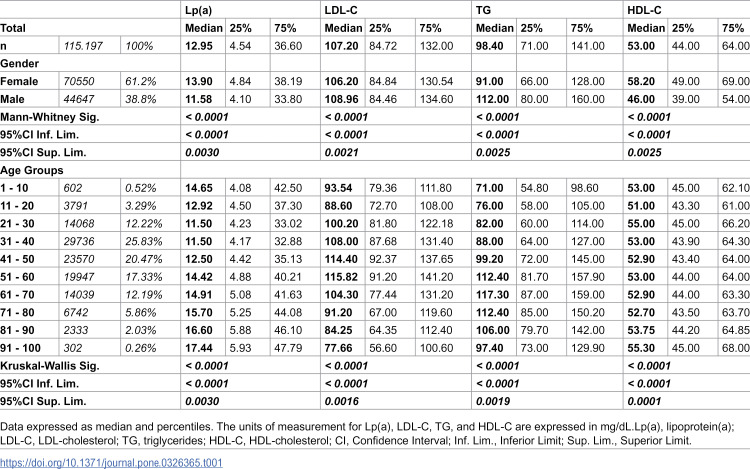 Figure 1
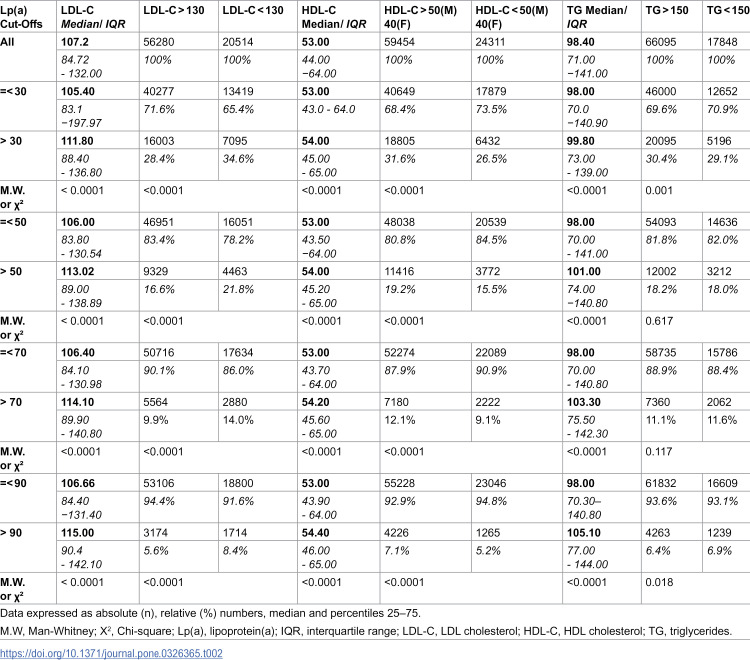 Figure 2
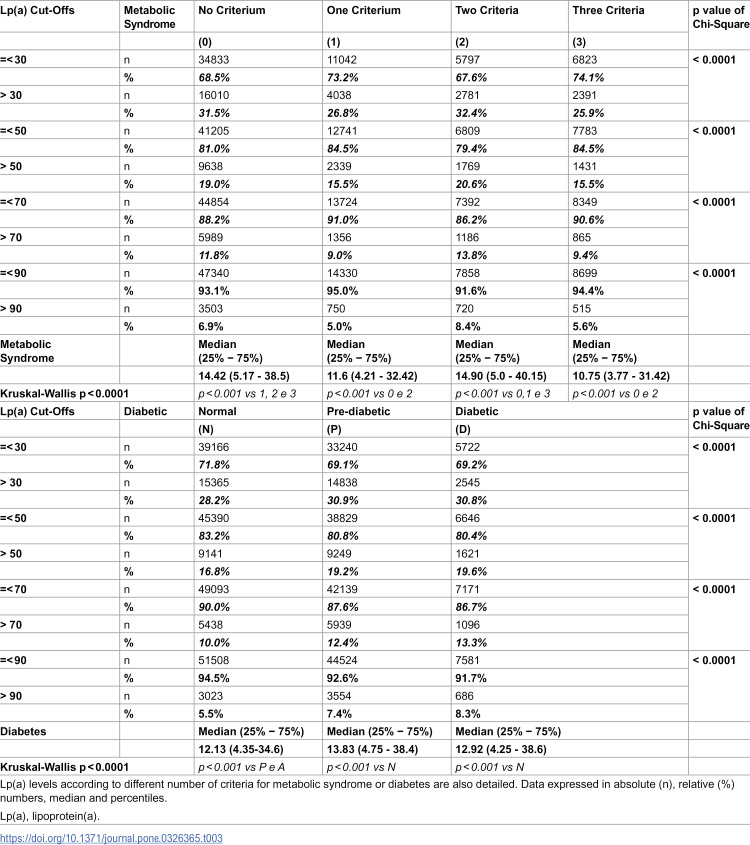 Figure 3
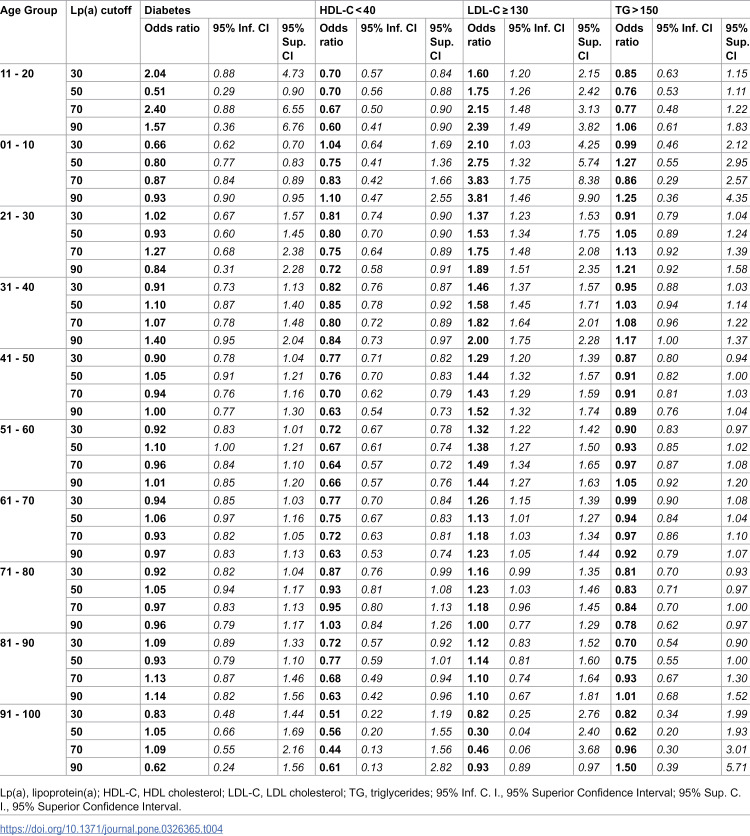 Figure 4
Peer Reviews
No public reviews on file for this paper yet. If you reviewed it on a platform where reviews are public (OpenReview, ICLR, NeurIPS, ICML), you can paste yours below so the community can read it here.
Videos
No videos yet. Explain this paper in a talk, walkthrough, or lecture? Add one.
Taxonomy
TopicsLipoproteins and Cardiovascular Health · Antiplatelet Therapy and Cardiovascular Diseases · Inflammatory mediators and NSAID effects