Diazotrophic growth of free-living Rhizobium etli: Community-like metabolic modeling of growing and non-growing nitrogen-fixing cells
Maryam Afarin, Fereshteh Naeimpoor

TL;DR
This study models the metabolism of Rhizobium etli in its free-living state, showing how nitrogen fixation affects growth and energy use.
Contribution
A novel community-like metabolic model was developed to simulate free-living Rhizobium etli with both growing and non-growing nitrogen-fixing cells.
Findings
Ammonia as a nitrogen source yielded the highest growth rate of 0.259 h⁻¹ in Rhizobium etli.
N₂ fixation in a mixed community reduced growth rate due to high energy demands compared to ammonia assimilation.
Oxidative phosphorylation, TCA cycle, and glycolysis were key pathways differentiating fluxes across nitrogen sources.
Abstract
Rhizobium etli, a nitrogen-fixing bacterium, grows both in symbiosis (with plants) and in free-living state. While most metabolic models focus on its symbiotic form, this study refined the existing iOR363 model to account for free-living growth. By addition of a biomass formation reaction followed by model curation growth was simulated using various N-sources (NH₃, NO₂, and NO₃). At fixed succinate uptake rate (4.16 mmol/gDWC/h), ammonia yielded the highest growth rate of 0.259 h ⁻ ¹. To represent free-living N-fixing R. etli, a novel two-member community-like model, consisting of both growing and differentiated non-growing N-fixing cells with ammonia exchange, was developed. The XFBA approach, based on community Flux Balance Analysis (cFBA), was formulated to maintain fixed abundances rather than assuming equal growth rates. With a non-growing:growing abundance ratio of 1:9 in…
Genes, proteins, chemicals, diseases, species, mutations and cell lines named across the full text — each resolved to its canonical identifier and authoritative record.
Click any figure to enlarge with its caption.
 Figure 1
 Figure 2
 Figure 3
 Figure 4
 Figure 5
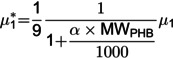 Figure 6
 Figure 7
 Figure 8
 Figure 9
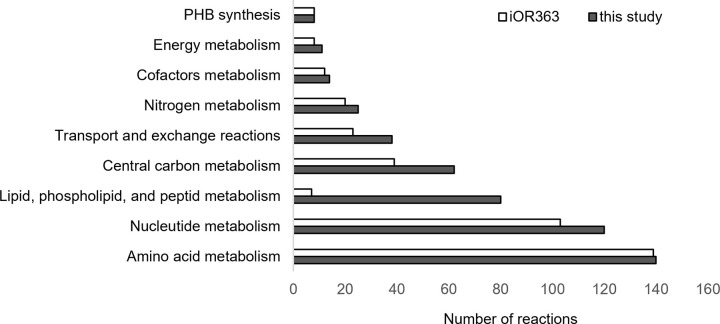 Figure 10
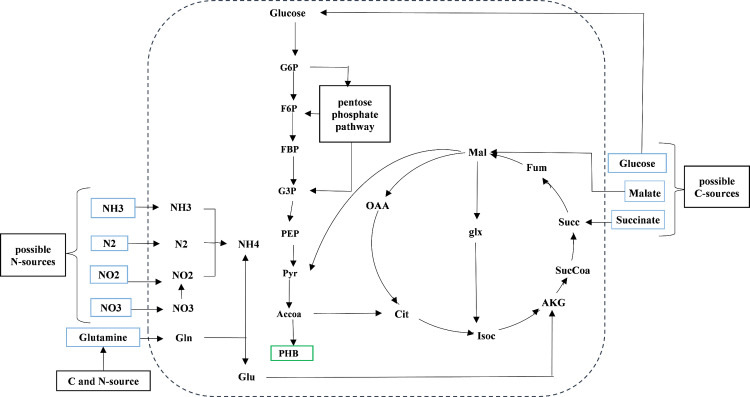 Figure 11
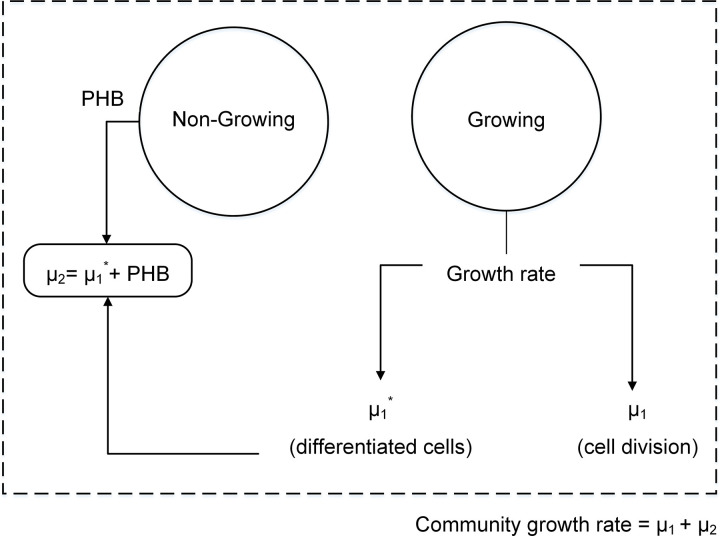 Figure 12
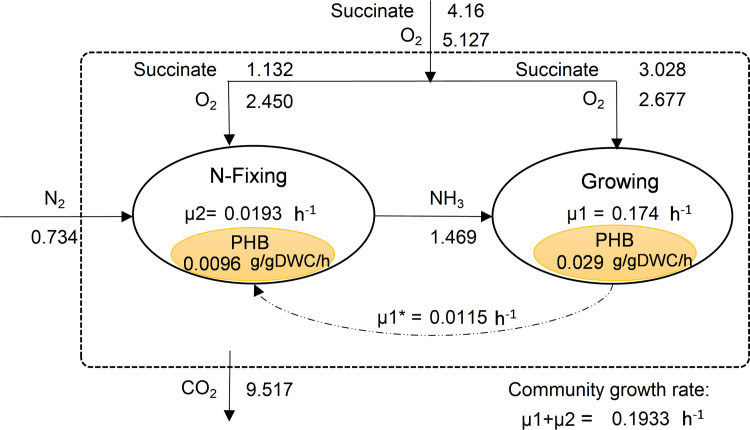 Figure 13
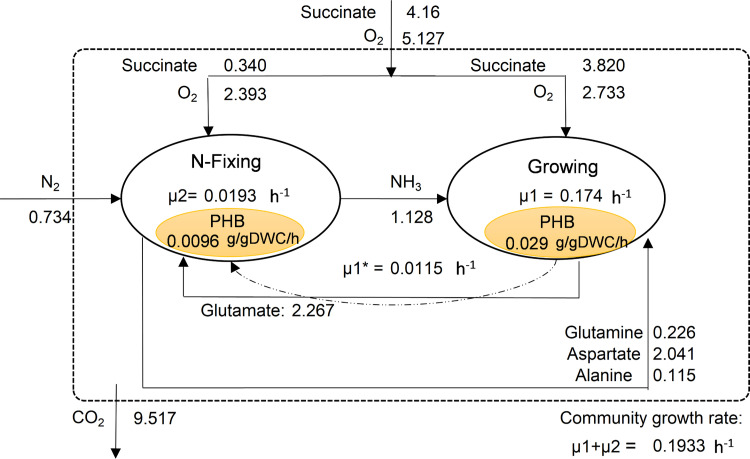 Figure 14
 Figure 15
 Figure 16
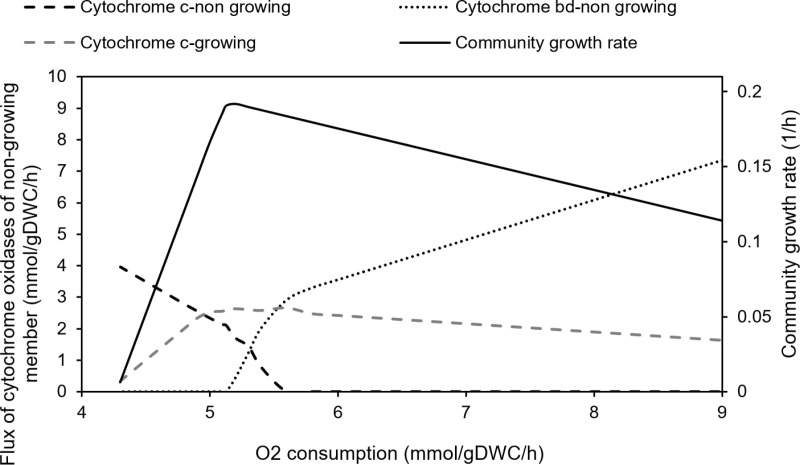 Figure 17
 Figure 18
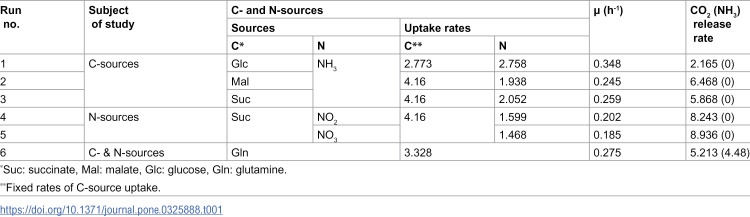 Figure 19
Peer Reviews
No public reviews on file for this paper yet. If you reviewed it on a platform where reviews are public (OpenReview, ICLR, NeurIPS, ICML), you can paste yours below so the community can read it here.
Videos
No videos yet. Explain this paper in a talk, walkthrough, or lecture? Add one.
Taxonomy
TopicsMicrobial Metabolic Engineering and Bioproduction · Wastewater Treatment and Nitrogen Removal · Microbial Fuel Cells and Bioremediation