High-accuracy spinal alignment monitoring using the head angle and visual distance in computer users
Ko Hashimoto, Yusuke Sekiguchi, Kaho Matsuda, Masataka Hori, Yutaka Mizuno, Ryosuke Shibuya, Kohei Takahashi, Takahiro Onoki, Kenichiro Yahata, Shin-Ichi Izumi, Toshimi Aizawa, Holakoo Mohsenifar, Kentaro Yamada, Kentaro Yamada

TL;DR
This study introduces a noninvasive method to monitor spinal alignment in computer users using head angle and visual distance, which could help prevent neck and back pain.
Contribution
The paper presents a novel, noninvasive method for estimating spinal alignment during seated computer work using head angle and visual distance.
Findings
Head angle and visual distance showed significant correlations with spinal sagittal alignment, especially in the cervical spine.
Incorporating demographic factors like age and gender improved the predictive accuracy of spinal alignment estimation.
Radiographic validation confirmed the reliability of body surface marker measurements against standard spinal alignment indices.
Abstract
A Prospective Validation Study. To validate a novel, noninvasive method for estimating the spinal sagittal alignment during seated computer work, using the head angle (HA) and visual distance (VD) as primary parameters. A 3D motion analysis system measured HA and VD in 21 healthy volunteers. The relationship between these parameters and spinal sagittal alignment, as determined by body surface markers, was investigated. To validate this method, radiographic measurements were taken in a separate group of 32 patients to confirm the link between body surface landmarks and actual spinal alignment. Additional variables, including gender, age, height, and weight, were incorporated into the model to improve accuracy. HA and VD showed significant correlations with spinal sagittal alignment, particularly for the cervical spine (C2-C7). Incorporating demographic factors further enhanced the…
Genes, proteins, chemicals, diseases, species, mutations and cell lines named across the full text — each resolved to its canonical identifier and authoritative record.
Click any figure to enlarge with its caption.
 Figure 1
 Figure 2
 Figure 3
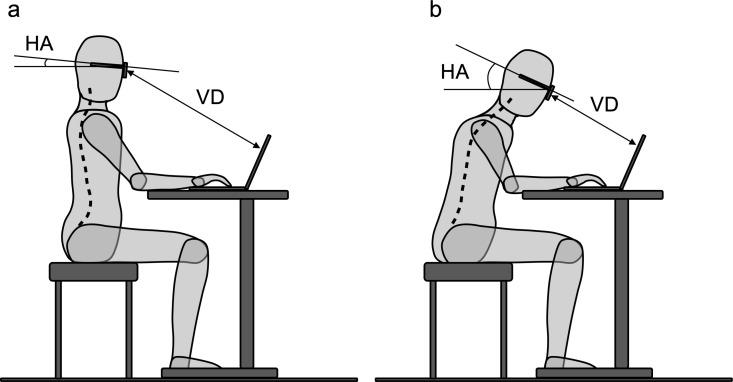 Figure 4
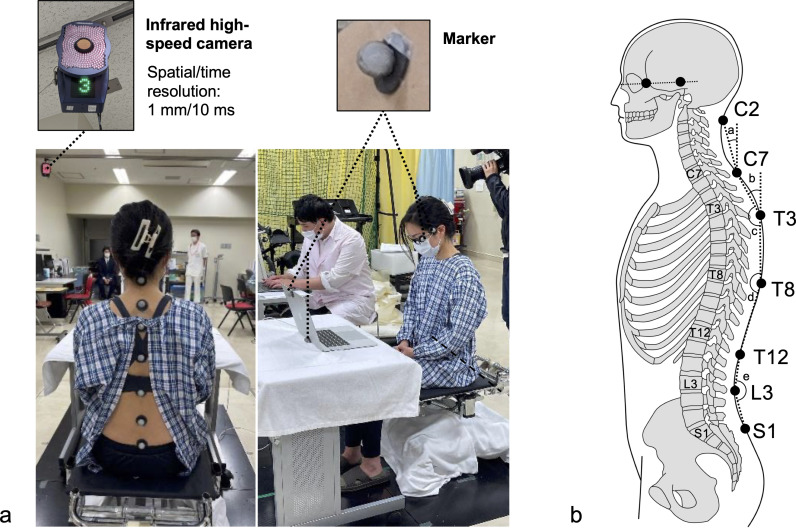 Figure 5
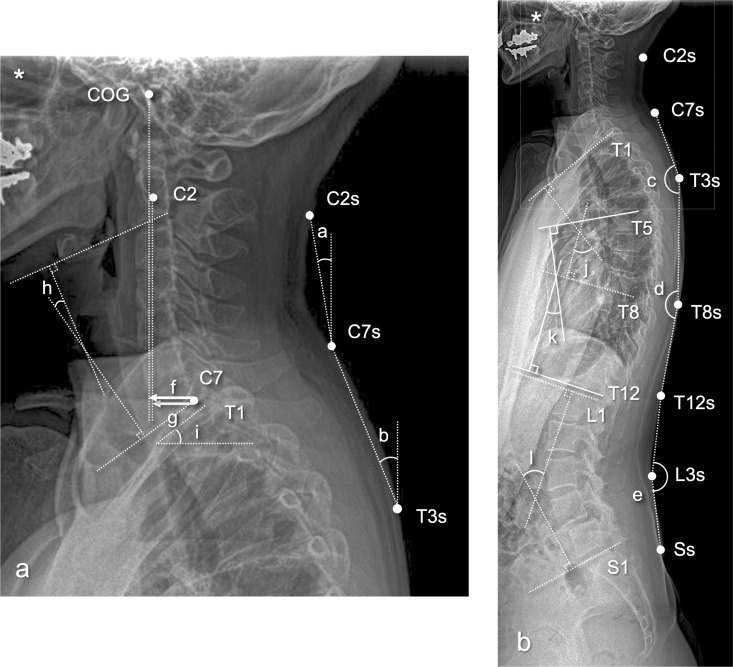 Figure 6
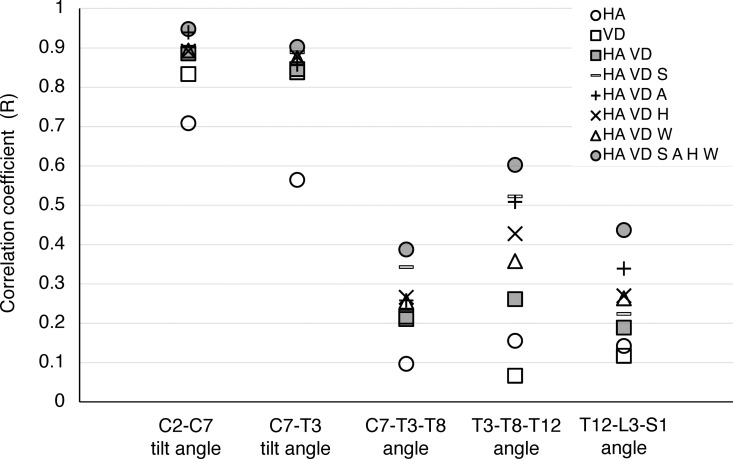 Figure 7
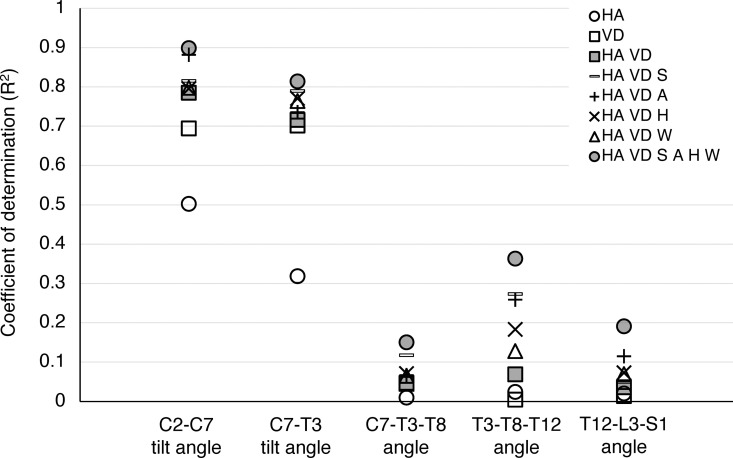 Figure 8
 Figure 9
 Figure 10
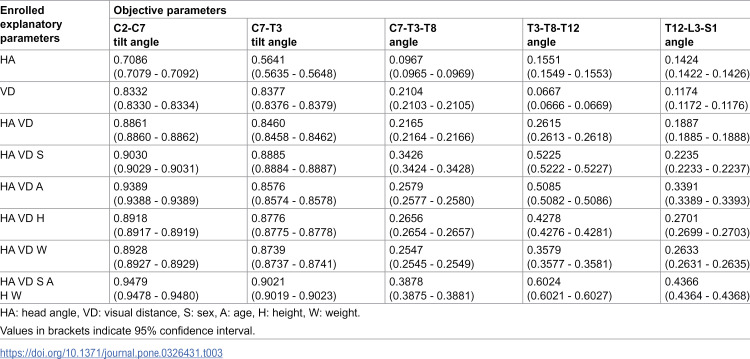 Figure 11
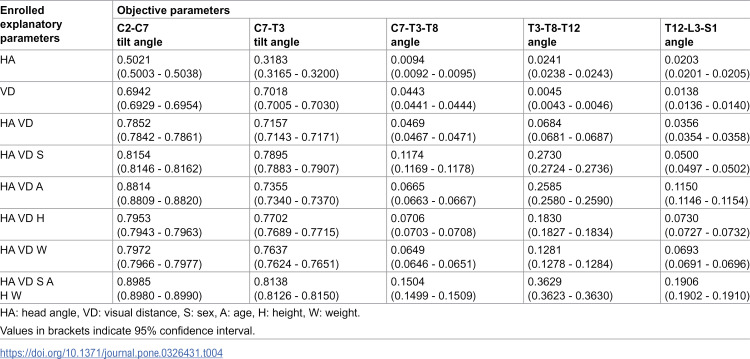 Figure 12
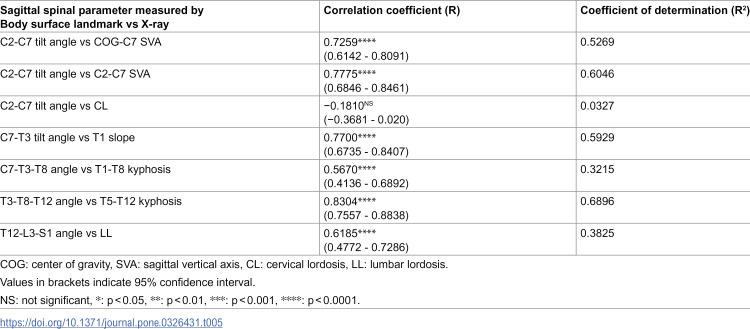 Figure 13
Peer Reviews
No public reviews on file for this paper yet. If you reviewed it on a platform where reviews are public (OpenReview, ICLR, NeurIPS, ICML), you can paste yours below so the community can read it here.
Videos
No videos yet. Explain this paper in a talk, walkthrough, or lecture? Add one.
Taxonomy
TopicsErgonomics and Musculoskeletal Disorders · Musculoskeletal pain and rehabilitation · Scoliosis diagnosis and treatment