Neutrophil extracellular traposis in cancer patients with acute ischemic stroke
Jae-Won Hyun, Rosah May Palermo Payumo, Jieun Chung, You-Ri Kang, Su-Hyun Kim, Ho Jin Kim, Ji-Youn Han, Sang-Yoon Park, Kokouvi Kassegne, Kokouvi Kassegne, Kokouvi Kassegne

TL;DR
This study finds that cancer patients with stroke have higher levels of NETosis markers linked to blood clotting, suggesting a new mechanism for their increased stroke risk.
Contribution
The study provides novel evidence linking NETosis to hypercoagulability in cancer patients with acute ischemic stroke.
Findings
Plasma DNA and nucleosome levels were significantly higher in cancer patients with AIS compared to controls.
NETosis markers correlated with D-dimer levels in cancer patients with AIS.
Cancer patients with ESUS had higher NETosis markers than those with CSM.
Abstract
Patients with cancer exhibit an increased risk of acute ischemic stroke (AIS), and neutrophil extracellular traposis (NETosis) has been proposed as a mechanism underlying cancer-associated hypercoagulability. However, studies validating these findings in independent cohorts are limited. We sought to explore whether NETosis-associated markers (plasma DNA and nucleosomes) are increased in patients with active cancer and AIS, and whether these increases correlate with coagulopathy markers in cancer patients. We analyzed NETosis-associated markers in cancer patients with and without AIS and healthy controls, and assessed the correlation between these markers and coagulopathy markers. Additionally, we compared the levels of Netosis-associated markers between cancer patients with conventional stroke mechanisms (CSM) and those with embolic stroke of undetermined source (ESUS). Plasma DNA…
Genes, proteins, chemicals, diseases, species, mutations and cell lines named across the full text — each resolved to its canonical identifier and authoritative record.
Click any figure to enlarge with its caption.
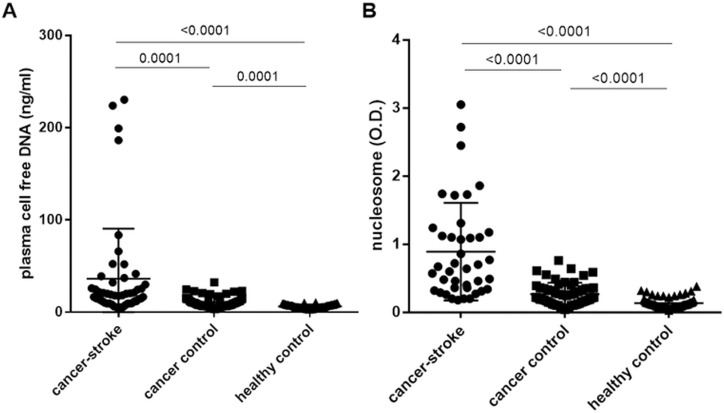 Figure 1
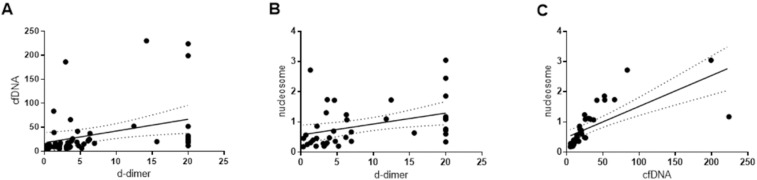 Figure 2
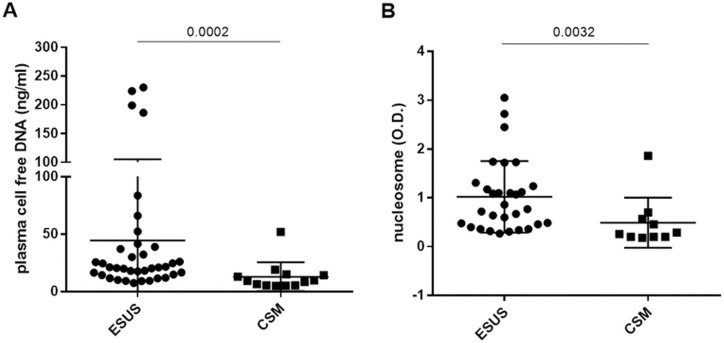 Figure 3
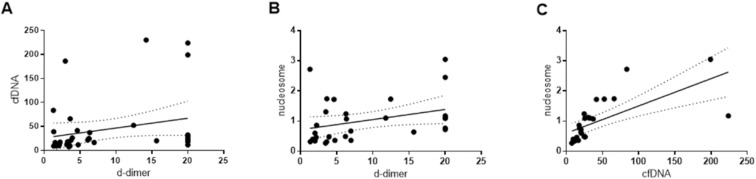 Figure 4
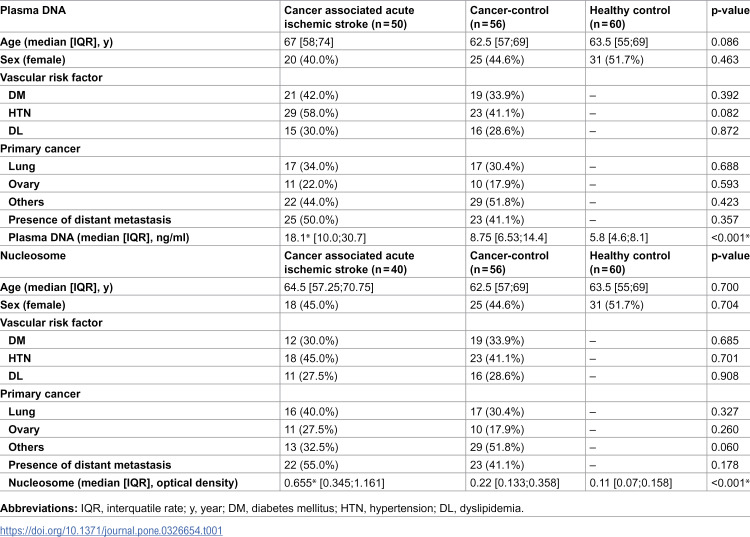 Figure 5
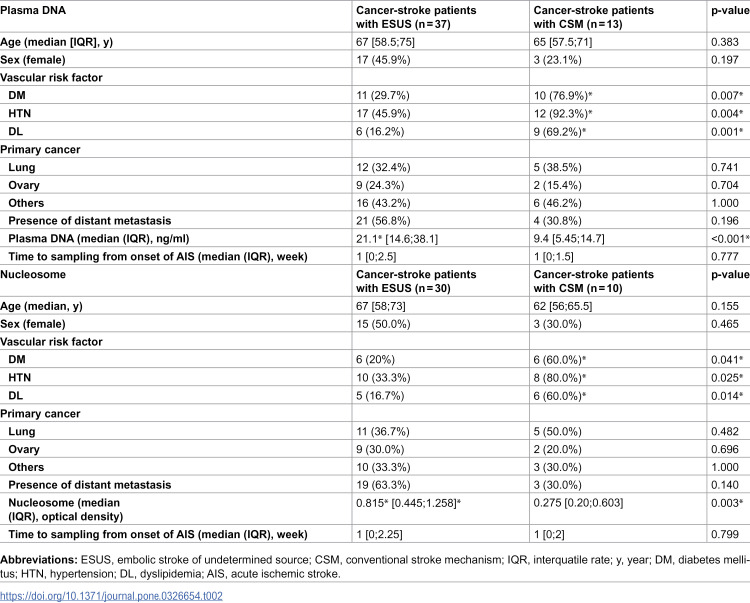 Figure 6
Peer Reviews
No public reviews on file for this paper yet. If you reviewed it on a platform where reviews are public (OpenReview, ICLR, NeurIPS, ICML), you can paste yours below so the community can read it here.
Videos
No videos yet. Explain this paper in a talk, walkthrough, or lecture? Add one.
Taxonomy
TopicsNeutrophil, Myeloperoxidase and Oxidative Mechanisms · Infective Endocarditis Diagnosis and Management · S100 Proteins and Annexins