Structural basis for higher-order DNA binding by a bacterial transcriptional regulator
Frederik Oskar Graversgaard Henriksen, Lan Bich Van, Ditlev Egeskov Brodersen, Ragnhild Bager Skjerning, Danielle A. Garsin, Kai Papenfort, Danielle A. Garsin, Kai Papenfort, Danielle A. Garsin, Kai Papenfort, Danielle A. Garsin, Kai Papenfort

TL;DR
This study reveals how a bacterial toxin-antitoxin system regulates its own gene expression through dynamic protein-DNA interactions and structural asymmetry.
Contribution
The paper provides a structural and mechanistic model of transcriptional autoregulation involving a unique 4:2 stoichiometric complex and concentration-dependent DNA binding.
Findings
The Xre-RES complex binds DNA in a 1:1 molar ratio with an asymmetric interaction.
The complex can transition between DNA-binding and non-binding forms depending on antitoxin concentration.
Structural analysis reveals a secondary DNA binding site and a dynamic autoregulation mechanism.
Abstract
Transcriptional regulation by binding of transcription factors to palindromic sequences in promoter regions is a fundamental process in bacteria. Some transcription factors have multiple dimeric DNA-binding domains, in principle enabling interaction with higher-order DNA structures; however, mechanistic and structural insights into this phenomenon remain limited. The Pseudomonas putida toxin-antitoxin (TA) system Xre-RES has an unusual 4:2 stoichiometry including two potential DNA-binding sites, compatible with a complex mechanism of transcriptional autoregulation. Here, we show that the Xre-RES complex interacts specifically with a palindromic DNA repeat in the promoter in a 1:1 molar ratio, leading to transcriptional repression. We determine the 2.7 Å crystal structure of the protein-DNA complex, revealing an unexpected asymmetry in the interaction and suggesting the presence of a…
Genes, proteins, chemicals, diseases, species, mutations and cell lines named across the full text — each resolved to its canonical identifier and authoritative record.
Click any figure to enlarge with its caption.
 Figure 1
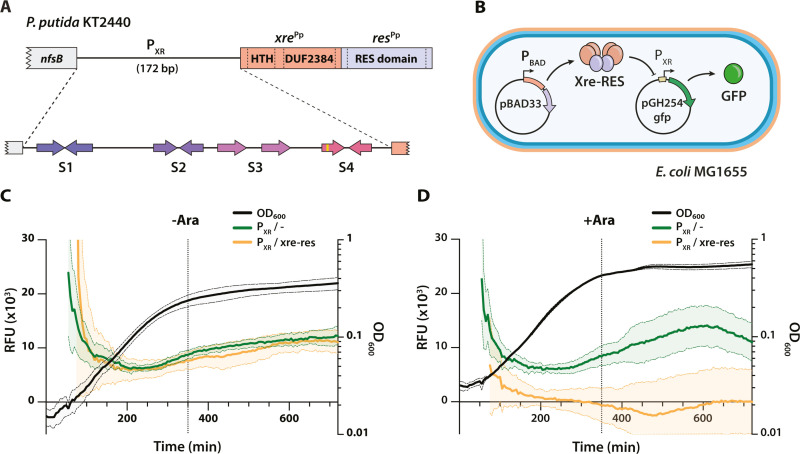 Figure 2
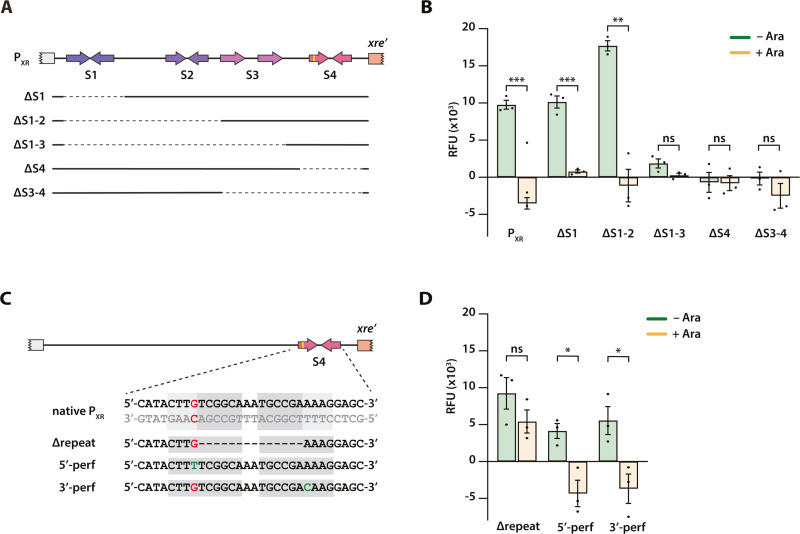 Figure 3
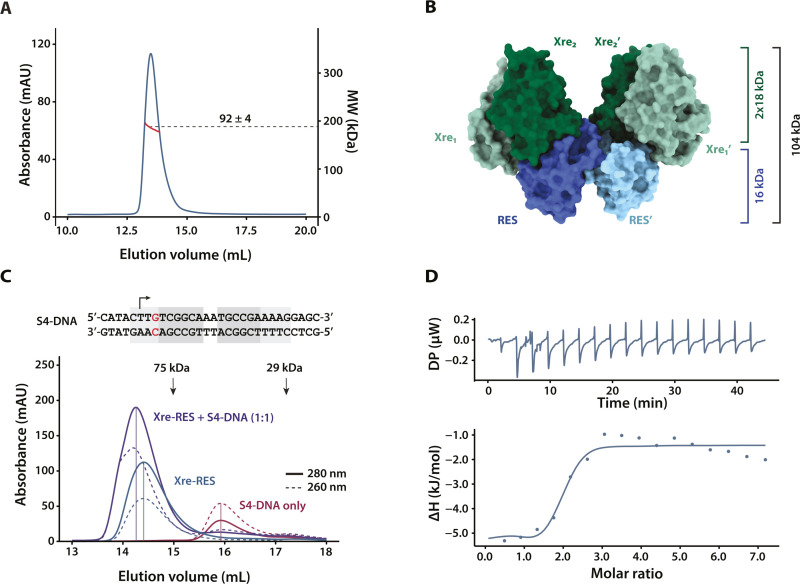 Figure 4
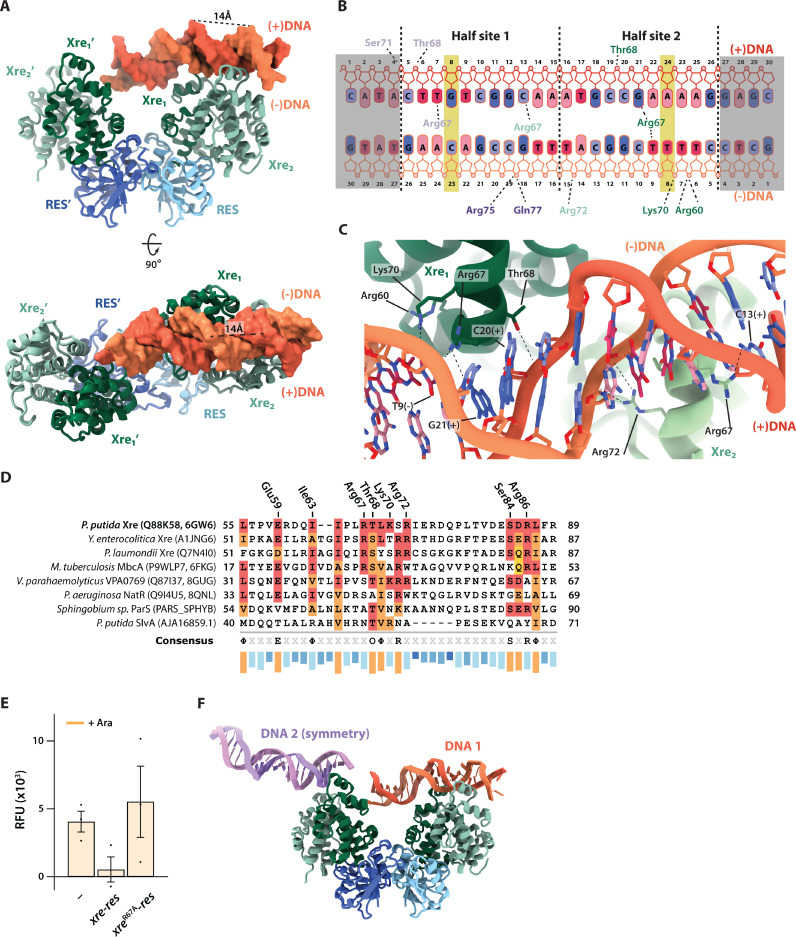 Figure 5
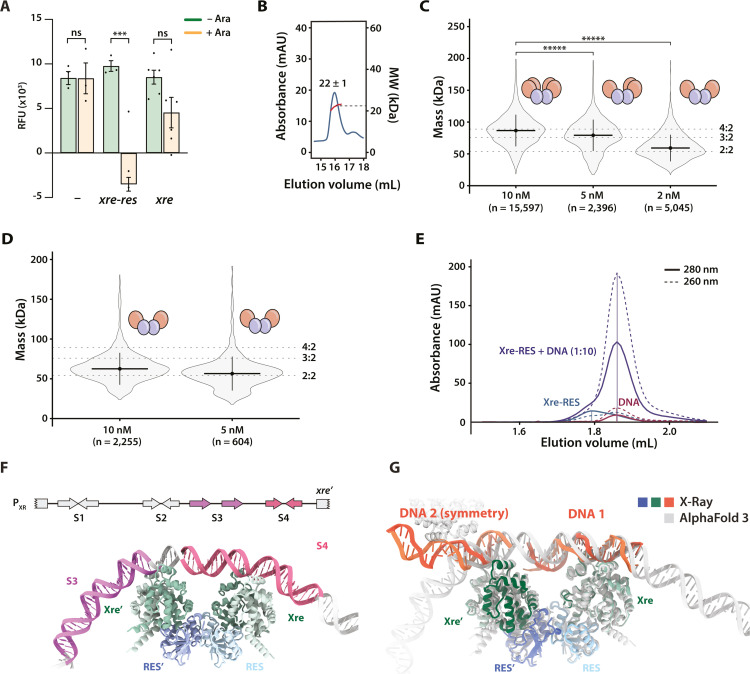 Figure 6
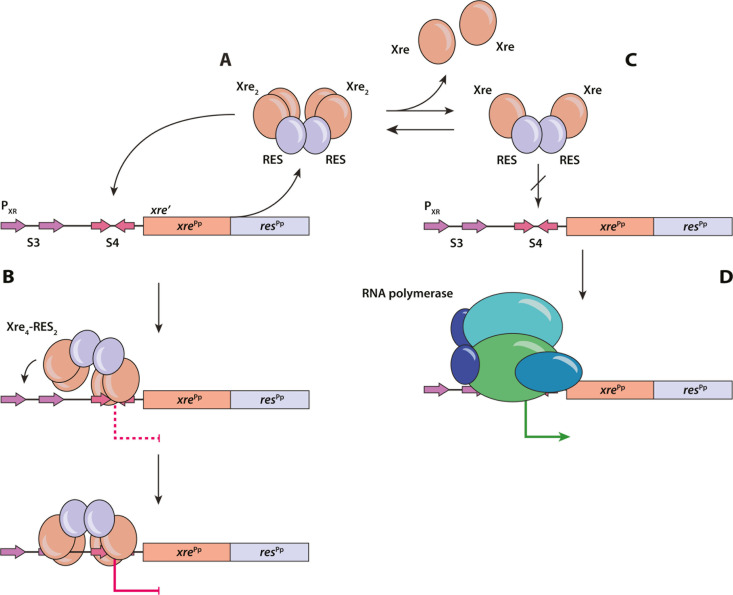 Figure 7
 Figure 8
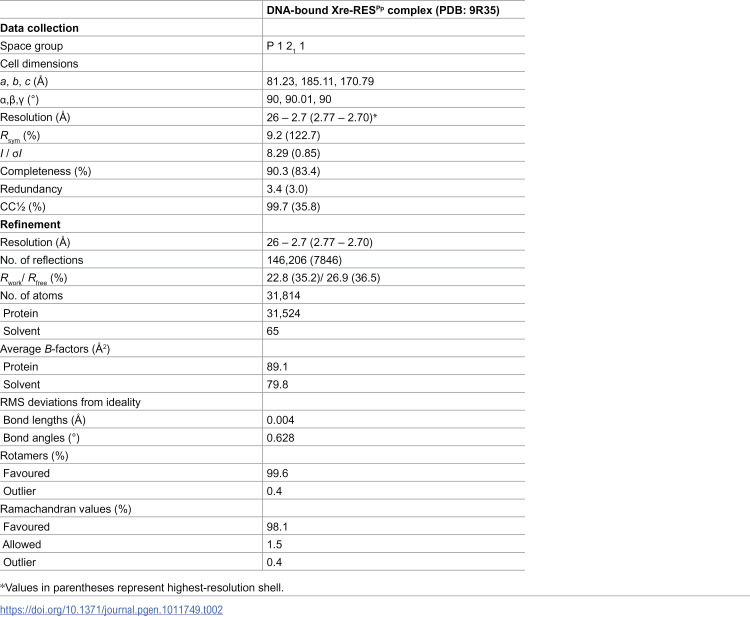 Figure 9
Peer Reviews
No public reviews on file for this paper yet. If you reviewed it on a platform where reviews are public (OpenReview, ICLR, NeurIPS, ICML), you can paste yours below so the community can read it here.
Videos
No videos yet. Explain this paper in a talk, walkthrough, or lecture? Add one.
Taxonomy
TopicsBacterial Genetics and Biotechnology · Bacteriophages and microbial interactions · RNA and protein synthesis mechanisms