Estimating a change-point of baseline age in the longitudinal trajectories of biomarkers: application to an imaging study of preclinical Alzheimer disease
Chengjie Xiong, Folasade Agboola, Jingqin Luo

TL;DR
This paper introduces new methods to estimate the age at which biomarker changes accelerate in Alzheimer's disease, using longitudinal data from brain imaging.
Contribution
The paper proposes multiple statistical methods to estimate a change-point in baseline age for longitudinal biomarker trajectories.
Findings
Estimators performed poorly with small sample sizes or boundary change-points but improved with larger samples.
The proposed methods showed consistent estimates for the age when white matter hypointensity changes accelerated in an Alzheimer's cohort.
The profile likelihood method produced a significantly later change-point estimate compared to other methods.
Abstract
Biomarkers are routinely measured from human biospecimens and imaging scans in Alzheimer disease (AD) research. Age is a well-known risk factor for AD. Detecting the age at which the longitudinal change in biomarkers starts to accelerate, i.e., a change-point in age, is important to design preventive interventions. We analyzed longitudinal biomarker data by a random intercept and random slope model where the slope (longitudinal rate of change) was modeled as a piecewise linear and continuous function of baseline age. We proposed to estimate the intersection of the two linear functions, i.e., the change-point in age by multiple methods: maximum (profile) likelihood, minimum squared pseudo bias, minimum variance, minimum mean square error (MSE), and a two-stage method. We simulated large numbers of data sets to evaluate the performance of these estimators and implemented them to analyze…
Genes, proteins, chemicals, diseases, species, mutations and cell lines named across the full text — each resolved to its canonical identifier and authoritative record.
Click any figure to enlarge with its caption.
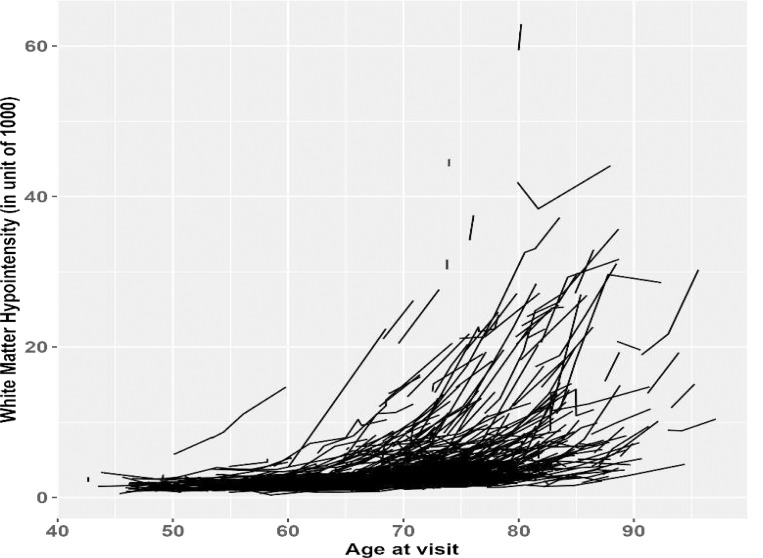 Figure 1
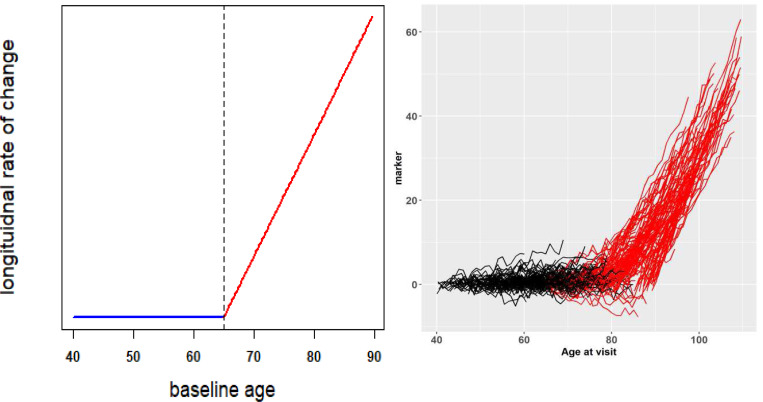 Figure 2
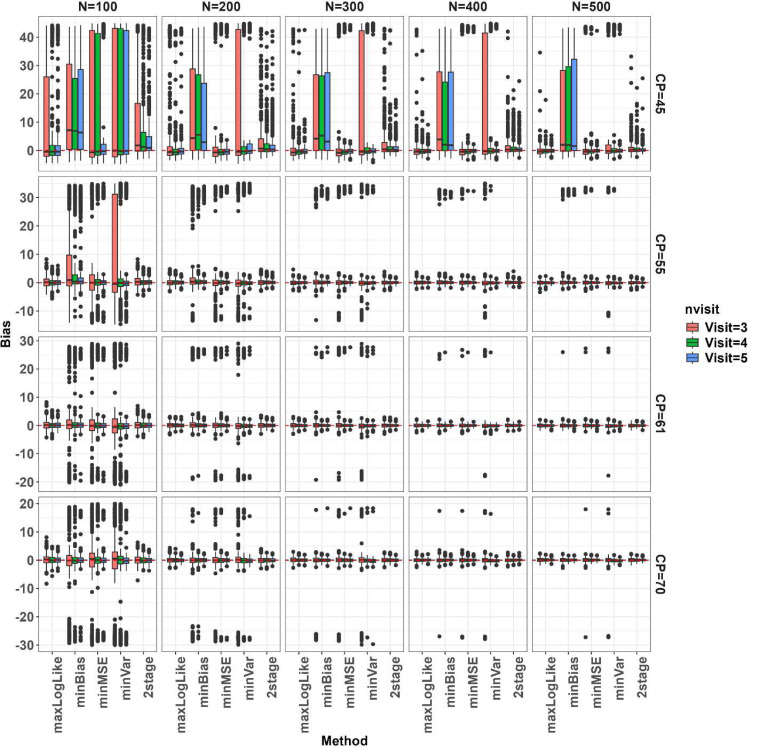 Figure 3
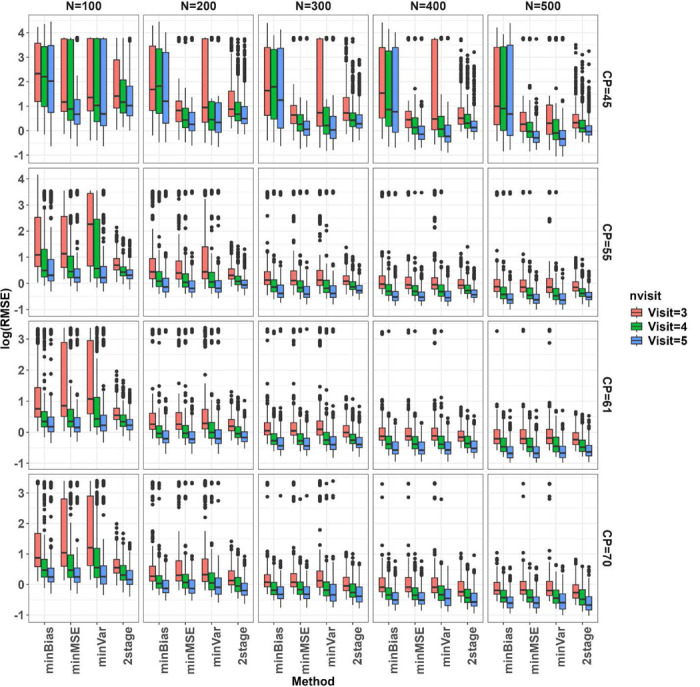 Figure 4
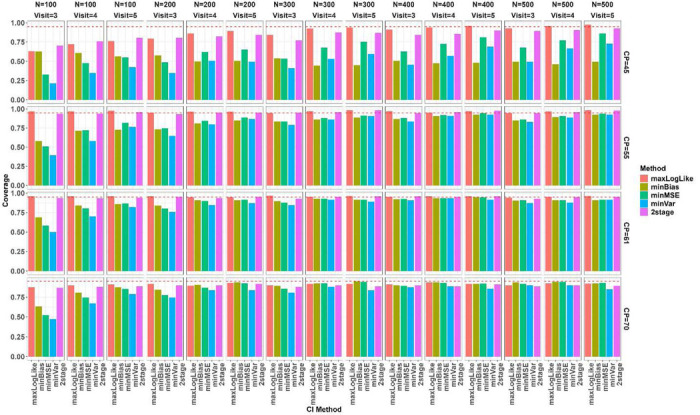 Figure 5
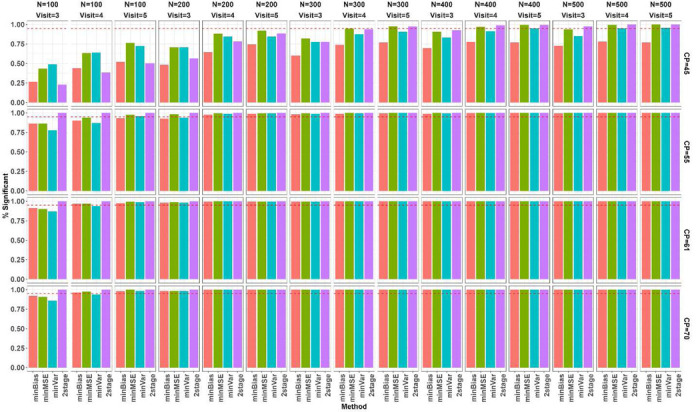 Figure 6
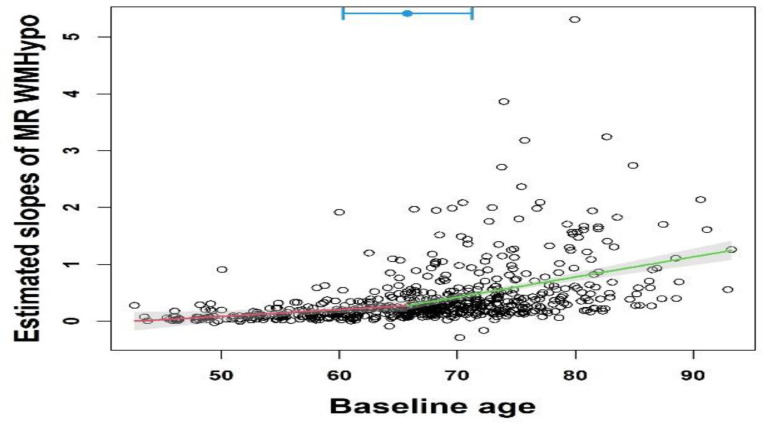 Figure 7
Peer Reviews
No public reviews on file for this paper yet. If you reviewed it on a platform where reviews are public (OpenReview, ICLR, NeurIPS, ICML), you can paste yours below so the community can read it here.
Videos
No videos yet. Explain this paper in a talk, walkthrough, or lecture? Add one.
Taxonomy
TopicsStatistical Methods and Inference · Health Systems, Economic Evaluations, Quality of Life · Statistical Methods and Bayesian Inference