Treatment with mitochondrial targeting antibiotics improves survival outcomes after Flock House virus infection in young and aged Drosophila melanogaster
Dean Bunnell, Madelyn Buhl, Justin McGee, Grace Milas, Stanislava Chtarbanova

TL;DR
Treating fruit flies with antibiotics that target mitochondria improves survival after a virus infection, regardless of age or virus levels.
Contribution
Mitochondrial-targeting antibiotics improve survival in virus-infected flies by activating the mitochondrial unfolded protein response.
Findings
Tetracycline and rifampicin treatment improves survival in both young and aged flies after Flock House virus infection.
The protective effect of tetracycline is independent of its antimicrobial properties and virus load modulation.
Tetracycline treatment increases expression of genes related to UPRmt, glycolysis, and oxidative stress response.
Abstract
Aged organisms are more susceptible to infectious diseases, including infections with RNA viruses. Mitochondrial dysfunction is one of many hallmarks of aging that could affect this increased susceptibility, as the relationship between immunity and metabolism is crucial to manage infections. Using Drosophila melanogaster- Flock House virus (FHV) host-virus interactions model system, previous work has identified differences in young and aged flies’ ability to modulate oxygen consumption rates (OCR). Here, we hypothesized that interventions that reduce OCR could improve survival of FHV, as observed in young flies. Tetracycline (TTC) and rifampicin (RIF) antibiotics disrupt mitochondrial translation and transcription respectively because of mitochondria’s bacterial ancestry. The mitochondrial unfolded protein response (UPRmt) is activated by mitochondrial stressors, including reactive…
Genes, proteins, chemicals, diseases, species, mutations and cell lines named across the full text — each resolved to its canonical identifier and authoritative record.
Click any figure to enlarge with its caption.
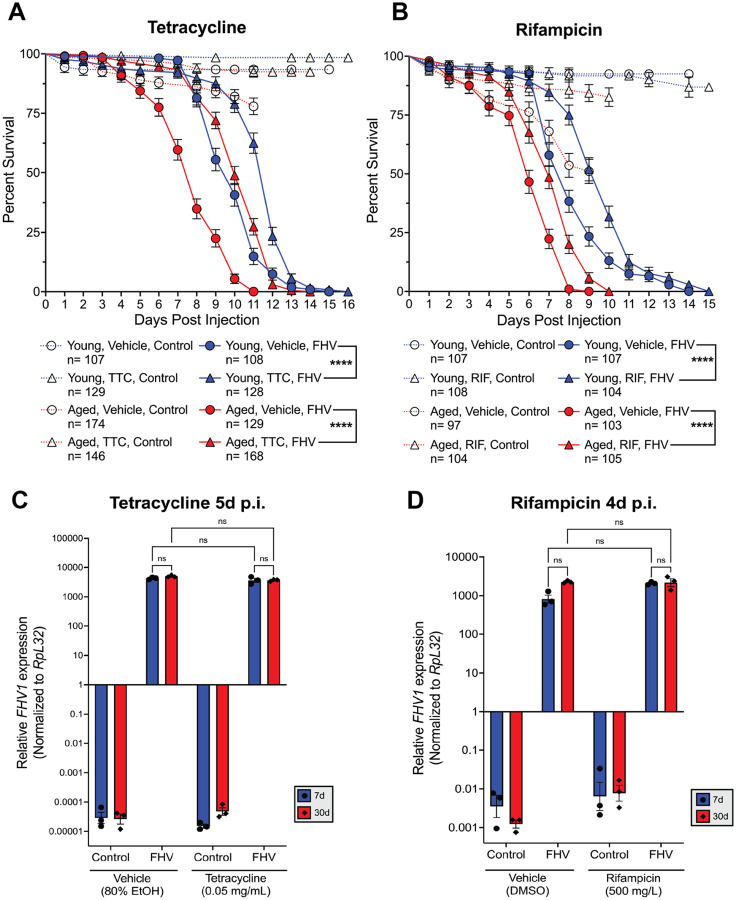 Figure 1
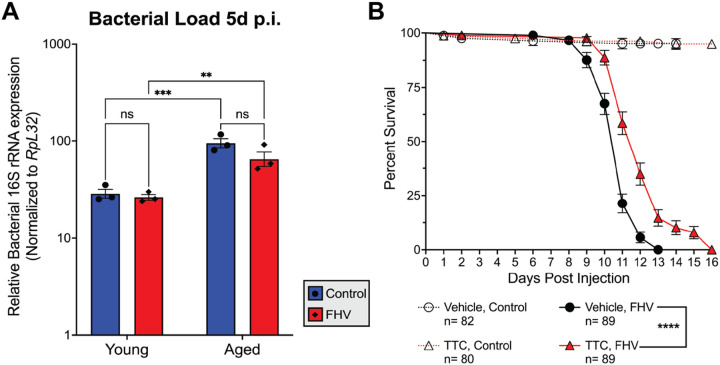 Figure 2
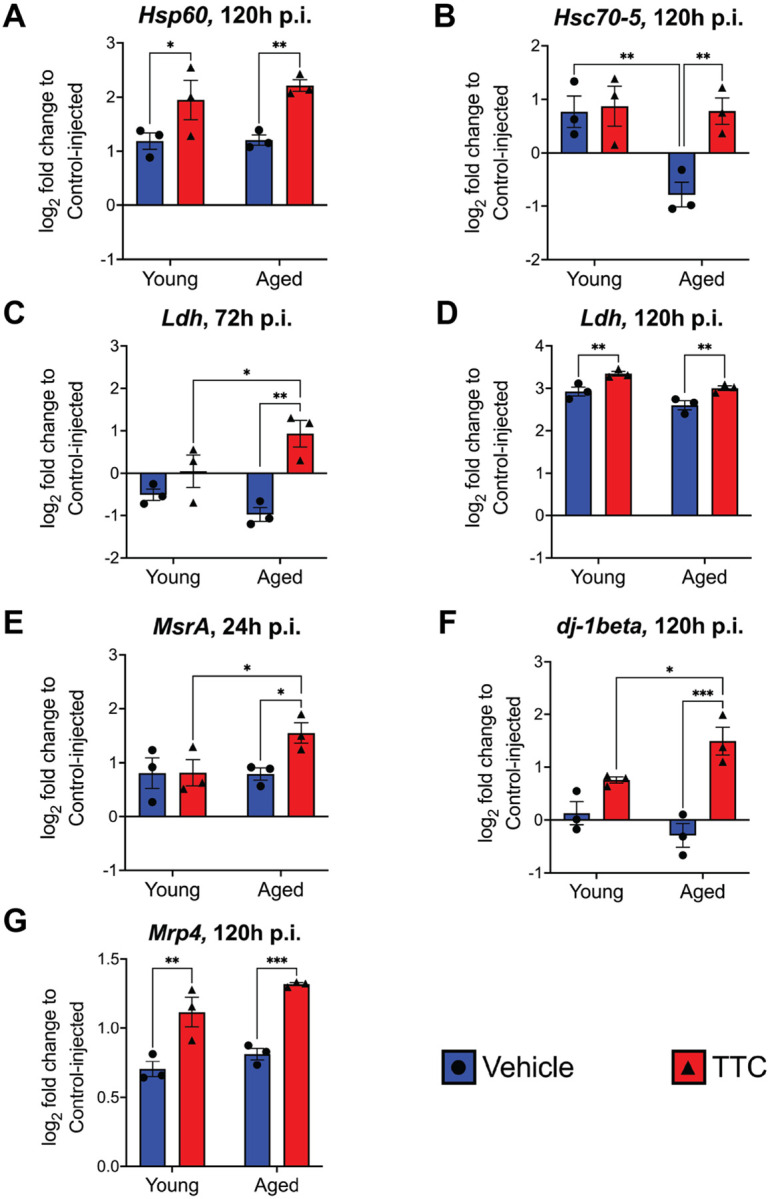 Figure 3
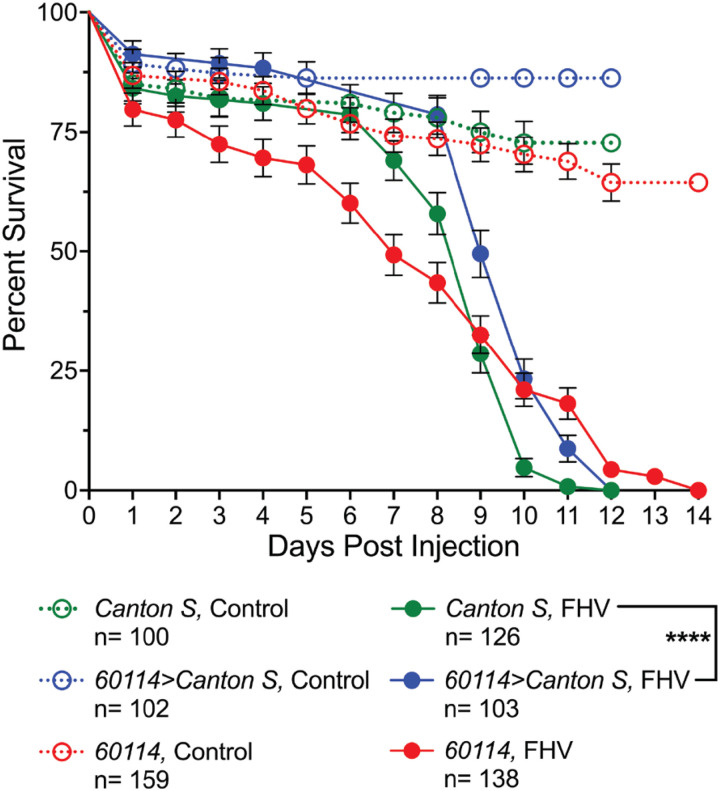 Figure 4
Peer Reviews
No public reviews on file for this paper yet. If you reviewed it on a platform where reviews are public (OpenReview, ICLR, NeurIPS, ICML), you can paste yours below so the community can read it here.
Videos
No videos yet. Explain this paper in a talk, walkthrough, or lecture? Add one.
Taxonomy
TopicsMosquito-borne diseases and control · Invertebrate Immune Response Mechanisms · Physiological and biochemical adaptations