Complement factor D (adipsin) mediates pressure-pain hypersensitivity post destabilization of medial meniscus injury
Priscilla Tjandra, Bethany Andoko, Jooyoung Kim, Andreana Gomez, Sonya Sar, Megha Aepala, Tiffany Pham, Darren Dumlao, Hope Welhaven, Kelsey Collins

TL;DR
This study shows that complement factor D (adipsin) influences knee pain after injury, even when cartilage is protected, suggesting a new mechanism for osteoarthritis pain.
Contribution
The study reveals that complement factor D mediates pressure-pain hypersensitivity independently of cartilage damage in a mouse model of osteoarthritis.
Findings
FD−/− mice showed persistent pressure-pain hyperalgesia despite cartilage protection after DMM surgery.
Eicosanoid profiles in synovial fluid and serum changed in FD−/− mice, indicating a role in pain mediation.
Hyperalgesia in FD−/− mice emerged early and persisted for 8 weeks post-injury.
Abstract
Although osteoarthritis (OA) is the leading cause of pain and disability worldwide, there is a lack of models to probe the separable mechanism of OA structural damage and knee pain. We previously identified that deletion of complement factor D (FD) results in increased pressure-pain hyperalgesia despite cartilage protection after destabilization of the medial meniscus (DMM) surgery. However, how these discordant OA phenotypes manifest is not understood. We employed a novel targeted lipidomics approach to elucidate the role of eicosanoids in FD-mediated pain. We hypothesize that the absence of Cfd (FD−/−) will protect cartilage but cause increased pressure-pain hyperalgesia and eicosanoid dysregulation that persists throughout OA development. Male and female FD−/− and wild-type (WT) mice were challenged with DMM or remained naïve (n=5–11/group) at 16 weeks old. Pressure-pain…
Genes, proteins, chemicals, diseases, species, mutations and cell lines named across the full text — each resolved to its canonical identifier and authoritative record.
Click any figure to enlarge with its caption.
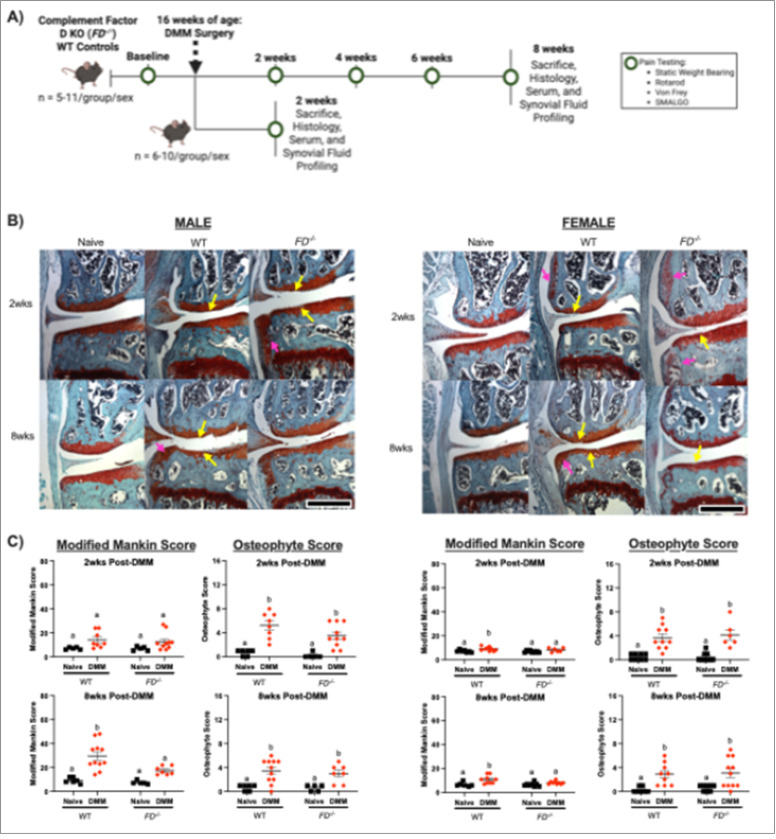 Figure 1
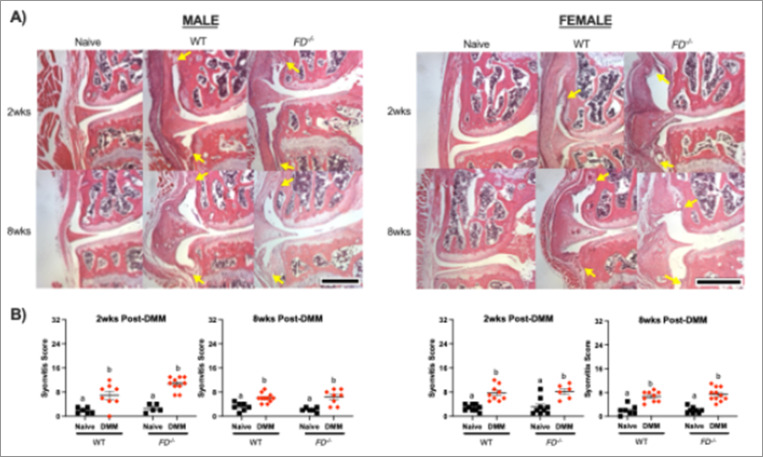 Figure 2
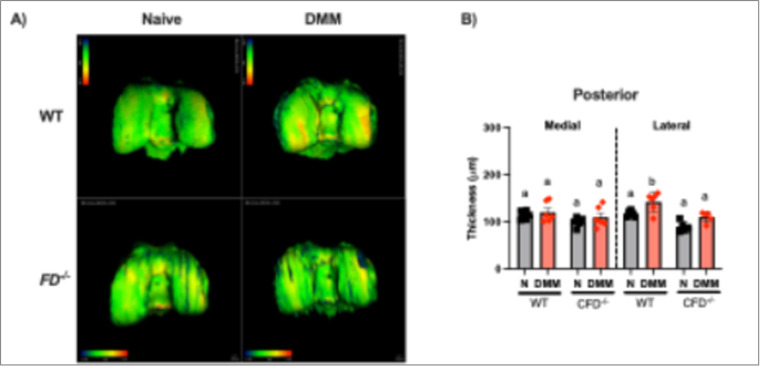 Figure 3
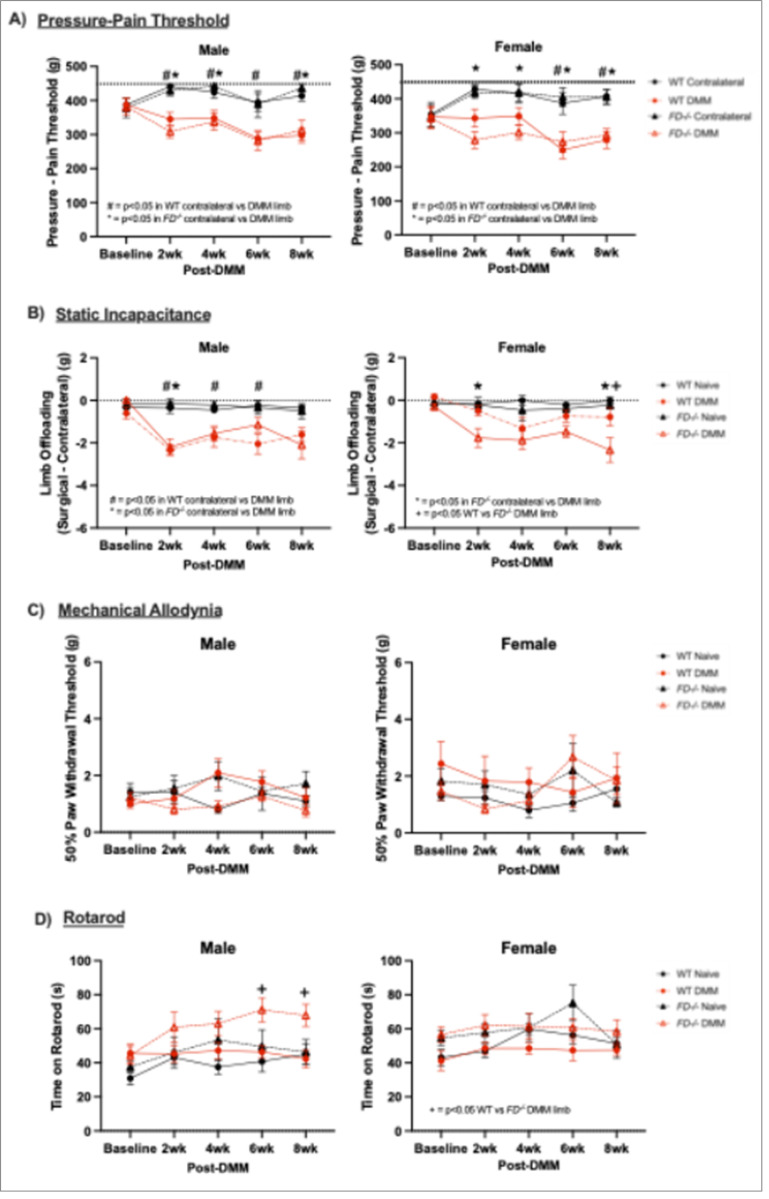 Figure 4
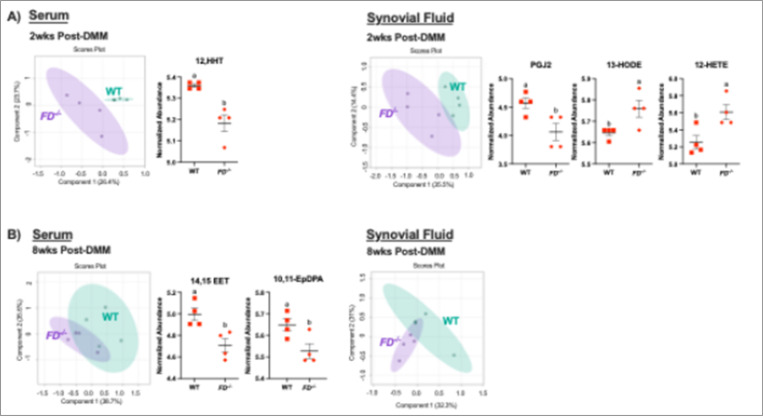 Figure 5
Peer Reviews
No public reviews on file for this paper yet. If you reviewed it on a platform where reviews are public (OpenReview, ICLR, NeurIPS, ICML), you can paste yours below so the community can read it here.
Videos
No videos yet. Explain this paper in a talk, walkthrough, or lecture? Add one.
Taxonomy
TopicsKnee injuries and reconstruction techniques · Osteoarthritis Treatment and Mechanisms