Single-cell transcriptomics reveal differences between chorionic and basal plate cytotrophoblasts and trophoblast stem cells
Robert Morey, Francesca Soncin, Sampada Kallol, Nirvay Sah, Zoe Manalo, Tony Bui, Jaroslav Slamecka, Virginia Chu Cheung, Don Pizzo, Daniela F. Requena, Ching-Wen Chang, Omar Farah, Ryan Kittle, Kelly Lam, Morgan Meads, Mariko Horii, Kathleen M. Fisch, Mana M. Parast

TL;DR
This study uses single-cell RNA sequencing to show that different regions of the early human placenta contain distinct types of trophoblast cells, and that current stem cell lines resemble cells that become invasive.
Contribution
The study identifies distinct transcriptional states of cytotrophoblasts and shows that trophoblast stem cells resemble EVT precursors.
Findings
Basal plate CTB are biased toward EVT, while chorionic plate CTB are biased toward STB.
Trophoblast stem cells resemble EVT precursor cells and lose in vivo markers during culture.
ITGA5+ CTB form EVT in 2D but not organoids, while ITGA5− CTB form organoids but not EVT.
Abstract
Cytotrophoblast (CTB) of the early gestation human placenta are bipotent progenitor epithelial cells, which can differentiate into invasive extravillous trophoblast (EVT) and multinucleated syncytiotrophoblast (STB). Trophoblast stem cells (TSC), derived from early first trimester placentae, have also been shown to be bipotential; however, their cell-of-origin has not been identified. In this study, we set out to probe the transcriptional diversity of early and late first trimester villous CTB (vCTB) and compare these to TSC. To this end, we performed single-cell RNA sequencing (scRNA-seq) on placental villous tissue from early (6–8 weeks) and late (12–14 weeks) first trimester placentae; we also evaluated CTB within basal (maternal) and chorionic (fetal) regions of early first trimester placenta, both by scRNA-seq and GeoMx-based spatial transcriptomics. Finally, we performed scRNA-seq…
Genes, proteins, chemicals, diseases, species, mutations and cell lines named across the full text — each resolved to its canonical identifier and authoritative record.
Click any figure to enlarge with its caption.
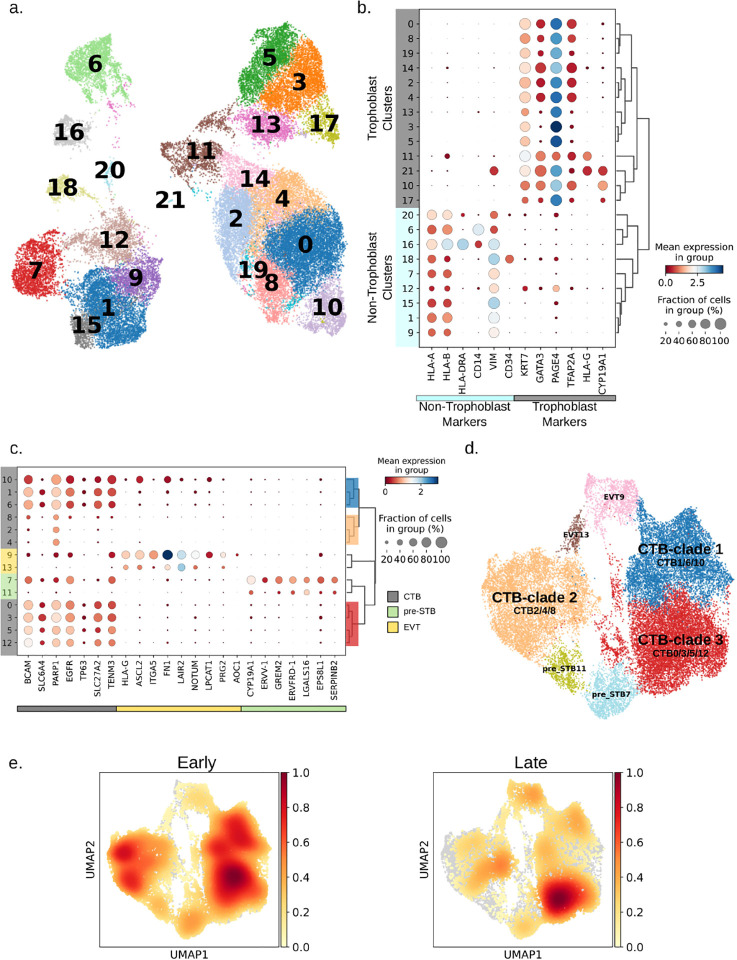 Figure 1
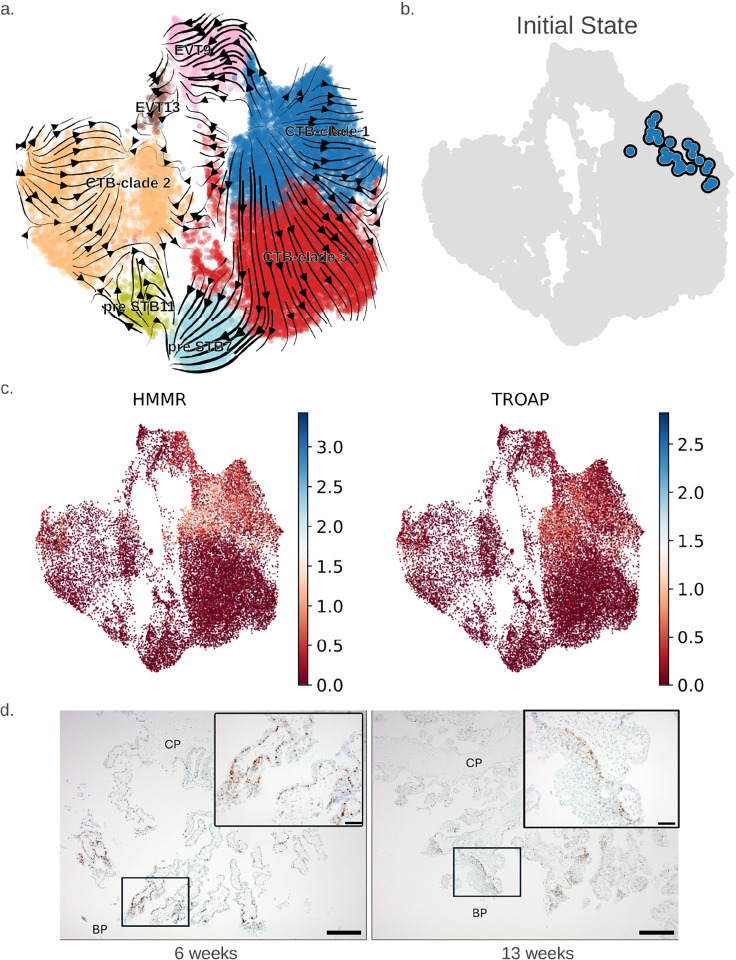 Figure 2
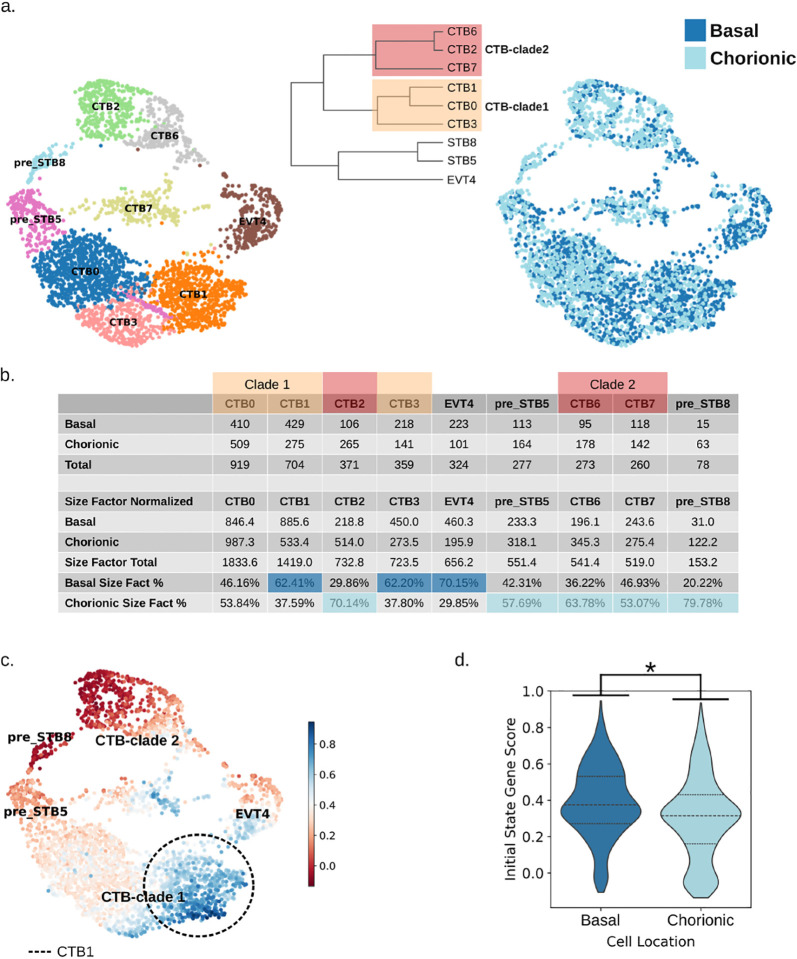 Figure 3
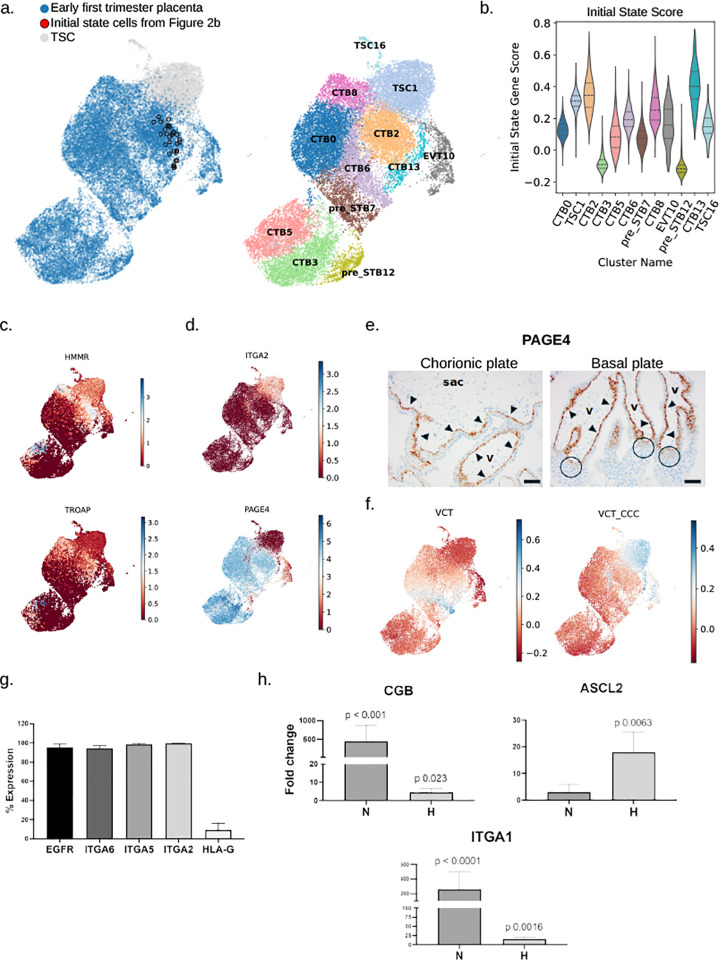 Figure 4
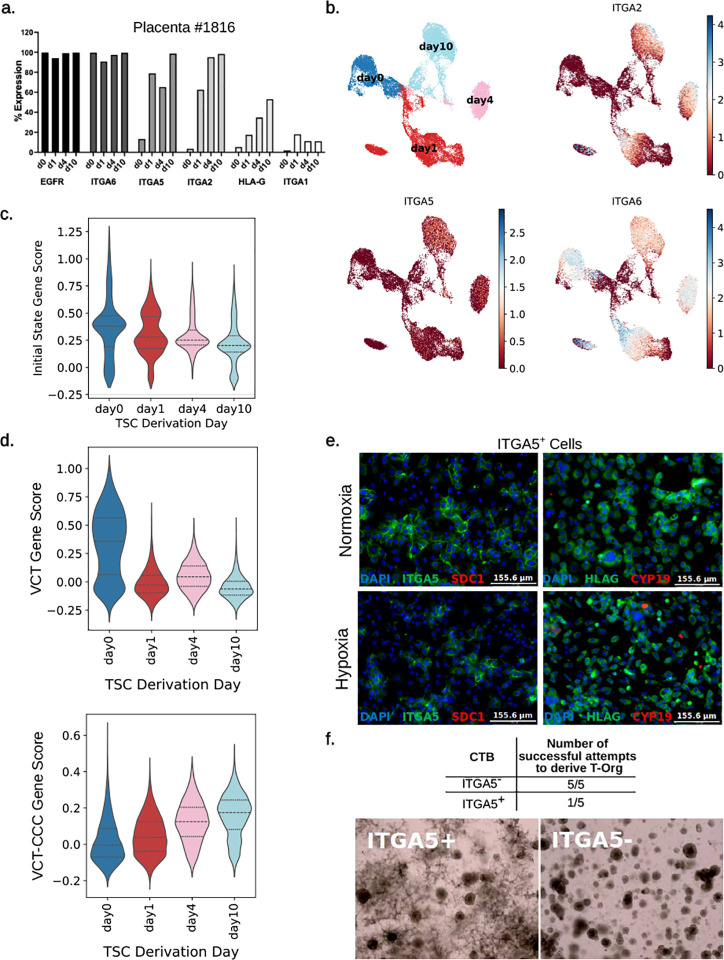 Figure 5
Peer Reviews
No public reviews on file for this paper yet. If you reviewed it on a platform where reviews are public (OpenReview, ICLR, NeurIPS, ICML), you can paste yours below so the community can read it here.
Videos
No videos yet. Explain this paper in a talk, walkthrough, or lecture? Add one.
Taxonomy
TopicsPregnancy and preeclampsia studies