Breast carcinomas associated with microglandular adenosis are linked to germline alterations in homologous recombination-deficiency genes
Christopher J. Schwartz, Iskender Genco, Matteo Repetto, Daniel Muldoon, Andrea Gazzo, Panieh Terraf, Anne Grabenstetter, Dara Ross, Hong Zhang, Diana Mandelker, Simon Powell, Britta Weigelt, Chaitanya Bandlamudi, Edi Brogi, Fresia Pareja, Hannah Y. Wen

TL;DR
A rare type of triple-negative breast cancer linked to microglandular adenosis is often associated with genetic mutations in HRD genes, suggesting potential for targeted therapies.
Contribution
This study identifies a high frequency of germline HRD gene mutations in IBC-MGA, a rare breast cancer subtype.
Findings
42% of patients had germline pathogenic variants in HRD genes, mostly in BRCA1.
Tumors showed TP53 mutations and high HRD scores, indicating homologous recombination deficiency.
No significant clinicopathologic differences were found between germline HRD-associated and sporadic cases.
Abstract
Invasive breast carcinomas associated with microglandular adenosis (IBC-MGA) represent a rare and poorly characterized form of triple-negative breast cancer (TNBC). We analyzed clinical, pathological, and germline genetic data from 38 patients, including 34 IBC-MGAs and 4 in situ cases. Germline pathogenic or likely pathogenic variants in homologous recombination-deficiency (HRD) genes were found in 42% (16/38) of patients, predominantly in BRCA1 (81%, 13/16). Most tumors were grade 3 invasive ductal or metaplastic carcinomas with limited tumor-infiltrating lymphocytes. No significant clinicopathologic differences were observed between germline HRD-associated and sporadic cases. Paired tumor-normal targeted sequencing revealed frequent TP53 mutations and high HRD scores. These findings underscore the relationship of breast carcinomas associated with MGA with HRD-related germline…
Genes, proteins, chemicals, diseases, species, mutations and cell lines named across the full text — each resolved to its canonical identifier and authoritative record.
Click any figure to enlarge with its caption.
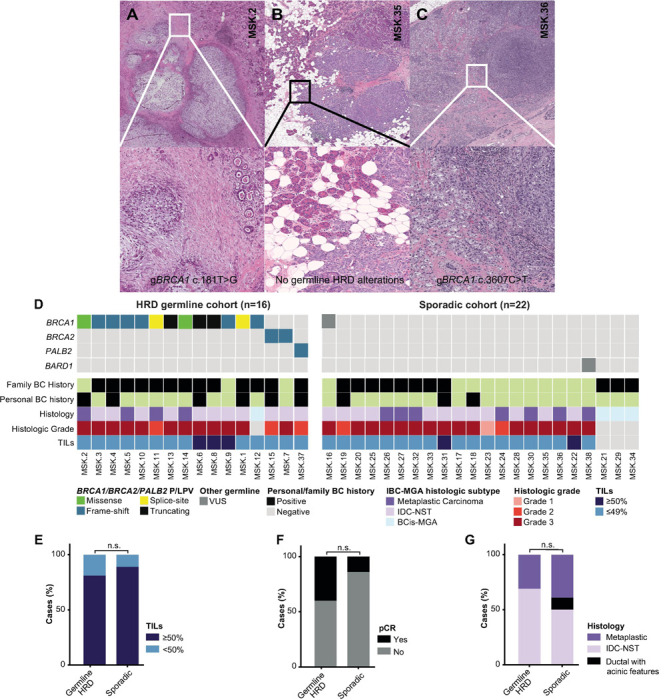 Figure 1
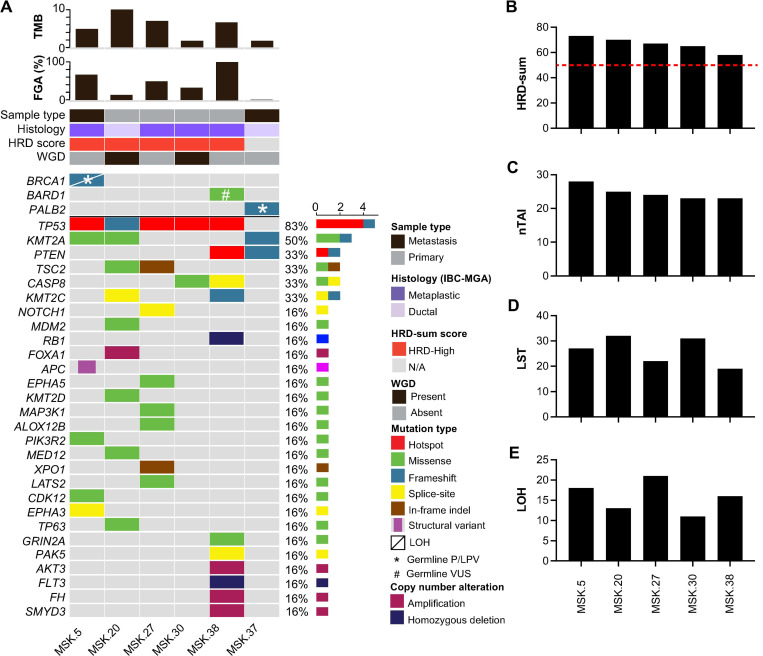 Figure 2
Peer Reviews
No public reviews on file for this paper yet. If you reviewed it on a platform where reviews are public (OpenReview, ICLR, NeurIPS, ICML), you can paste yours below so the community can read it here.
Videos
No videos yet. Explain this paper in a talk, walkthrough, or lecture? Add one.
Taxonomy
TopicsPARP inhibition in cancer therapy · RNA modifications and cancer · Cancer-related Molecular Pathways