Factors associated with women’s preference for an over-encapsulated Dual Prevention Pill: Findings from two clinical crossover trials among women in South Africa and Zimbabwe
Sanyukta Mathur, Marlena Plagianos, Barbara Friedland, Irene Bruce, Brady Burnett-Zieman, Adlight Dandazi, Petina Musara, Nkosiphile Ndlovu, Natasha Sedze, Siyanda Tenza, Krishnaveni Reddy, Shile Zulu, Lisa Haddad, Caroline Murombedzi, Nyaradzo Mgodi, Thesla Palanee-Philips

TL;DR
This study explores why women in South Africa and Zimbabwe prefer a combined pill for HIV and pregnancy prevention, finding that factors like relationship dynamics and ease of use influence their choices.
Contribution
The study identifies distinct behavioral, social, and structural factors influencing preference for a dual prevention pill in two African countries.
Findings
DPP preference was higher in Zimbabwe (62%) compared to South Africa (39%).
In South Africa, DPP preference was linked to behavioral factors and product characteristics like ease of use.
In Zimbabwe, HIV concerns and structural factors like housing security were key drivers of DPP preference.
Abstract
A dual prevention pill (DPP) for co-delivery of pregnancy and HIV prevention is currently in development and will offer an alternative to taking two separate products. We examined behavioral, partnership/interpersonal, social, and structural correlates of preferences for an over-encapsulated DPP (as a proxy for the product in development, consisting of oral contraceptive pill and oral PrEP pill) among women and adolescent girls in South Africa and Zimbabwe to inform DPP introduction and counseling strategies. This secondary analysis used data from two clinical crossover studies that compared the acceptability, adherence, and preference for the over-encapsulated DPP versus separate PrEP and oral contraceptives. HIV-uninfected, non-pregnant cisgender women were enrolled in Johannesburg, South Africa (n = 96, ages 18–40) and Harare, Zimbabwe (n = 30, ages 16—24). Participants were…
Genes, proteins, chemicals, diseases, species, mutations and cell lines named across the full text — each resolved to its canonical identifier and authoritative record.
Click any figure to enlarge with its caption.
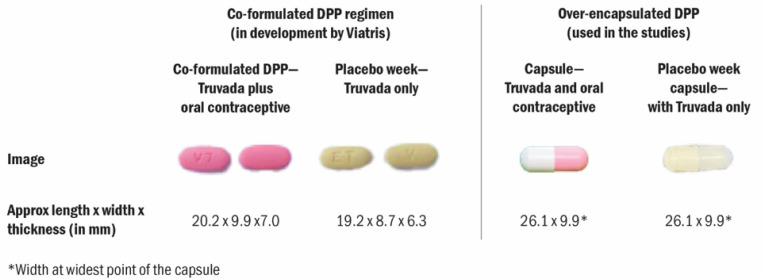 Figure 1
Peer Reviews
No public reviews on file for this paper yet. If you reviewed it on a platform where reviews are public (OpenReview, ICLR, NeurIPS, ICML), you can paste yours below so the community can read it here.
Videos
No videos yet. Explain this paper in a talk, walkthrough, or lecture? Add one.
Taxonomy
TopicsHIV/AIDS Research and Interventions · Global Maternal and Child Health · Adolescent Sexual and Reproductive Health