Differential contribution of working memory to auditory rhythm discrimination in stuttering and nonstuttering adults
Emily Garnett, Toni Smith, Bailey Rann, Nicholas Mularoni, Soo-Eun Chang, J. Devin McAuley

TL;DR
Adults who stutter may use working memory to compensate for rhythm perception difficulties linked to brain network differences.
Contribution
The study identifies a working memory-dependent timing mechanism in adults who stutter for rhythm discrimination.
Findings
AWS showed stronger working memory-rhythm discrimination correlations than controls.
AWS with low working memory performed worse in rhythm discrimination than controls.
AWS with high working memory matched controls in rhythm discrimination performance.
Abstract
Stuttering is a neurodevelopmental condition characterized by involuntary disruptions in the rhythmic flow of speech. Notably, stuttering is associated with aberrant structure and function of the basal ganglia thalamocortical network. Separately, the BGTC network has been implicated in non-speech beat and rhythm perception. Supporting a link between the two sets of findings, children who stutter exhibit poorer auditory rhythm discrimination compared to non-stutterers, especially for complex rhythms without a consistently marked beat. For adults who stutter (AWS), data showing a link between stuttering and poorer auditory rhythm discrimination has been mixed. One possible reason may be that AWS have developed strategies for rhythm discrimination that leverage an alternative non-BGTC network dependent timing mechanism. One candidate from the timing literature is the use of an…
Genes, proteins, chemicals, diseases, species, mutations and cell lines named across the full text — each resolved to its canonical identifier and authoritative record.
Click any figure to enlarge with its caption.
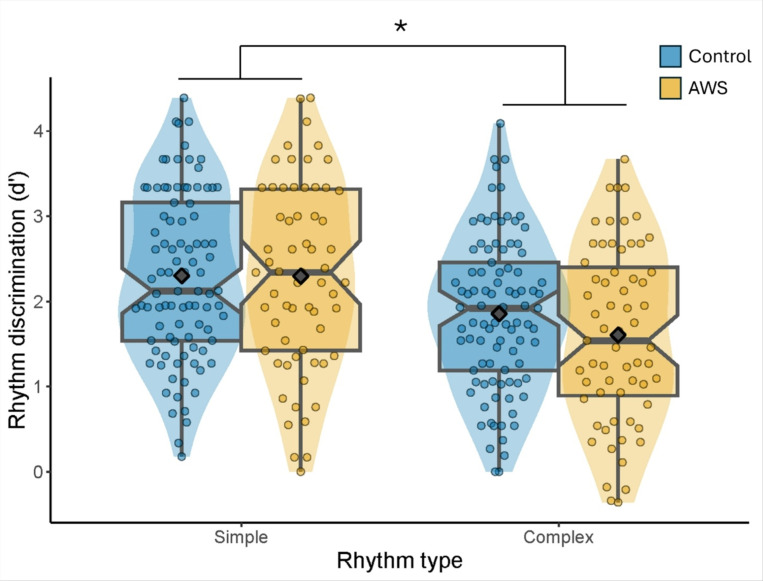 Figure 1
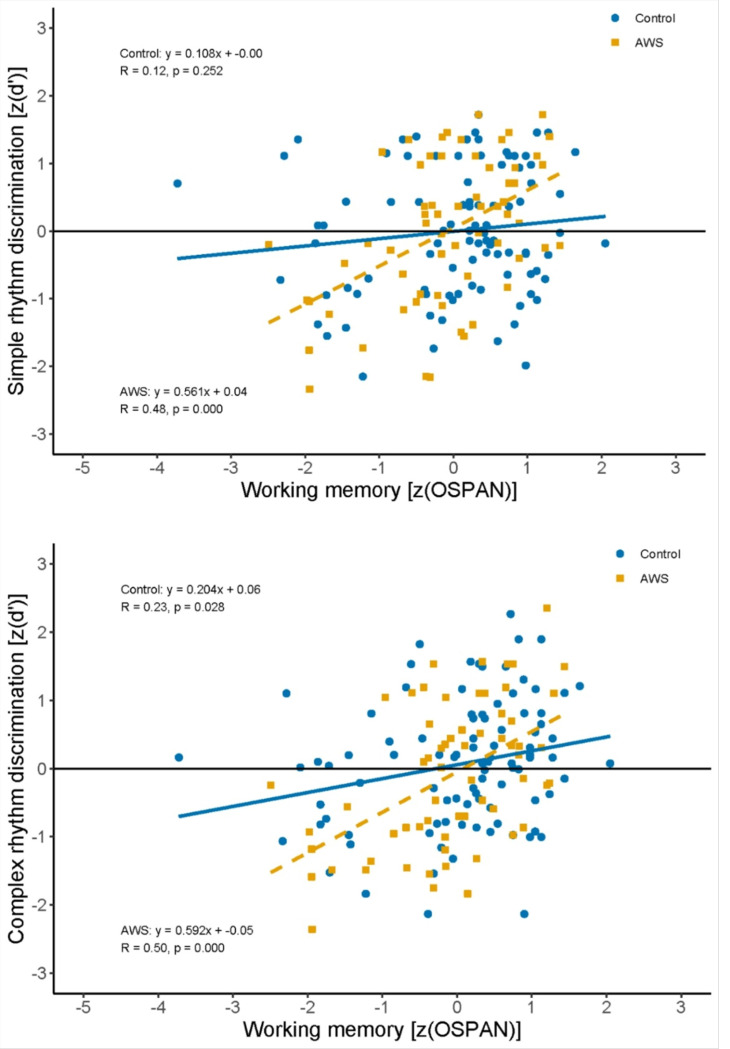 Figure 2
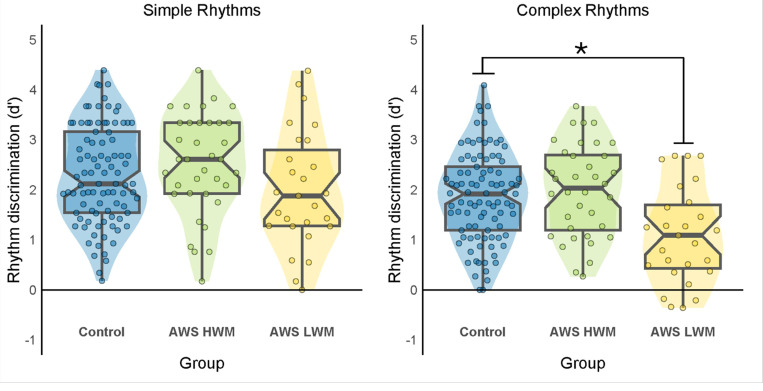 Figure 3
Peer Reviews
No public reviews on file for this paper yet. If you reviewed it on a platform where reviews are public (OpenReview, ICLR, NeurIPS, ICML), you can paste yours below so the community can read it here.
Videos
No videos yet. Explain this paper in a talk, walkthrough, or lecture? Add one.
Taxonomy
TopicsStuttering Research and Treatment · Phonetics and Phonology Research · Neuroscience and Music Perception