Stationary Population Dynamics Reveal a Structural Typology of Global Aging: A Binary Model Approach Across 195 Countries
James R. Carey, Arni S. R. Srinivasa Rao

TL;DR
This paper introduces a new way to classify global population aging using a binary model across 195 countries, revealing patterns and future trends in demographic shifts.
Contribution
The novel Binary Population Pair framework provides a unified structural typology of aging by integrating multiple demographic dimensions.
Findings
A five-stage demographic succession model classifies countries from Youth Dominance to Age Dominance.
A convergence toward structural stationarity is projected by 2100 with increasing gerontic population profiles.
The 'Demographic Vortex' concept describes populations in a feedback loop of low fertility and aging.
Abstract
This study presents a unified structural typology of global population aging using a novel Binary Population Pair framework. Grounded in the Stationary Population Identity, the approach pairs each observed national population with its stationary counterpart to quantify deviations across three core dimensions: age structure, population momentum, and longevity gains. Leveraging new comparative metrics, including the Lifespan Parity Ratio, Stationarity Gap, Terminal Dependency Ratio, Survival Offset, and Net Structural Aging, the study classifies 195 countries into a five-stage demographic succession model, from Youth Dominance to Age Dominance, with a transitional Youth-Age Crossover at the midpoint. Results reveal a broad convergence toward structural stationarity by 2100, as countries transition from youthful to increasingly gerontic profiles. A post-successional condition, the…
Genes, proteins, chemicals, diseases, species, mutations and cell lines named across the full text — each resolved to its canonical identifier and authoritative record.
Click any figure to enlarge with its caption.
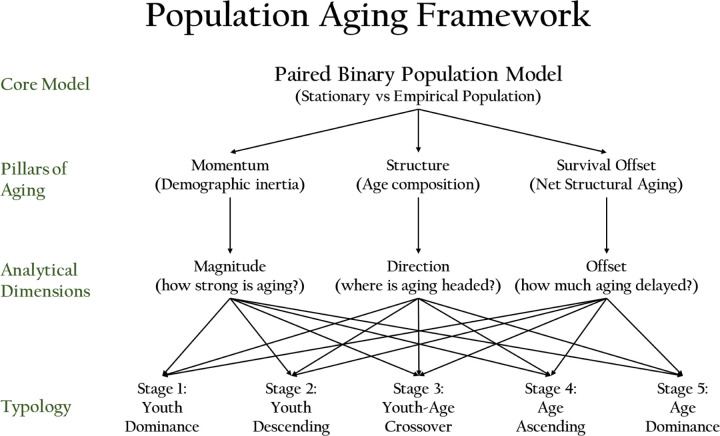 Figure 1
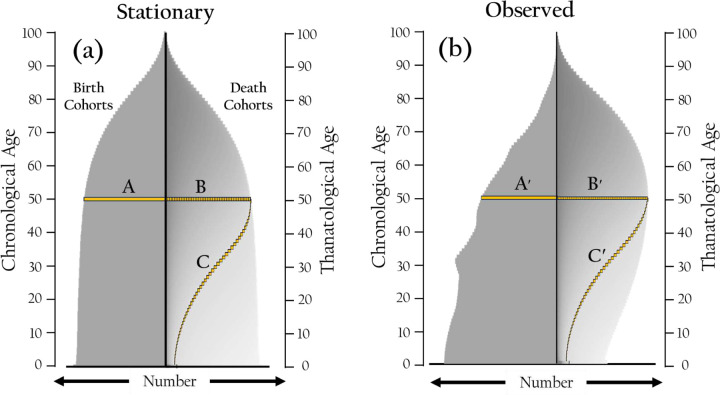 Figure 2
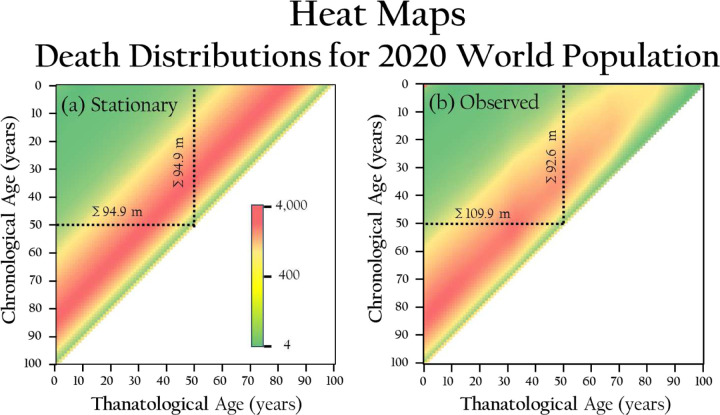 Figure 3
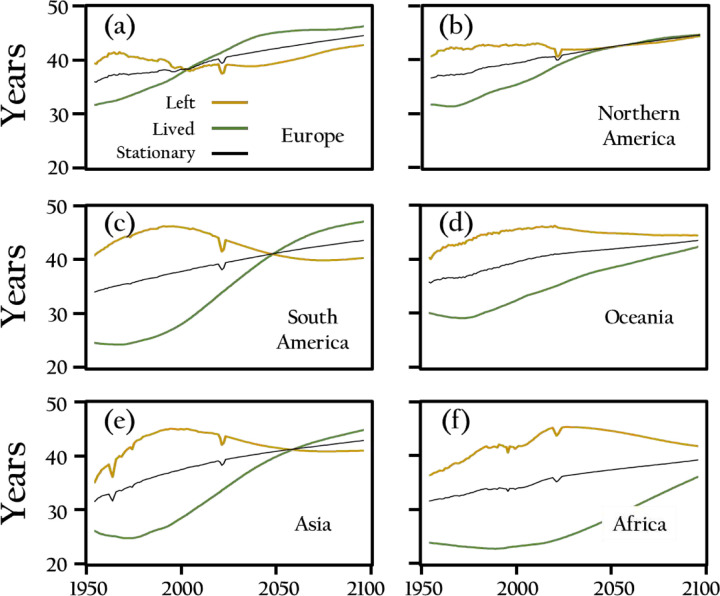 Figure 4
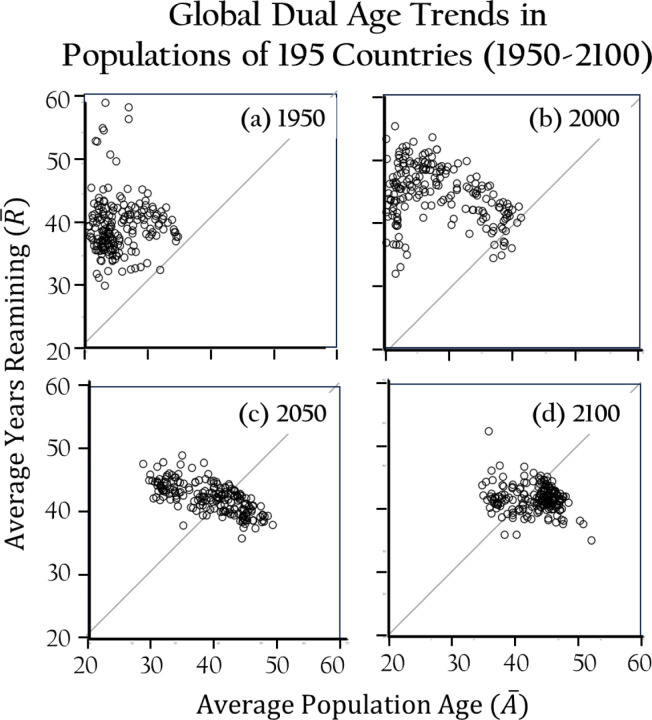 Figure 5
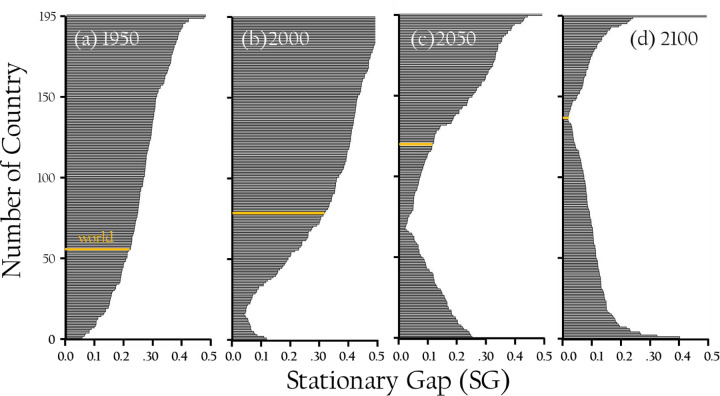 Figure 6
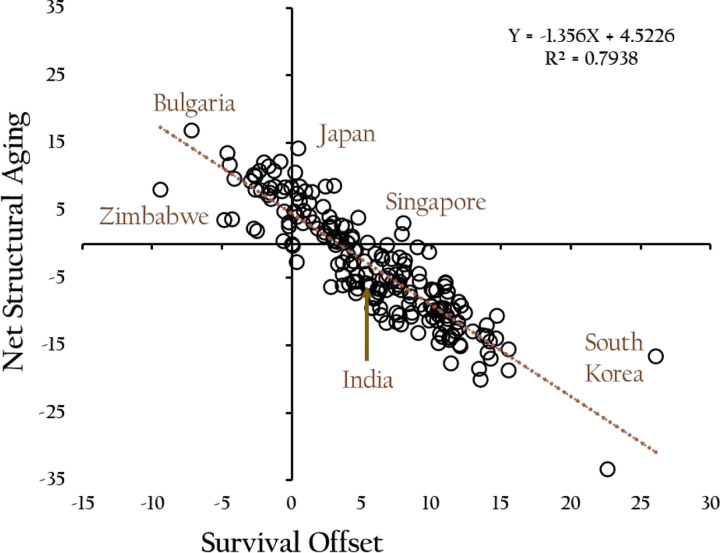 Figure 7
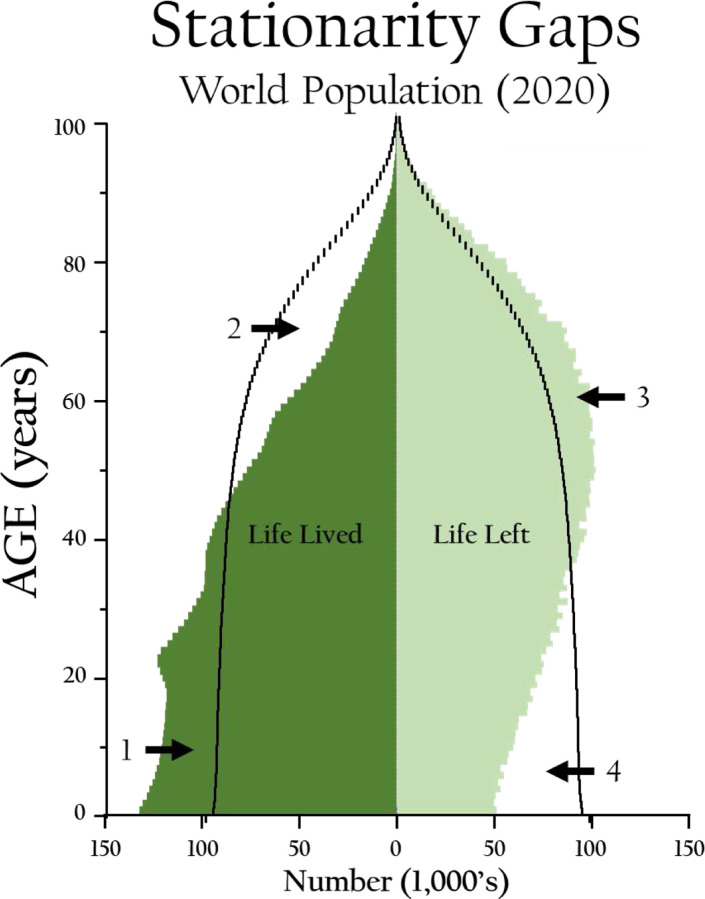 Figure 8
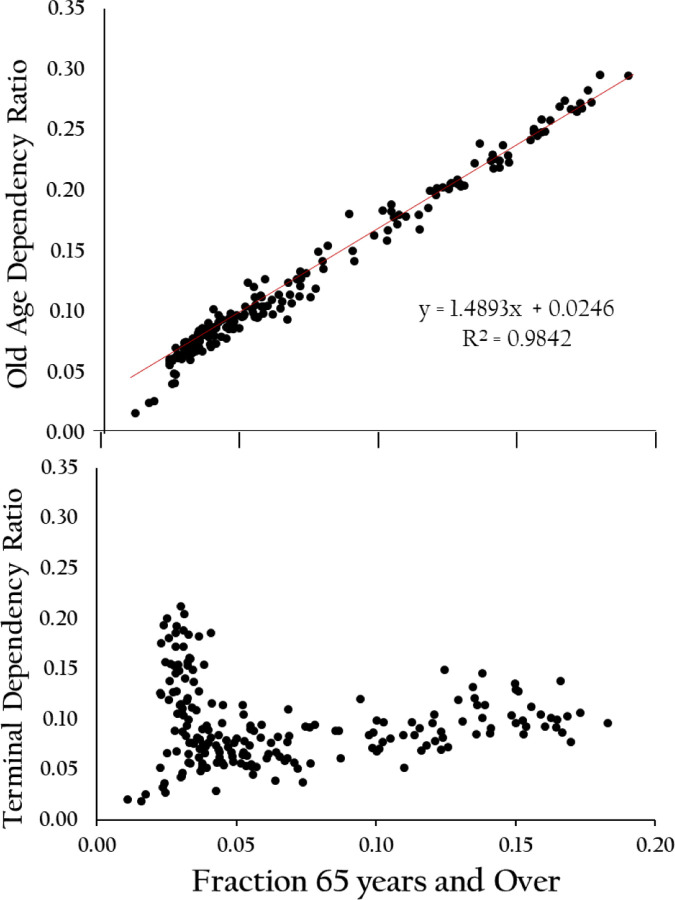 Figure 9
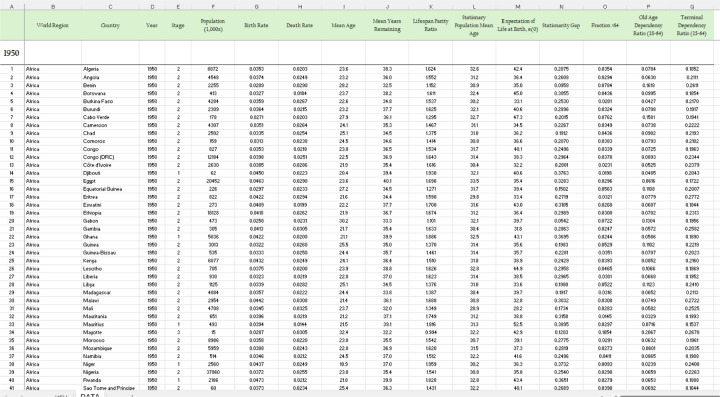 Figure 10
Peer Reviews
No public reviews on file for this paper yet. If you reviewed it on a platform where reviews are public (OpenReview, ICLR, NeurIPS, ICML), you can paste yours below so the community can read it here.
Videos
No videos yet. Explain this paper in a talk, walkthrough, or lecture? Add one.
Taxonomy
TopicsInsurance, Mortality, Demography, Risk Management · Global Health Care Issues