Highly replicating hepatitis C virus variants emerge in immunosuppressed patients causing severe disease
Volker Lohmann, Paul Rothhaar, Christian Heuss, Margaret Tulessin, Zhiqing Wang, Ha Gyu-Thomas Seong, Colin Förster, Jocelyn Quistrebert, Haiting Chai, Marvin Reineke, Louise Benning, Jonathan Honegger, Maike Hofmann, Robert Thimme, Jörg Timm, Graham Cooke, Paul Schnitzler

TL;DR
This study shows that certain hepatitis C virus variants replicate more efficiently and are linked to severe disease in immunosuppressed patients.
Contribution
The discovery of a replication-enhancing domain in HCV's nonstructural protein 5A that correlates with severe disease outcomes in specific patient groups.
Findings
A replication-enhancing domain (ReED) in HCV NS5A was identified, which increases viral replication fitness.
High replicator variants were found exclusively in liver transplant patients with severe disease outcomes.
High replicator genomes are enriched in patients with liver transplants, hepatocellular carcinoma, and HIV co-infection.
Abstract
Hepatitis C virus (HCV) exists as a heterogenous quasispecies, but the phenotypic consequences of viral variability are widely unexplored. Here we identified a replication enhancing domain (ReED) in nonstructural protein 5A conferring high replication fitness to clinical isolates. Accumulation of mutations in the ReED mediates high genome replication capacity. In a cohort of liver transplant patients, high replicator variants were exclusively found in individuals with severe disease outcome, suggesting that high viral replication fitness is associated with increased viral pathogenesis. Analysis of large sequence cohorts revealed that overall only 10% of viral genomes showed genetic signatures of high replicators, which were enriched in recipients of liver transplantations, patients developing hepatocellular carcinoma and in HIV coinfected individuals. Overall, our data suggests that low…
Genes, proteins, chemicals, diseases, species, mutations and cell lines named across the full text — each resolved to its canonical identifier and authoritative record.
Click any figure to enlarge with its caption.
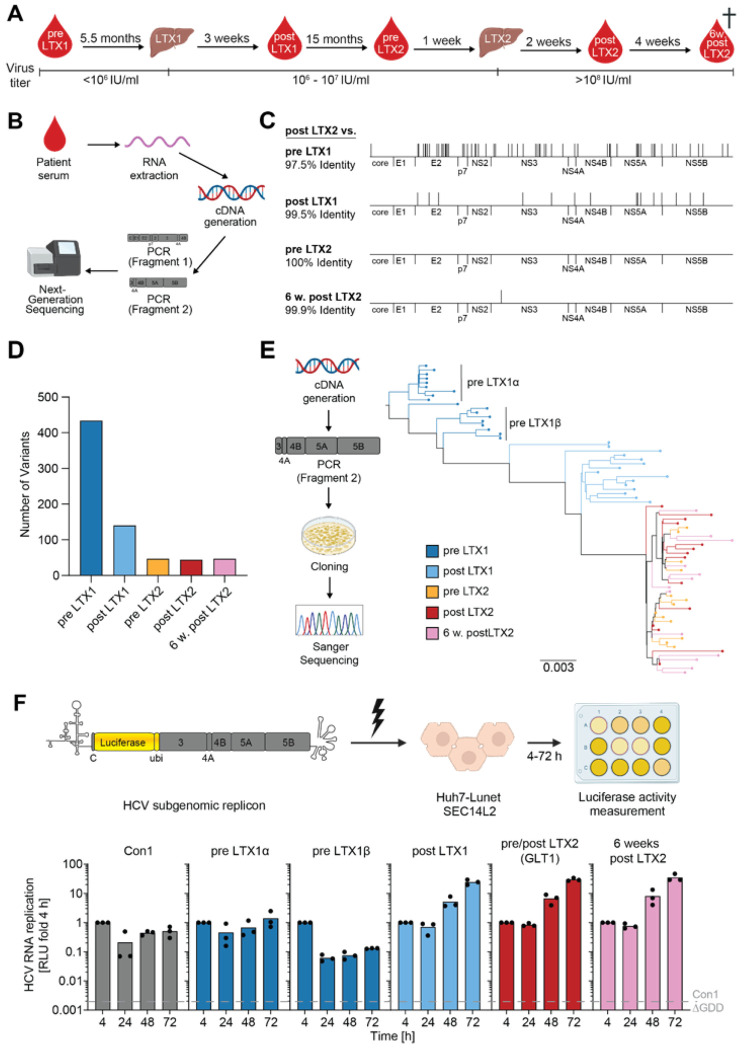 Figure 1
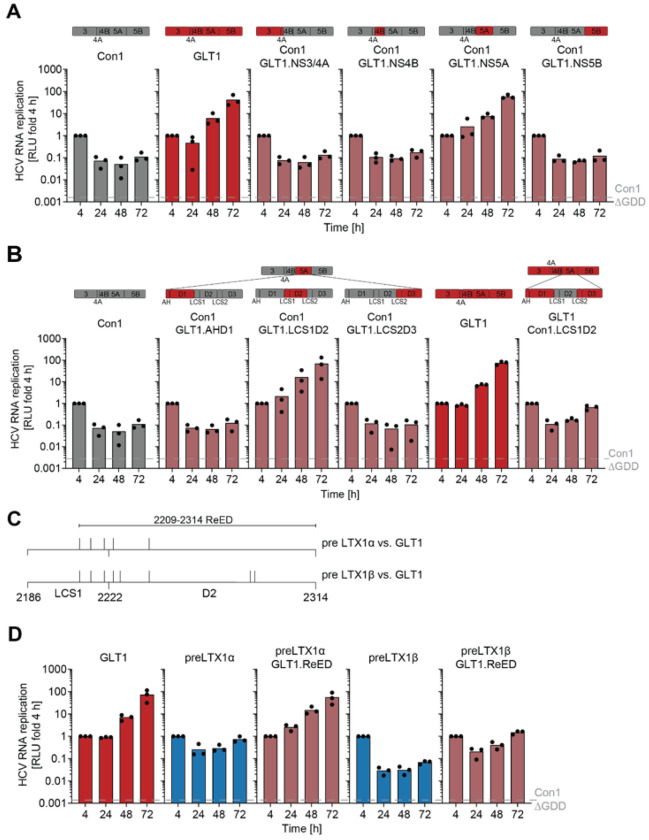 Figure 2
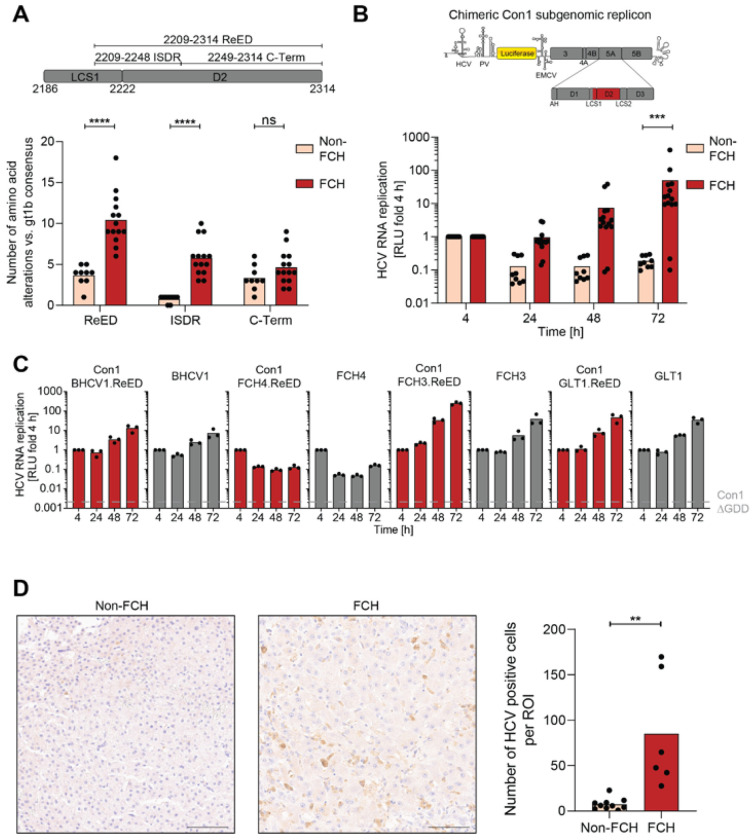 Figure 3
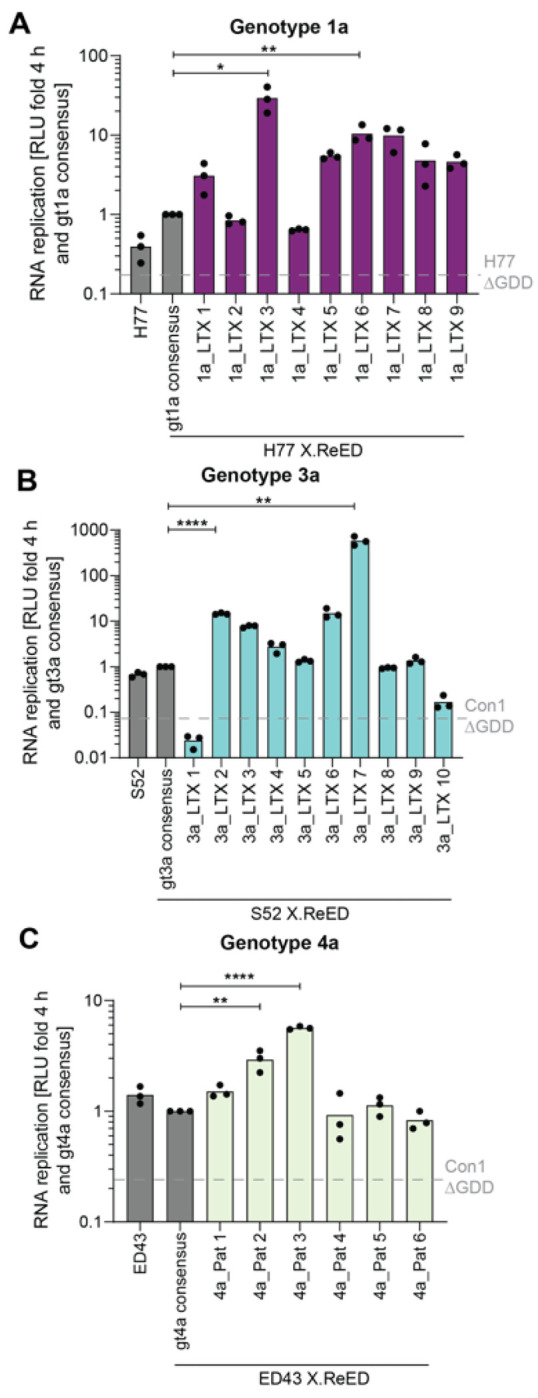 Figure 4
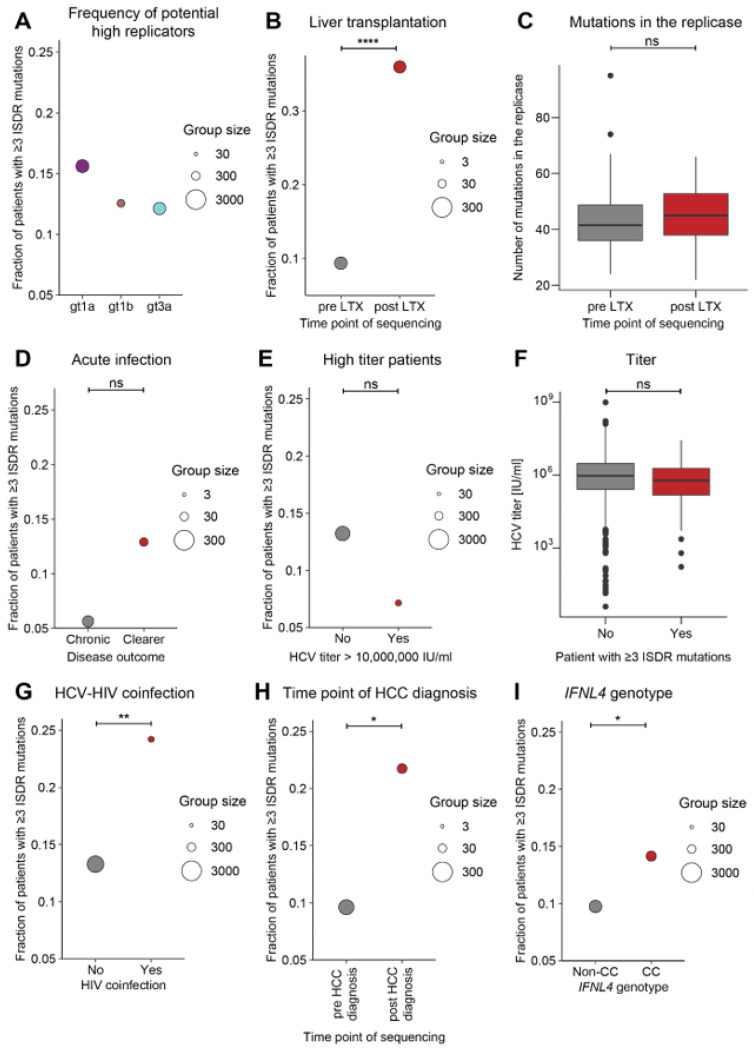 Figure 5
Peer Reviews
No public reviews on file for this paper yet. If you reviewed it on a platform where reviews are public (OpenReview, ICLR, NeurIPS, ICML), you can paste yours below so the community can read it here.
Videos
No videos yet. Explain this paper in a talk, walkthrough, or lecture? Add one.
Taxonomy
TopicsHepatitis C virus research · HIV Research and Treatment · Evolution and Genetic Dynamics