Why AGG is associated with high transgene output: passenger effects and their implications for transgene design
Kate G Daniels, Sofia Radrizzani, Laurence D Hurst

TL;DR
The study investigates why AGG codon is linked to high protein output in some experiments but not others, revealing design biases affect results.
Contribution
The novelty lies in identifying non-random construct design as a source of conflicting results in transgene efficiency studies.
Findings
AGG's association with high output in one experiment is an artefact due to biased codon co-occurrence.
High translational adaptation in the first 10 codons weakly predicts higher efficiency in less biased constructs.
Non-random design in experiments limits reproducibility of transgene efficiency findings.
Abstract
In bacteria, high A and low G content of the 5′ end of the coding sequence (CDS) promotes low RNA stability, facilitating ribosomal initiation and subsequently a high protein to transcript ratio. Additionally, 5′ NGG codons are suppressive owing to peptidyl-tRNA drop off. It was, therefore, surprising that the first large-scale transgene experiment to interrogate the 5′ effect by codon randomization found the NGG, G-rich codon AGG to be the most associated with high transgene output. Why is this? We show that this is not replicated in other large transgene datasets, where AGG and NGG are associated with low efficiency. More generally, there is limited agreement between the first experiment and others. This we find to be a consequence of non-random construct design. In constructs of the first experiment, AGG disproportionately occurs with non-AGG codons associated with low stability and…
Genes, proteins, chemicals, diseases, species, mutations and cell lines named across the full text — each resolved to its canonical identifier and authoritative record.
Click any figure to enlarge with its caption.
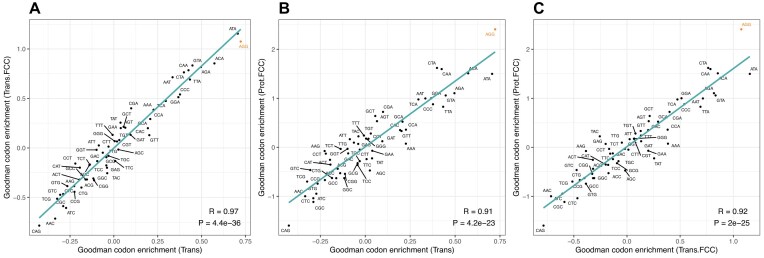 Figure 1
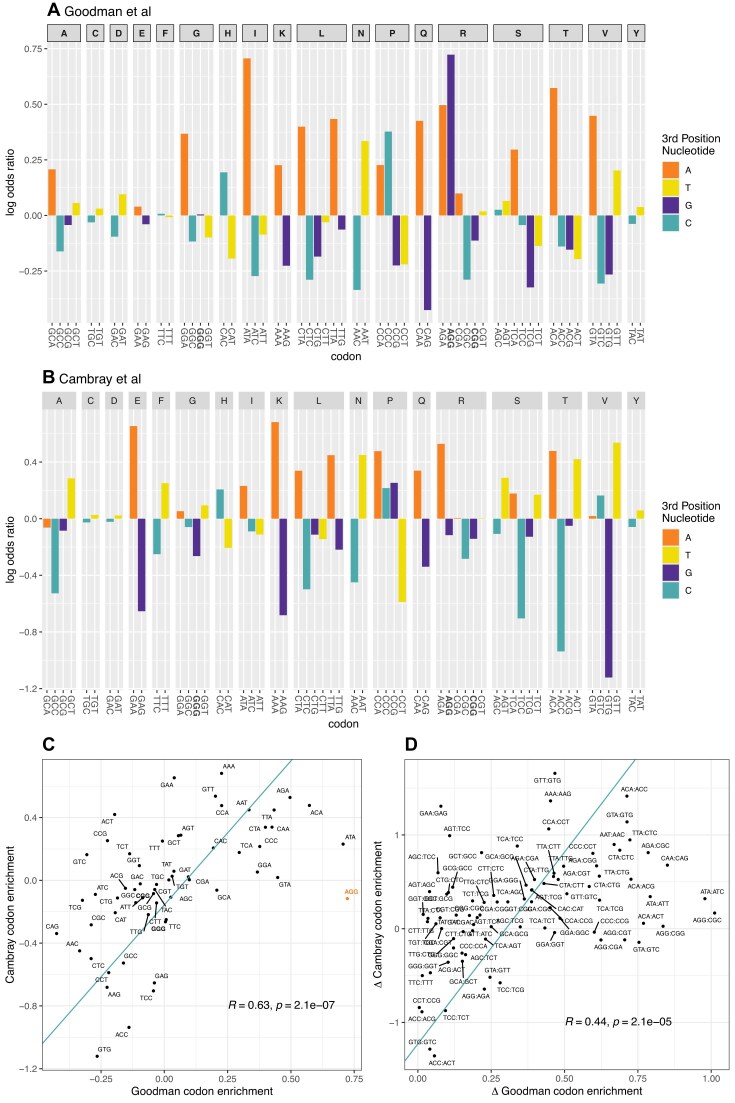 Figure 2
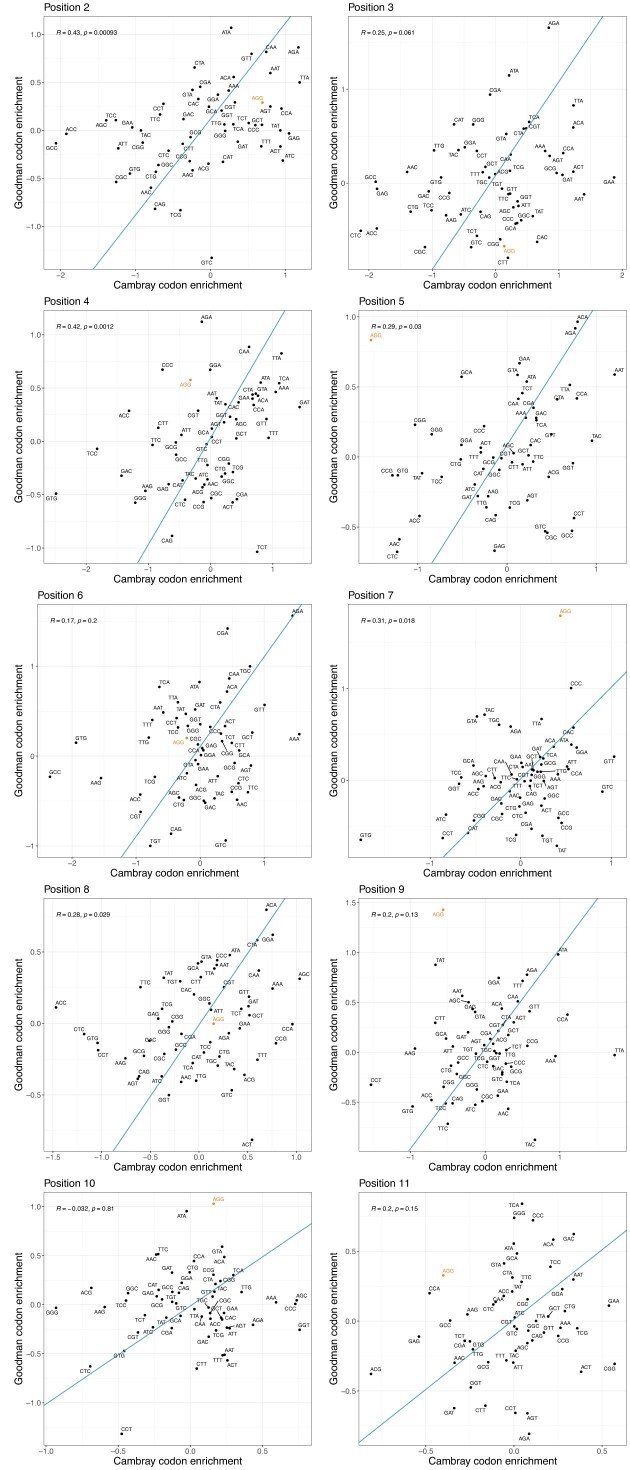 Figure 3
 Figure 4
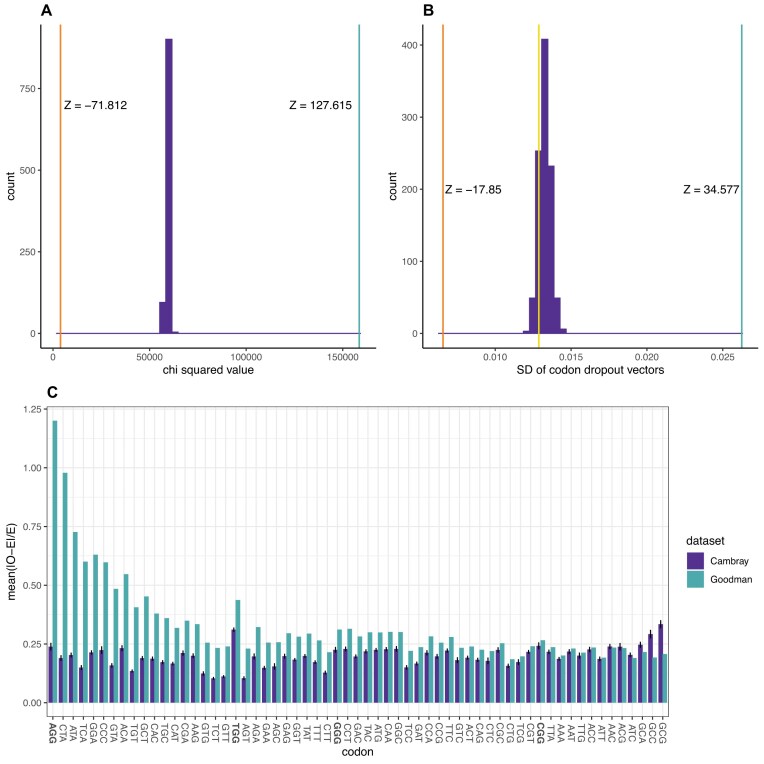 Figure 5
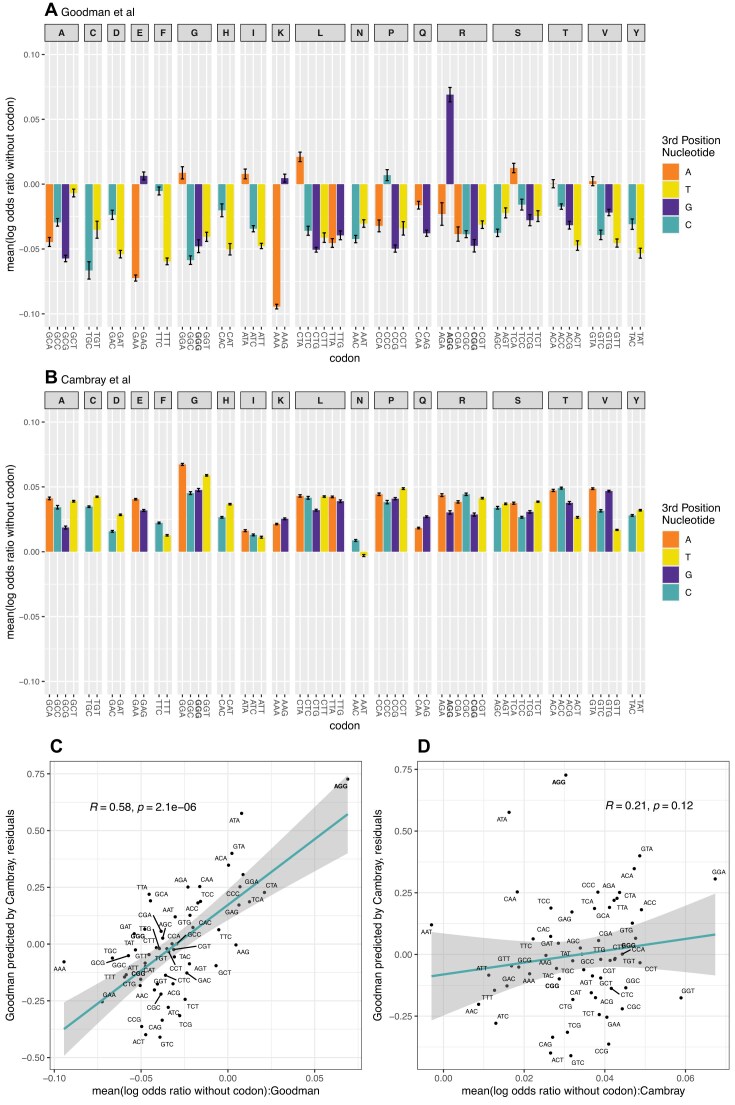 Figure 6
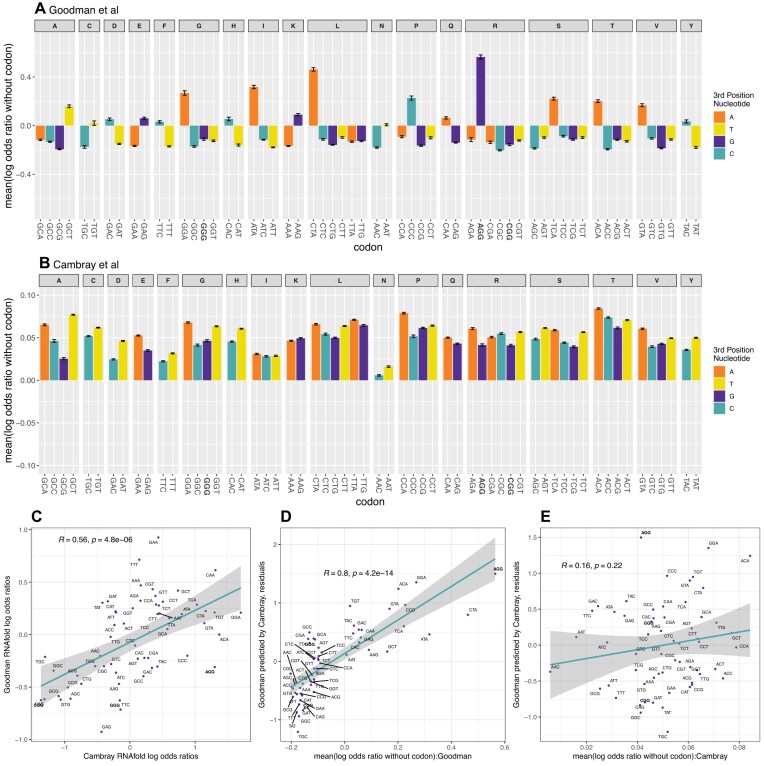 Figure 7
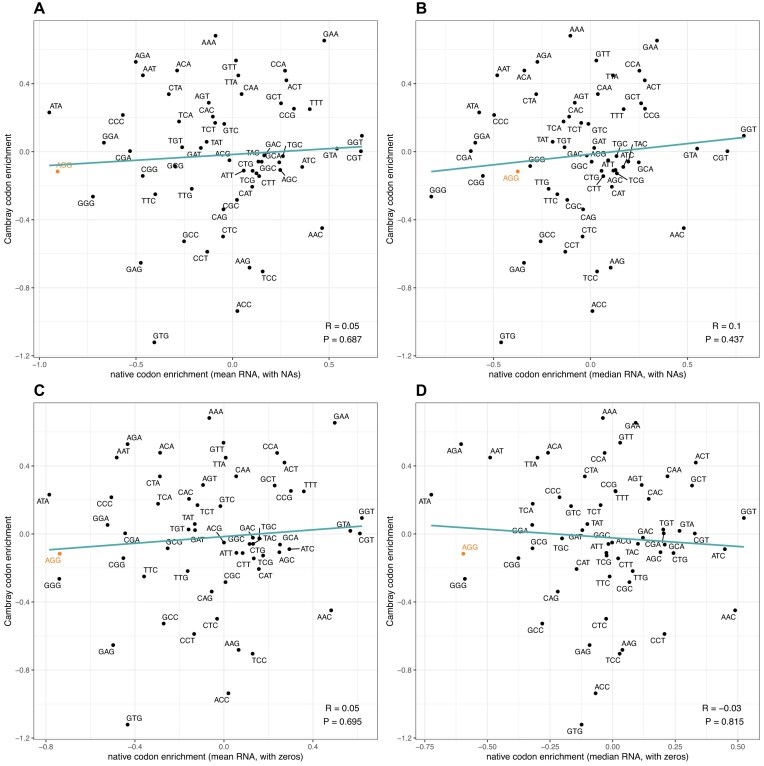 Figure 8
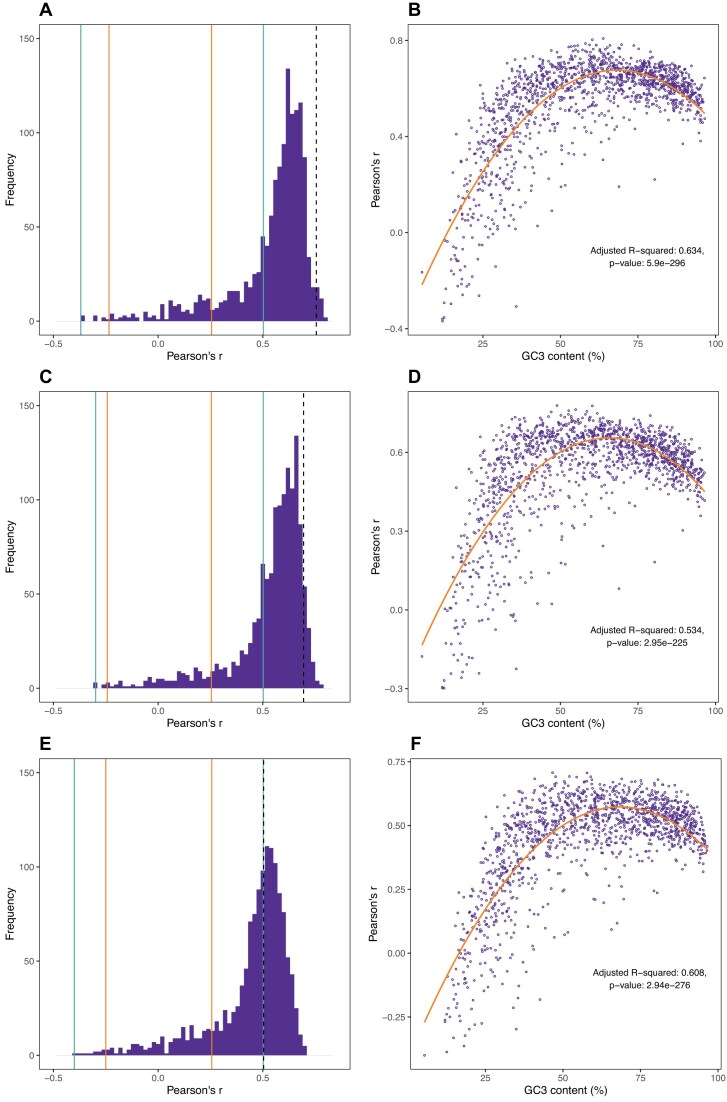 Figure 9
Peer Reviews
No public reviews on file for this paper yet. If you reviewed it on a platform where reviews are public (OpenReview, ICLR, NeurIPS, ICML), you can paste yours below so the community can read it here.
Videos
No videos yet. Explain this paper in a talk, walkthrough, or lecture? Add one.
Taxonomy
TopicsRNA and protein synthesis mechanisms · Bacterial Genetics and Biotechnology · Genomics and Phylogenetic Studies