Cerebellar pathology contributes to neurodevelopmental deficits in spinal muscular atrophy
Florian Gerstner, Sandra Wittig, Christian Menedo, Sayan Ruwald, Maria J Carlini, Adela Vankova, Leonie Sowoidnich, Gerardo Martín-López, Vanessa Dreilich, Andrea Alonso Collado, John G Pagiazitis, Oumayma Aousji, Chloe Grzyb, Amy Smith, Mu Yang, Francesco Roselli

TL;DR
The study shows that cerebellar dysfunction contributes to motor and communication issues in spinal muscular atrophy, beyond motor neuron loss.
Contribution
The study reveals cerebellar pathology in SMA, including Purkinje cell death and impaired communication, independent of spinal motor issues.
Findings
Cerebellar pathology, including Purkinje cell death, is observed in SMA patients and mouse models.
Impaired ultrasonic vocalization in SMA mice suggests cerebellar involvement in social communication.
Cerebellar dysfunction contributes to motor and communication deficits independently of spinal issues.
Abstract
Spinal muscular atrophy (SMA) is a neuromuscular disease characterized by ubiquitous SMN deficiency and loss of motor neurons. The persistence of motor and communication impairments, together with emerging cognitive and social deficits in severe Type I SMA patients treated early with SMN-restoring therapies, suggests a broader dysfunction involving neural circuits of the brain. To explore the potential supraspinal contributions to these emerging phenotypes, we investigated the cerebellum, a brain region critical for both motor and cognitive behaviors. Here, we identify cerebellar pathology in both post-mortem tissue from Type I SMA patients and a severe mouse model, which is characterized by lobule-specific Purkinje cell (PC) death driven by cell-autonomous, non-apoptotic p53-dependent mechanisms. Loss and dysfunction of excitatory parallel fiber synapses onto PC further contribute to…
Genes, proteins, chemicals, diseases, species, mutations and cell lines named across the full text — each resolved to its canonical identifier and authoritative record.
Click any figure to enlarge with its caption.
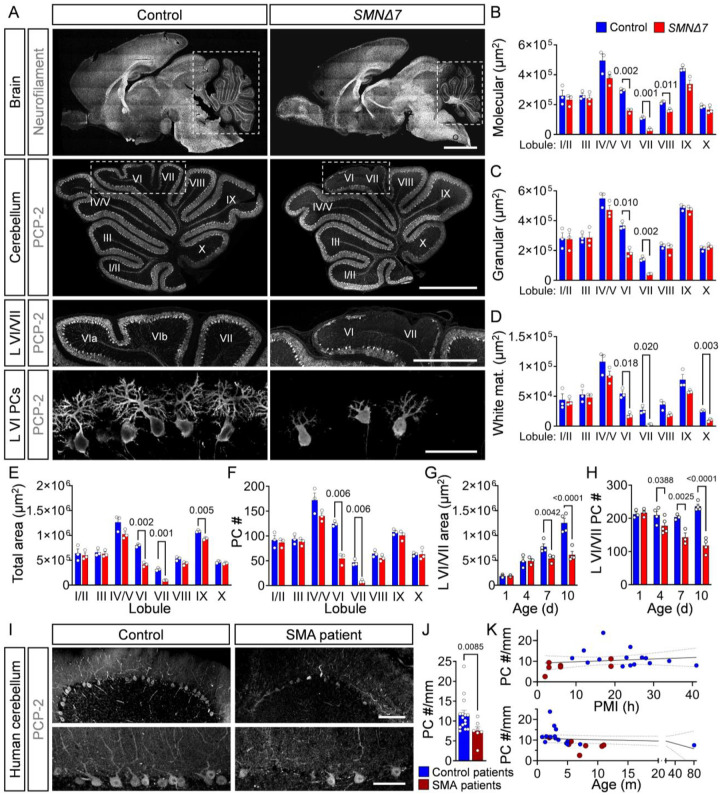 Figure 1
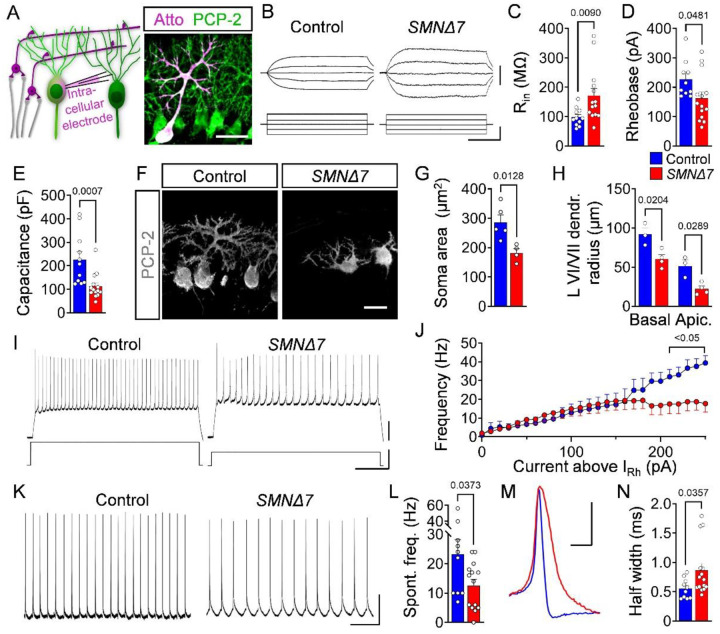 Figure 2
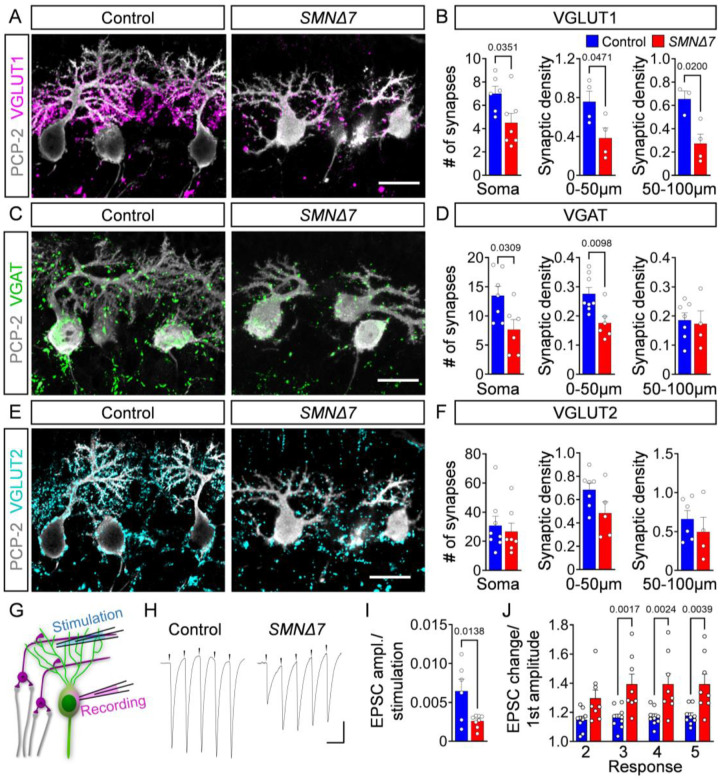 Figure 3
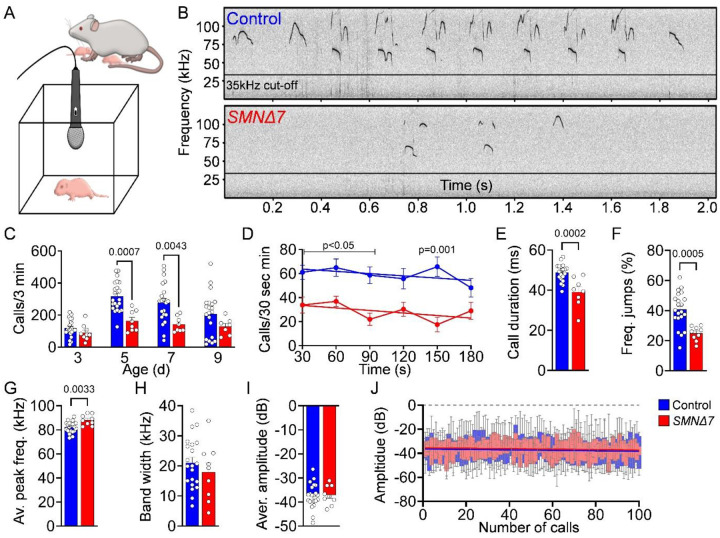 Figure 4
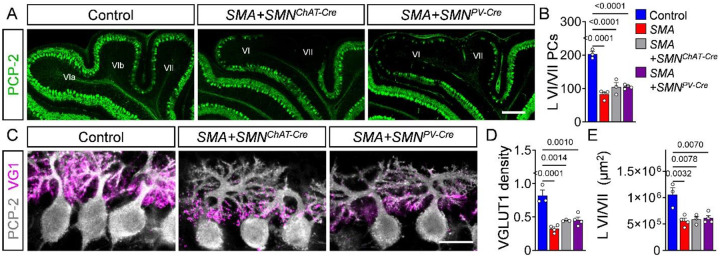 Figure 5
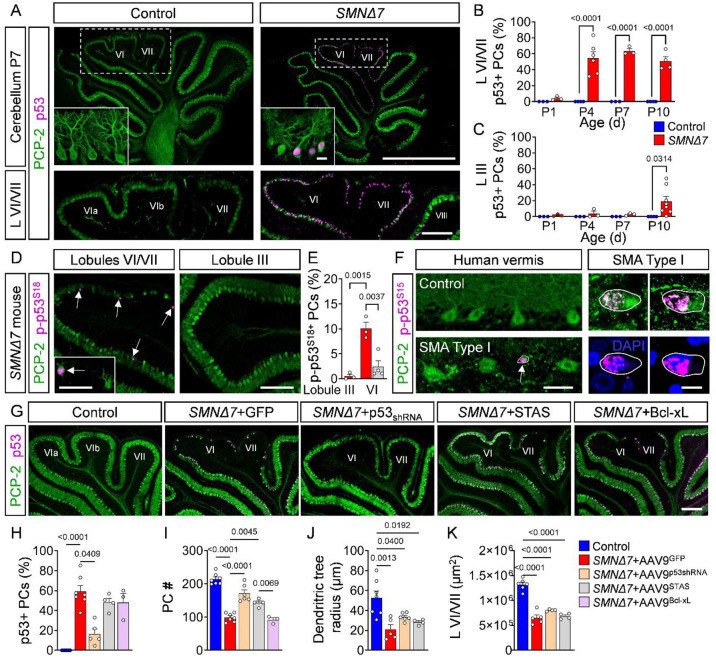 Figure 6
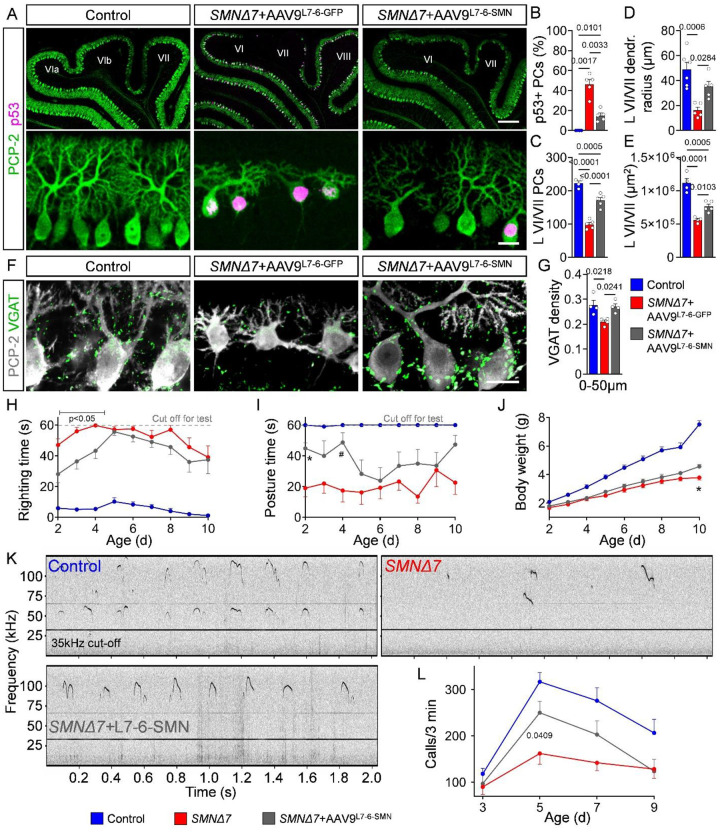 Figure 7
Peer Reviews
No public reviews on file for this paper yet. If you reviewed it on a platform where reviews are public (OpenReview, ICLR, NeurIPS, ICML), you can paste yours below so the community can read it here.
Videos
No videos yet. Explain this paper in a talk, walkthrough, or lecture? Add one.
Taxonomy
TopicsNeurogenetic and Muscular Disorders Research · Genetics and Neurodevelopmental Disorders · RNA modifications and cancer