Targeting Artemis Sensitizes B Cells to Topoisomerase 2 Poisons by Disrupting DNA-PKcs-Dependent Repair
Melissa L. Folkerts, Cameron Hom, Angie Nguyen, Kaiyuan V. Shen, Valeria Rangel, Pedro Ortega, Rémi Buisson, Selma Masri, Noritaka Adachi, Katheryn Meek, Nicholas R. Pannunzio

TL;DR
Blocking Artemis with peposertib makes B cells more sensitive to Top2 poisons, suggesting a new cancer treatment strategy.
Contribution
Artemis inhibition with peposertib enhances Top2 poison efficacy in B cells, revealing a novel therapeutic approach.
Findings
Inhibiting DNA-PKcs with peposertib sensitizes B cells to Top2 poisons by blocking Artemis endonuclease activity.
Artemis loss leads to accumulation of Top2 DNA adducts, indicating a role beyond NHEJ in DNA repair.
High Artemis expression correlates with poor survival in cancers, highlighting its clinical relevance.
Abstract
Topoisomerase 2 (Top2) poisons are widely used in cancer therapy but are associated with toxicity and secondary malignancies. Removing Top2 adducts requires endonuclease activity and repair by non-homologous end joining (NHEJ). We show that the NHEJ enzyme Artemis is a promising target for co-treatment with Top2 poisons. Inhibition of the Artemis activator, DNA-PKcs, with peposertib (M3814) sensitizes B cells to Top2 poisons while ATM or ATR inhibition does not. Interestingly, while M3814 treatment blocks Artemis endonuclease activity, Artemis phosphorylation is still detectible and is only affected upon inhibiting ATM, suggestive of an additional role for Artemis in DNA damage response signaling. Additionally, Artemis loss results in a significant accumulation of Top2 DNA adducts following treatment, indicating Artemis may act outside its canonical role in NHEJ to reduce adduct burden.…
Genes, proteins, chemicals, diseases, species, mutations and cell lines named across the full text — each resolved to its canonical identifier and authoritative record.
Click any figure to enlarge with its caption.
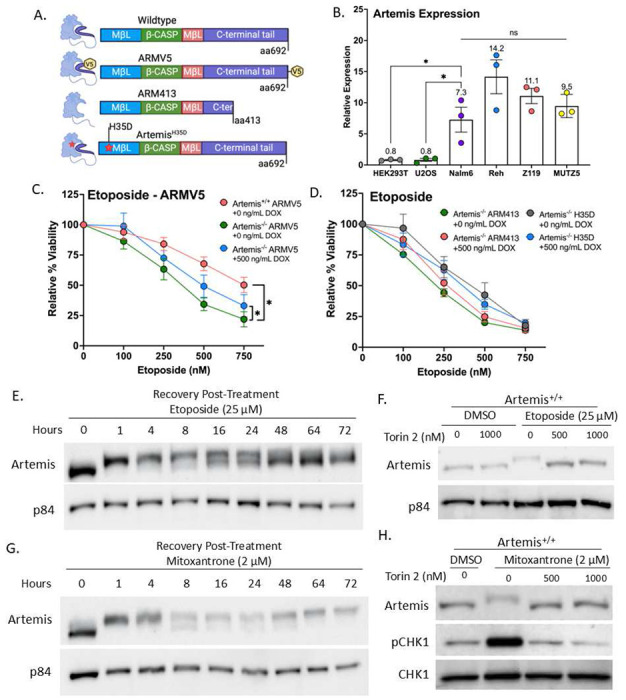 Figure 1
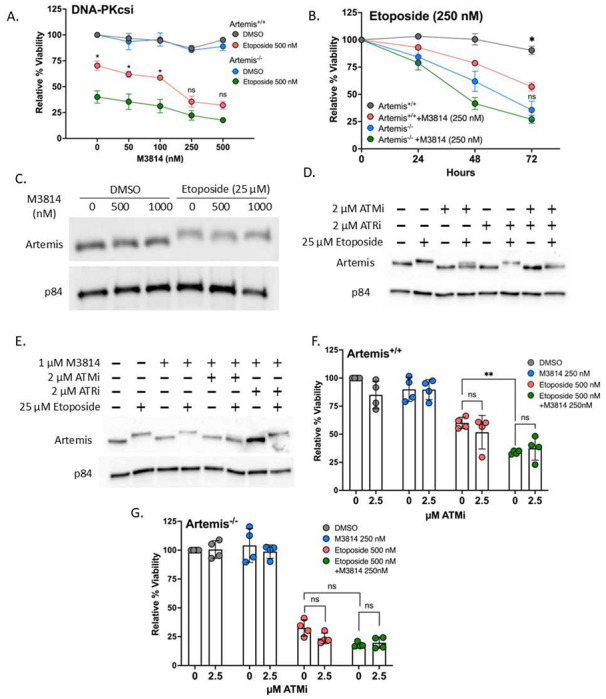 Figure 2
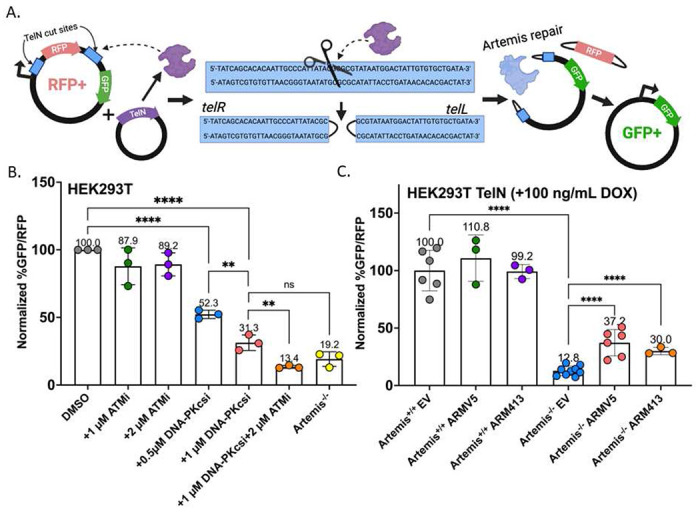 Figure 3
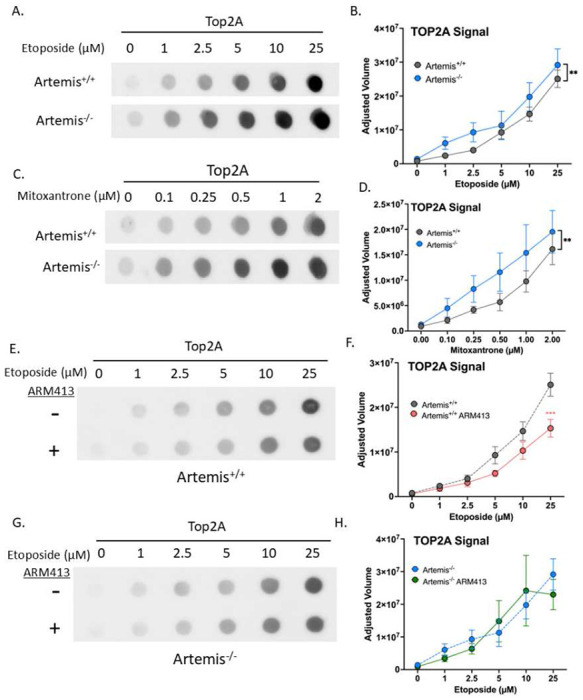 Figure 4
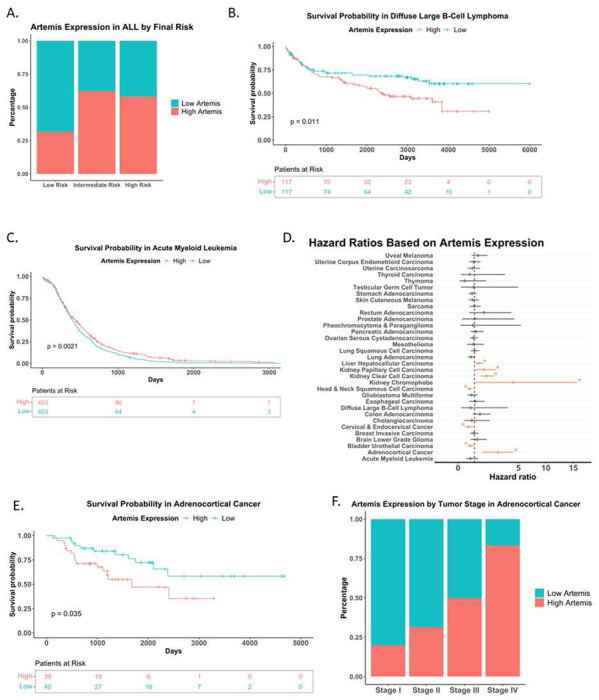 Figure 5
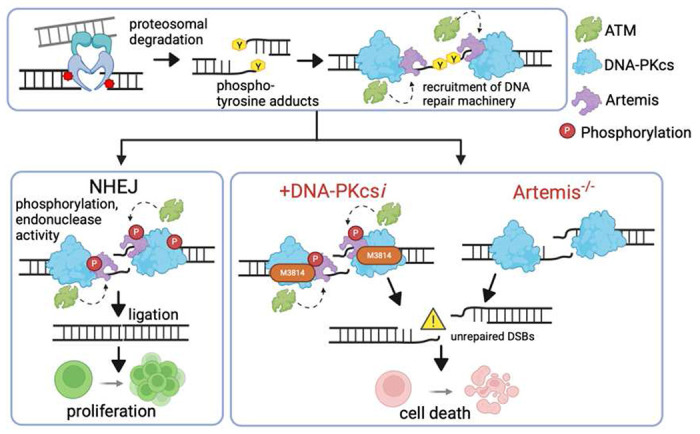 Figure 6
Peer Reviews
No public reviews on file for this paper yet. If you reviewed it on a platform where reviews are public (OpenReview, ICLR, NeurIPS, ICML), you can paste yours below so the community can read it here.
Videos
No videos yet. Explain this paper in a talk, walkthrough, or lecture? Add one.
Taxonomy
TopicsCancer therapeutics and mechanisms · Synthesis and Biological Evaluation · Phenothiazines and Benzothiazines Synthesis and Activities