Mechanistic Design of Cell-Penetrating Disruptors for a Phospho-Dependent Interaction
Vanda Gunning, Matthew Batchelor, Krista K. Alexander, Martin Walko, Selena G. Burgess, Stephen J. Royle, Eileen J. Kennedy, Richard Bayliss

TL;DR
Scientists designed a new peptide to disrupt a key protein interaction in cancer cells, potentially leading to new cancer therapies.
Contribution
A hydrocarbon-stapled peptide was developed to disrupt the TACC3/CHC interaction with high affinity and cellular efficacy.
Findings
Phosphorylation at TACC3 S558 overcomes electrostatic repulsion to enable interaction with CHC.
The hydrocarbon-stapled peptide SP TACC3 binds CHC with over 100-fold higher affinity than TACC3.
SP TACC3 disrupts the TACC3/CHC interaction in cells, causing mitotic delays in cancer cell lines.
Abstract
The complex formed by transforming acidic coiled coil 3 (TACC3) and clathrin heavy chain (CHC) enhances mitotic spindle stability and strength by cross-linking microtubules. The interaction is dependent on phosphorylation of TACC3 at S558 by Aurora-A. Previously, we elucidated the structural basis of the TACC3/CHC interaction, which is driven by hydrophobic residues on both proteins and the formation of an α-helix in TACC3 that docks into the helical repeats of CHC. Here we find that this phosphorylation event plays an unusual role in the protein–protein interaction; rather than direct bond formation, the phosphorylated residue acts by overcoming an inherent electrostatic repulsion between K507 of CHC and basic residues in TACC3. Leveraging this insight, we optimized the sequence using peptide arrays to develop a hydrocarbon-stapled peptide (SP TACC3) that binds CHC with over a…
Genes, proteins, chemicals, diseases, species, mutations and cell lines named across the full text — each resolved to its canonical identifier and authoritative record.
Click any figure to enlarge with its caption.
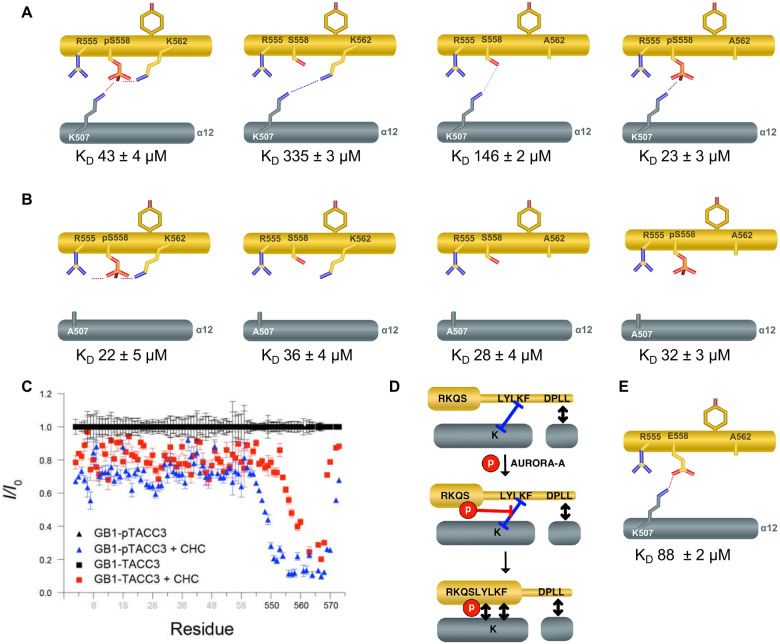 Figure 1
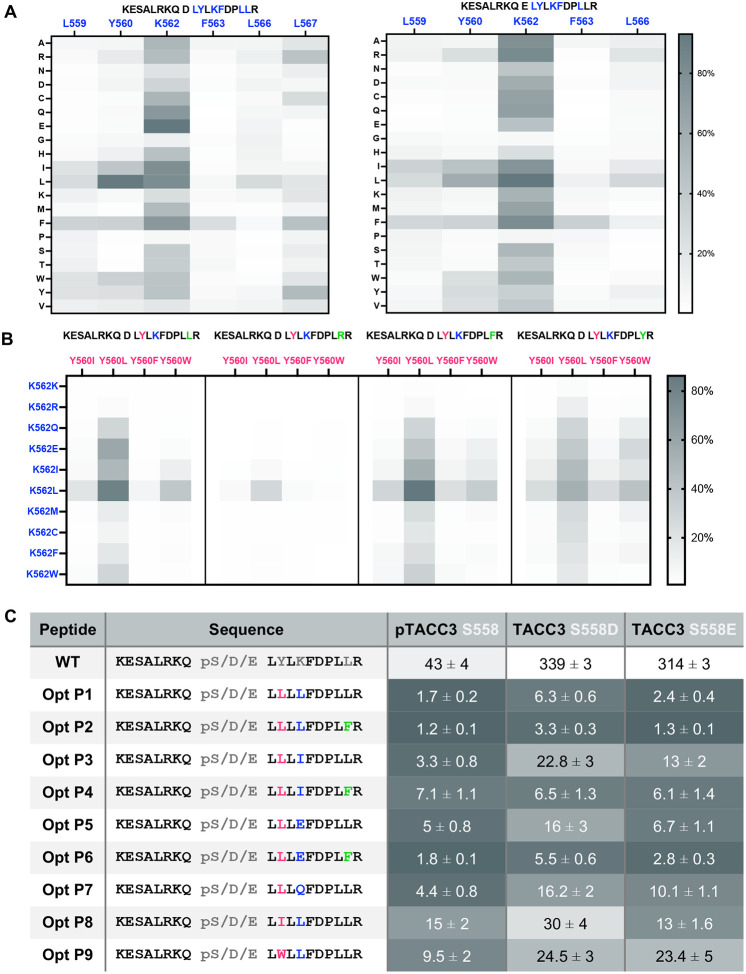 Figure 2
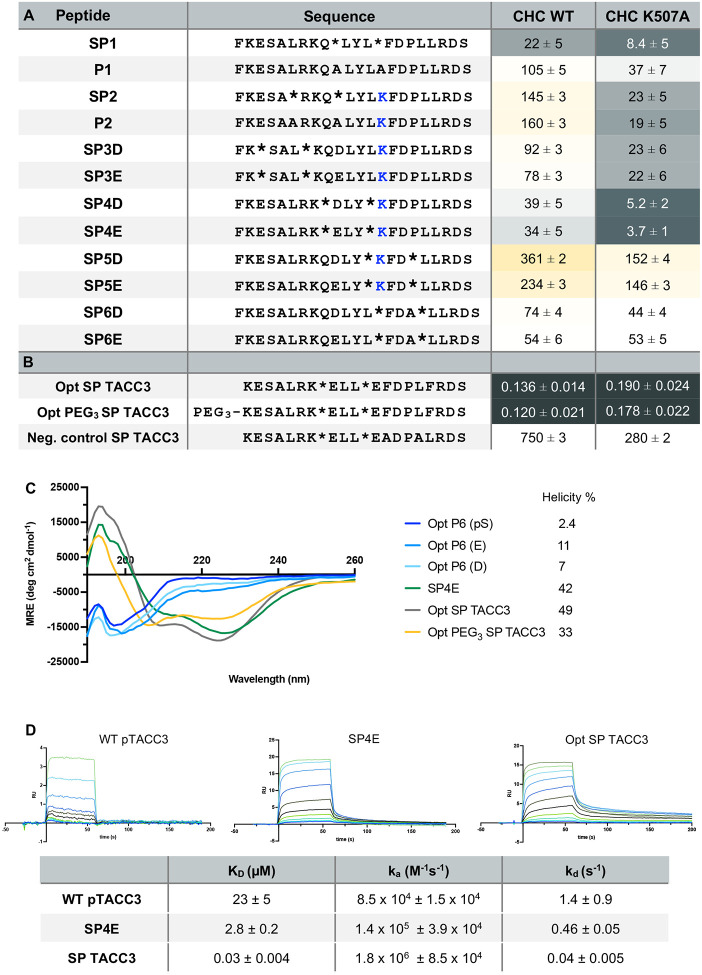 Figure 3
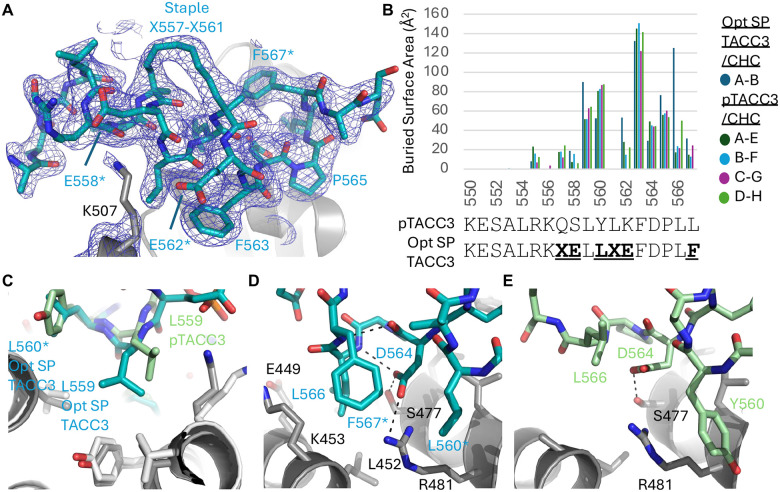 Figure 4
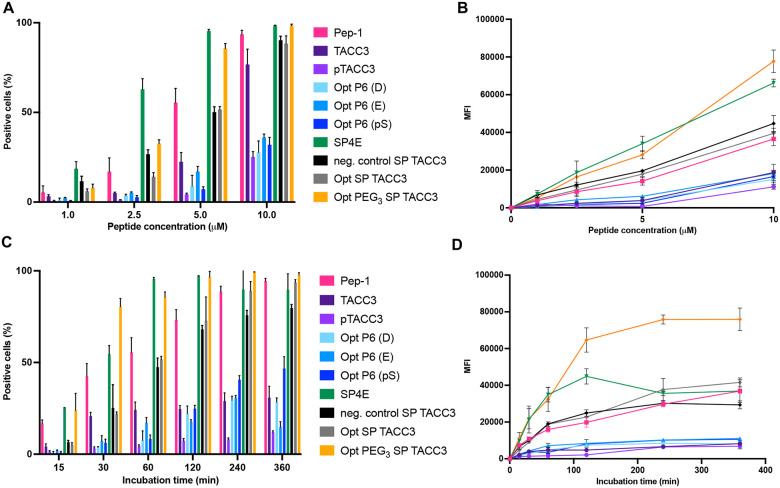 Figure 5
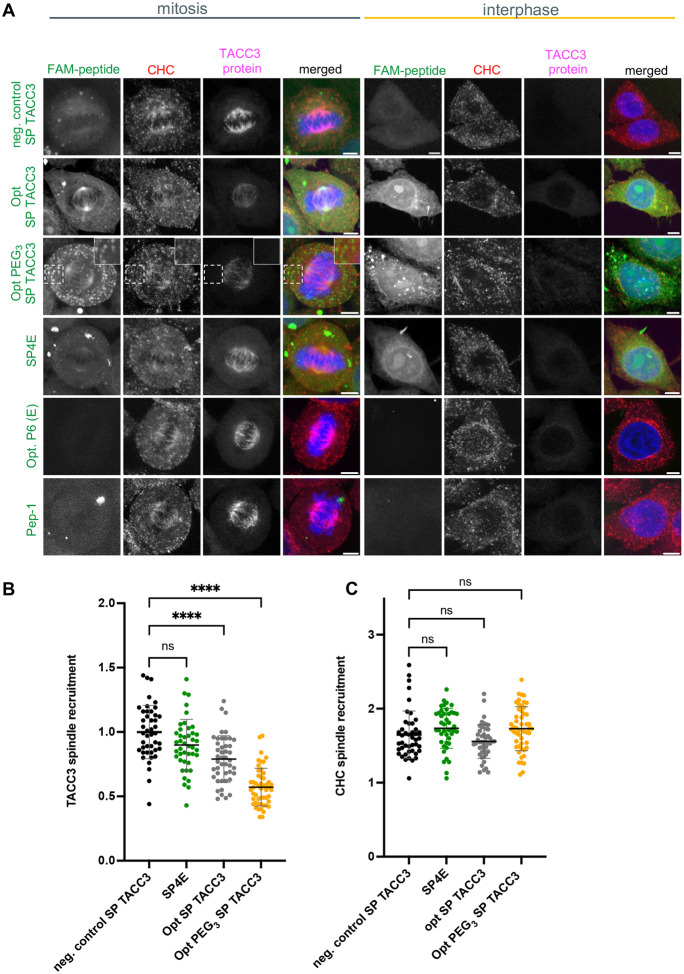 Figure 6
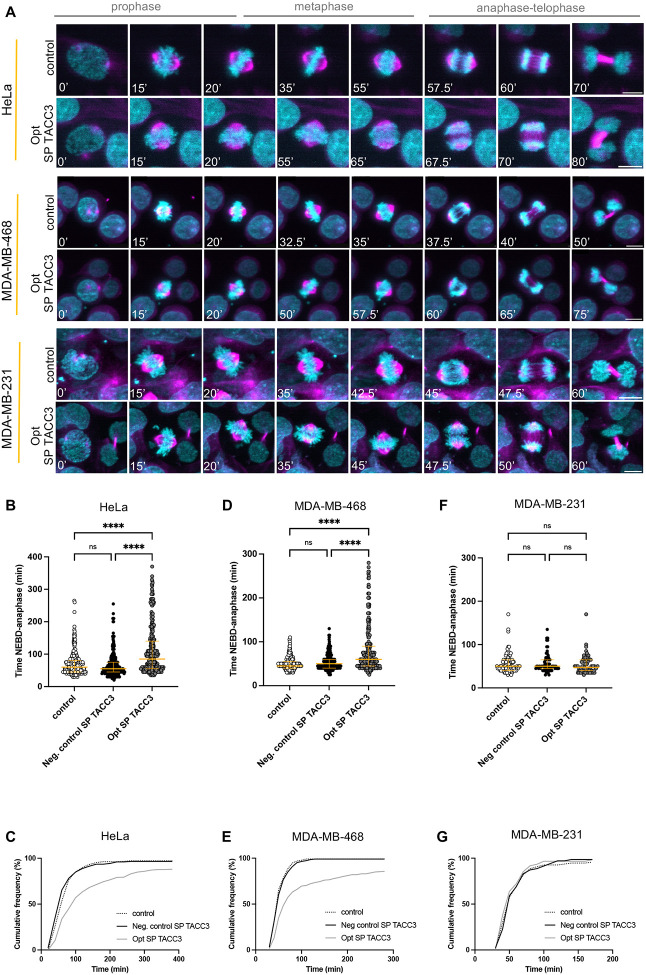 Figure 7
Peer Reviews
No public reviews on file for this paper yet. If you reviewed it on a platform where reviews are public (OpenReview, ICLR, NeurIPS, ICML), you can paste yours below so the community can read it here.
Videos
No videos yet. Explain this paper in a talk, walkthrough, or lecture? Add one.
Taxonomy
TopicsRNA Interference and Gene Delivery