Thermodynamic coupling between folding correctors and the first of dimerized nucleotide binding domains in CFTR
Guangyu Wang

TL;DR
This paper explores how folding correctors help fix a common cystic fibrosis mutation by stabilizing a key protein domain.
Contribution
The study reveals a thermodynamic protective mechanism of folding correctors in posttranslational CFTR NBD1 folding.
Findings
Folding correctors allosterically protect the α-subdomain of dimerized NBD1 from misfolding.
Cooperative folding between α- and β-subdomains is the last step upon ivacaftor binding.
The mechanism may restore Mg/ATP-mediated NBD dimerization in F508del mutation.
Abstract
The most common cystic fibrosis mutation is the F508del mutation in the human cystic fibrosis transmembrane conductance regulator (hCFTR), which causes misfolding of the first of two nucleotide binding domains (NBD1/2), preventing Mg/ATP-dependent NBD dimerization for normal function. Although folding correctors elexacaftor/VX-445 and lumacaftor/VX-809 have been combined to correct the NBD1 misfolding, the exact correction pathway is still unknown. In this study, the constrained tertiary noncovalent interaction networks or the thermoring structures of dimerized NBD1 in hCFTR/E1371Q with or without F508del were analyzed to identify the weakest noncovalent bridge as the final posttranslational tertiary folding of dimerized NBD1 in response to folding correctors. These computational analyses suggested that hCFTR may primarily use cooperative folding between α- and β-subdomains in dimerized…
Genes, proteins, chemicals, diseases, species, mutations and cell lines named across the full text — each resolved to its canonical identifier and authoritative record.
Click any figure to enlarge with its caption.
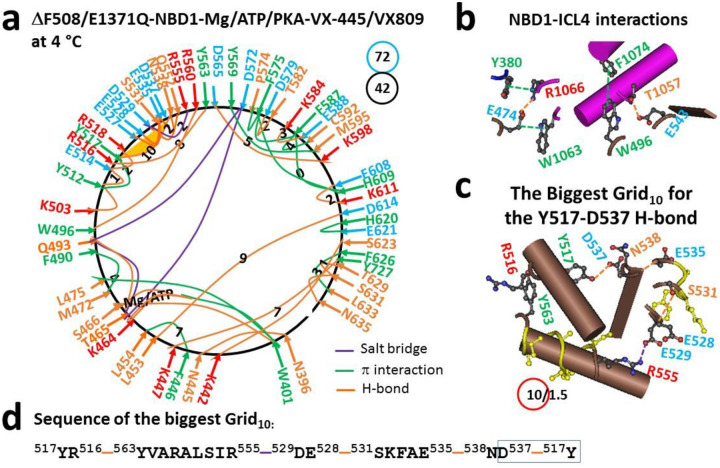 Figure 1
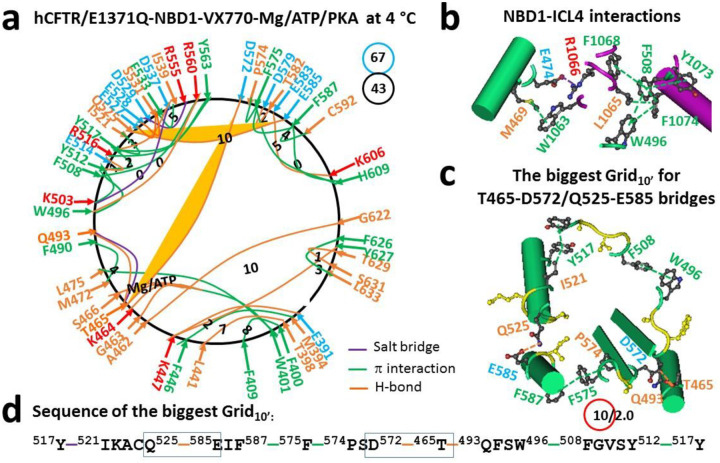 Figure 2
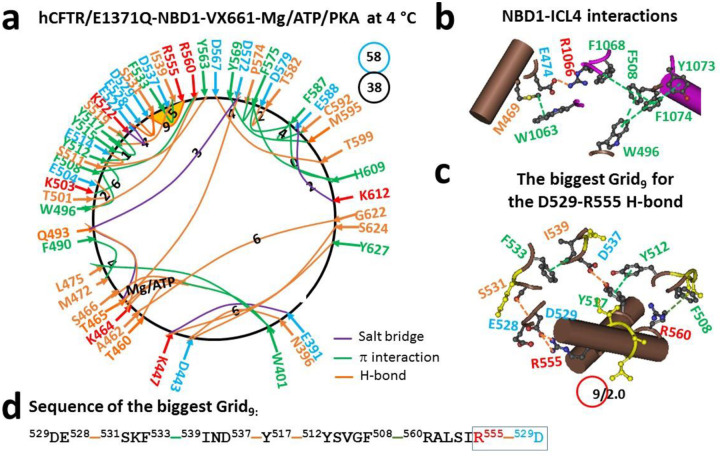 Figure 3
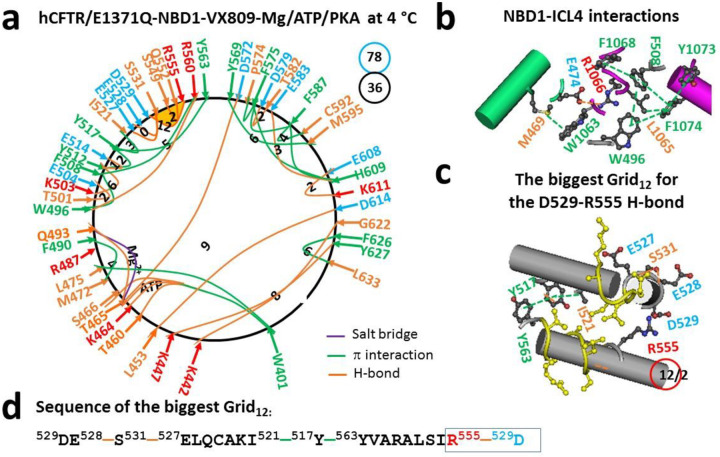 Figure 4
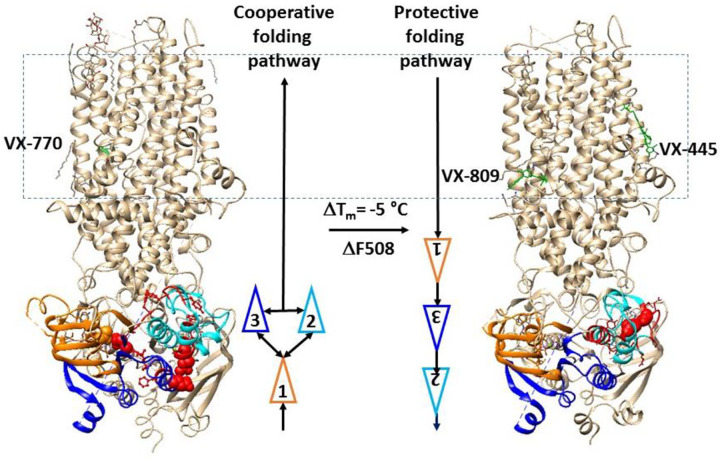 Figure 5
Peer Reviews
No public reviews on file for this paper yet. If you reviewed it on a platform where reviews are public (OpenReview, ICLR, NeurIPS, ICML), you can paste yours below so the community can read it here.
Videos
No videos yet. Explain this paper in a talk, walkthrough, or lecture? Add one.
Taxonomy
TopicsBacteriophages and microbial interactions · DNA and Nucleic Acid Chemistry · Cystic Fibrosis Research Advances