Determinants of Adherence and Satisfaction in Parkinson’s Disease Exercise Programs: A Comparison of 16-Months of Adapted Tango vs. Supervised Walking
Haneul Kim, Forouzan Rafiei, Meghan E. Kazanski, Amir Hossein Nekouei, Madeleine E. Hackney

TL;DR
This study compares adapted tango and walking exercises for Parkinson's patients, finding that motor and cognitive factors influence program adherence and satisfaction.
Contribution
The study identifies dyskinesia and cognitive function as key predictors of exercise program compliance and satisfaction in Parkinson’s disease.
Findings
Dyskinesia frequency and duration are negatively correlated with program compliance.
Cognitive function (MoCA scores) is the strongest predictor of participant satisfaction.
Freezing of gait (FOG) does not significantly affect program compliance or satisfaction.
Abstract
Moderate aerobic activities are promising treatment modalities for mitigating motor and cognitive deficits associated with Parkinson’s disease (PD). This study aims to characterize the association of PD-specific characteristics with compliance and satisfaction to the moderate-aerobic activity. Thirty-six participants with PD engaged in either adapted Argentine tango (TANGO) (n=20) or supervised walking (WALK) (n=16) classes for 16 months. Participants attended between59 to 76 classes to be fully compliant. Metrics associated with PD characteristics, including frequency and duration of dyskinesia and OFF state, freezing of gait status (FOG), years since PD diagnosis, Hoehn-Yahr Stage and motor and cognitive function, were collected. Linear regression models were used to examine the association of the PD metrics with treatment compliance (number of completed classes) and self-reported…
Genes, proteins, chemicals, diseases, species, mutations and cell lines named across the full text — each resolved to its canonical identifier and authoritative record.
Click any figure to enlarge with its caption.
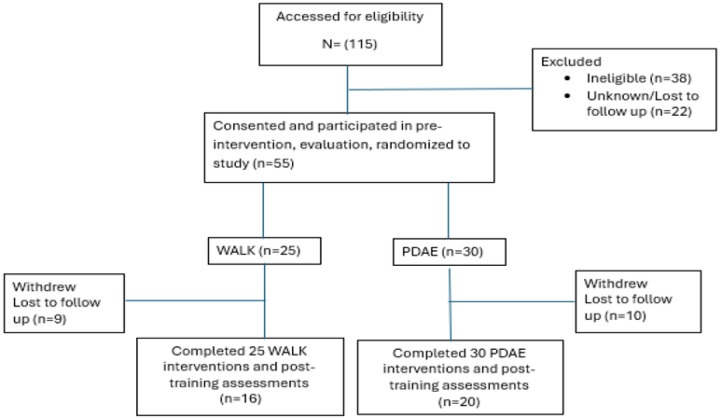 Figure 1
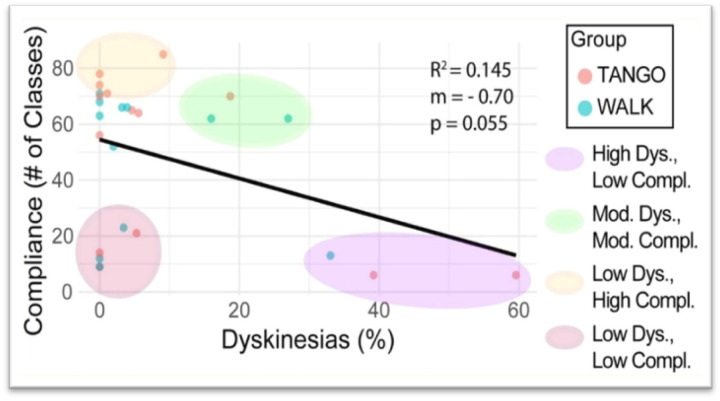 Figure 2
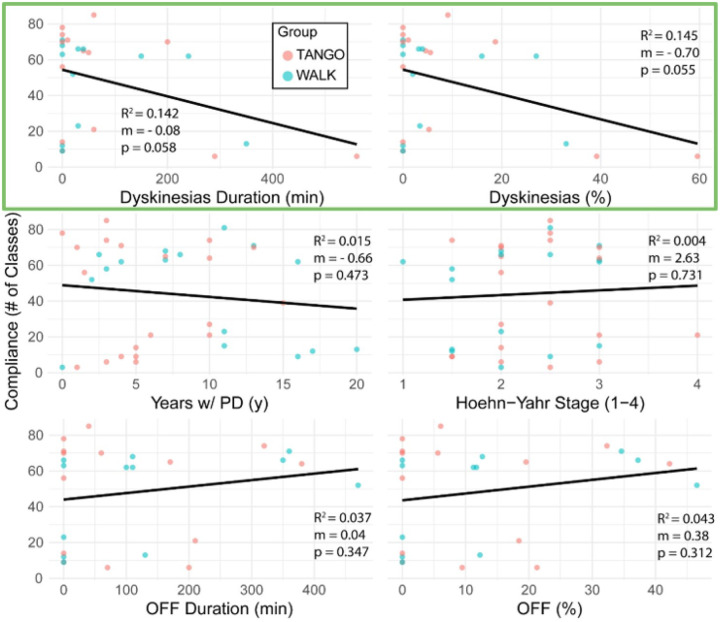 Figure 3
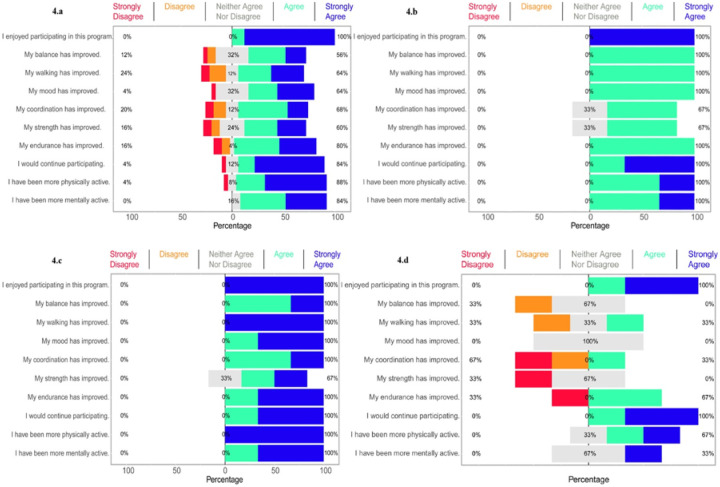 Figure 4
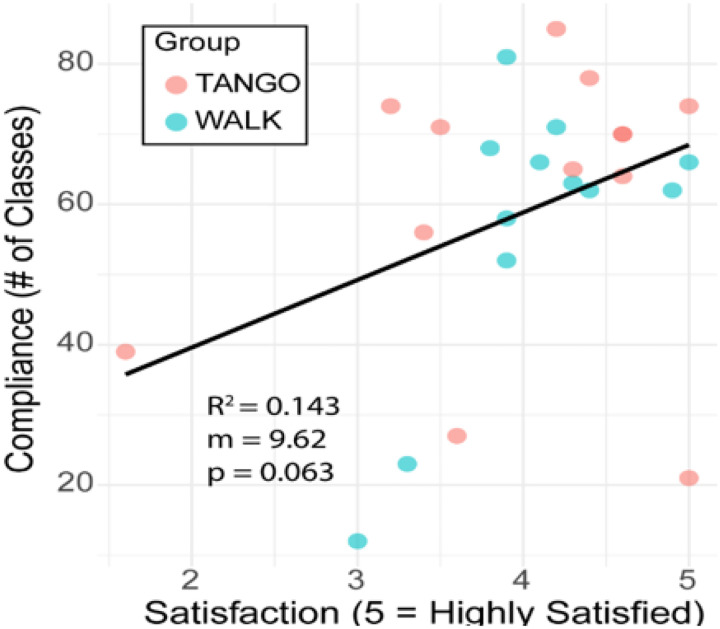 Figure 5
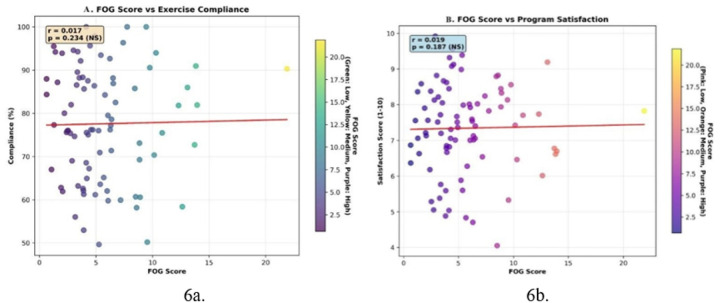 Figure 6
Peer Reviews
No public reviews on file for this paper yet. If you reviewed it on a platform where reviews are public (OpenReview, ICLR, NeurIPS, ICML), you can paste yours below so the community can read it here.
Videos
No videos yet. Explain this paper in a talk, walkthrough, or lecture? Add one.
Taxonomy
TopicsParkinson's Disease Mechanisms and Treatments · Balance, Gait, and Falls Prevention · Children's Physical and Motor Development