Engaging English- and Spanish-speaking older adults with and without possible cognitive impairment in advance care planning group visits: Protocol for the ENgaging in Advance Care Planning Talks (ENACT) Randomized Controlled Trial
Hillary Lum, Samantha Farro, Elizabeth Juarez-Colunga, Chandni Patel, Brianne Bettcher, Christine Haynes, Amy Huebschmann, David Nowels, Caroline Tietbohl, Jiayuan Shi, Carly Ritger, Prajakta Shanbhag, Kathleen Resman, Rebecca Sudore

TL;DR
This study tests a group visit approach to help older adults, including those with possible cognitive issues, plan their future medical care preferences.
Contribution
The ENACT trial introduces a novel group visit intervention for advance care planning in older adults with and without cognitive impairment in primary care.
Findings
The ENACT intervention will be evaluated for its impact on ACP documentation in the EHR.
The study will assess the acceptability and feasibility of the ENACT approach among diverse older adults.
The effect of possible cognitive impairment on the intervention's efficacy will be analyzed.
Abstract
Advance care planning (ACP) helps patients identify and communicate their preferences for medical care and prepares them for decision-making related to future care. While ACP is recommended for older adults with cognitive impairment, few interventions have been tested in primary care for this population. The ENACT trial tests the efficacy of the ENgaging in Advance Care planning Talks (ENACT) Group Visits intervention, which engages older adults with and without possible cognitive impairment in group medical visits focused on the ACP process. This two-arm randomized trial compares the efficacy of the ENACT Group Visits intervention arm to a control arm at 6-month follow-up. The trial will enroll at least 480 patients across 8 primary care clinics. Notable inclusion criteria include English or Spanish-speaking, age 70 or older, and no ACP documents in the electronic health record (EHR)…
Genes, proteins, chemicals, diseases, species, mutations and cell lines named across the full text — each resolved to its canonical identifier and authoritative record.
Click any figure to enlarge with its caption.
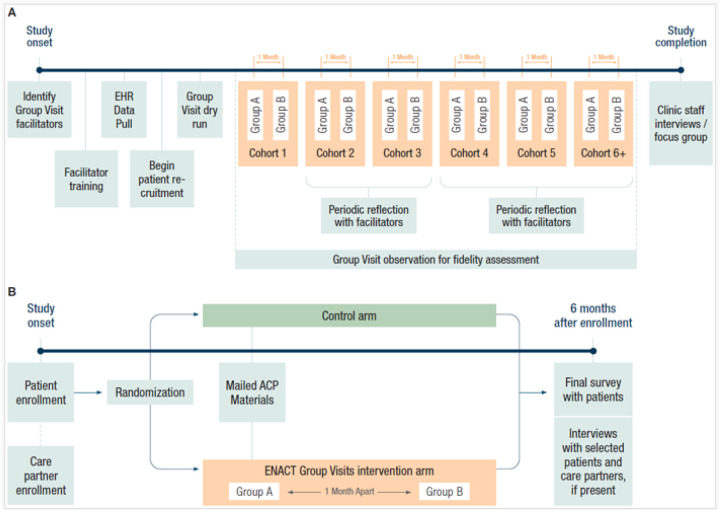 Figure 1
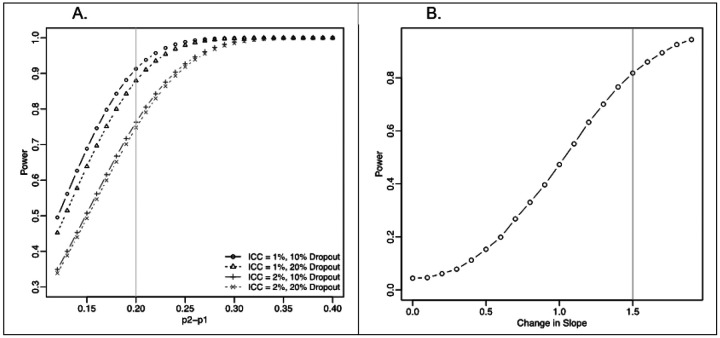 Figure 2
Peer Reviews
No public reviews on file for this paper yet. If you reviewed it on a platform where reviews are public (OpenReview, ICLR, NeurIPS, ICML), you can paste yours below so the community can read it here.
Videos
No videos yet. Explain this paper in a talk, walkthrough, or lecture? Add one.
Taxonomy
TopicsPalliative Care and End-of-Life Issues · Geriatric Care and Nursing Homes · Family and Patient Care in Intensive Care Units