Establishment and Reliability of an Automatic Measurement Method of Pectus Excavatum Indices Using a Deep Learning Model
Xicheng Deng, Siping He, Jiayi Lin, Chenhan Wang, Songxian Xie, Shanshan Hu, Kefeng Ling, Frank-Martin Haecker, Shuangquan Qu

TL;DR
This study developed a deep learning model to automatically measure pectus excavatum severity indices, showing high reliability compared to manual methods.
Contribution
The novel contribution is a U-Net-based automated system for measuring pectus excavatum indices with high consistency and accuracy.
Findings
Manual measurements had a 15.9% error rate, reduced to 4.1% after consensus correction.
The U-Net model showed stable error rates (8.7% vs 8.5%) with strong agreement (ICC 0.83-0.92) to corrected manual measurements.
Bland-Altman analysis confirmed minimal bias between automated and manual measurements.
Abstract
Objective: This study aimed to evaluate the consistency and accuracy of pectus excavatum (PE) indices assessment by comparing U-Net-based automated segmentation with manual measurements, aiming to reduce interobserver variability and standardize clinical workflow in PE severity evaluation. Methods: An automatic measurement model was developed using U-Net architecture, trained on 550 chest computed tomography (CT) scans from 94 patients and validated on 164 independent scans. The model calculated three key indices (Haller, correction, and asymmetry), compared against measurements by four observers. Results: Manual measurements showed an initial error rate of 15.9% (first three observers), reduced to 4.1% after consensus correction (p<0.01). The U-Net model exhibited stable error rates (8.7% vs 8.5% pre-/post-correction, p=0.91). Strong agreement was observed between automated and…
Genes, proteins, chemicals, diseases, species, mutations and cell lines named across the full text — each resolved to its canonical identifier and authoritative record.
Click any figure to enlarge with its caption.
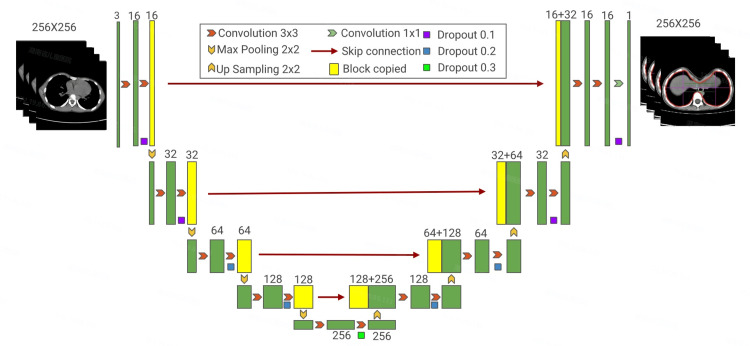 Figure 1
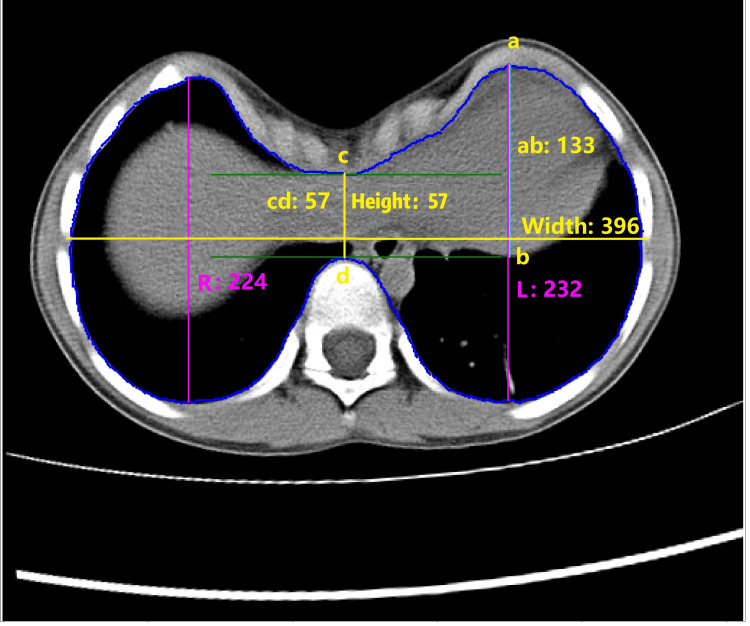 Figure 2
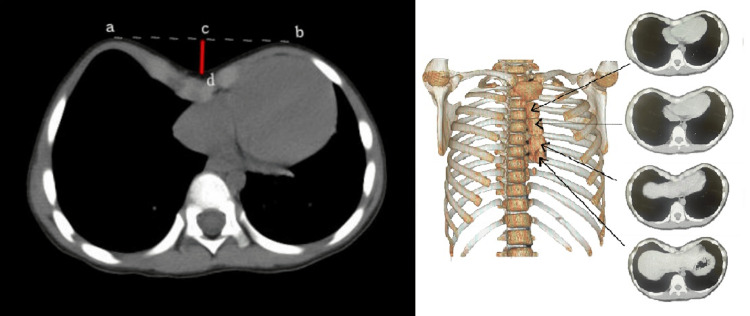 Figure 3
 Figure 4
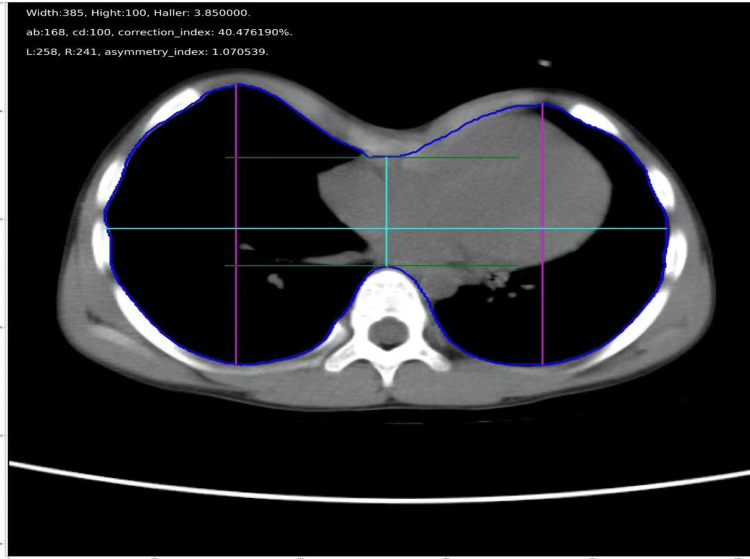 Figure 5
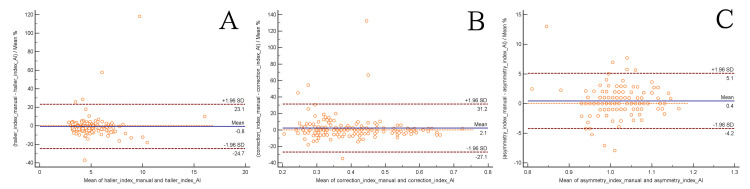 Figure 6
Peer Reviews
No public reviews on file for this paper yet. If you reviewed it on a platform where reviews are public (OpenReview, ICLR, NeurIPS, ICML), you can paste yours below so the community can read it here.
Videos
No videos yet. Explain this paper in a talk, walkthrough, or lecture? Add one.
Taxonomy
TopicsPectus Deformity Diagnosis and Treatment · Environmental and Sediment Control