Pathophysiological and prognostic relevance of exercise CMR-derived pulmonary artery compliance in patients with suspected diastolic dysfunction and normal right ventricular function
Alexander Schulz, Lara Kuttenkeuler, Sören J Backhaus, Torben Lange, Jonas Otto, Judith Gronwald, Ruben Evertz, Johannes T Kowallick, Gerd Hasenfuß, Andreas Schuster

TL;DR
This study shows that reduced pulmonary artery compliance during exercise in patients with suspected heart issues predicts worse outcomes, even when heart function appears normal.
Contribution
The study introduces exercise CMR-derived pulmonary artery compliance as a novel prognostic marker in patients with suspected diastolic dysfunction and normal right ventricular function.
Findings
Exercise stress testing revealed decreased MPA compliance in patients with suspected diastolic dysfunction.
Lower MPA compliance during exercise correlated with diastolic dysfunction markers and predicted cardiovascular events.
HFpEF patients showed a steeper decline in MPA compliance during exercise compared to non-HFpEF patients.
Abstract
Right ventricular (RV) dysfunction has been associated with worse prognosis in patients with diastolic dysfunction, highlighting the importance of early detection. Main pulmonary artery (MPA) compliance may indicate adverse biventricular coupling prior to emerging RV function. Sixty-eight patients with suspected diastolic dysfunction (New York Heart Association ≥ II, LV EF ≥ 50%, E/e′ ≥ 8) were prospectively recruited and underwent rest and stress right heart catheterization, echocardiography, and cardiovascular magnetic resonance imaging (CMR) within 24 h. Maximum (Amax) and minimum (Amin) MPA vessel area and stroke volume (RVSV) were obtained from CMR real-time phase-contrast images at rest and during exercise stress. Compliance was calculated as pulsatility MPAPuls=(Amax−AminAmin)×100 and capacitance MPACap=MPAPulsRVSV. Patients had systematic follow-up after 48 months. Occurrence…
Genes, proteins, chemicals, diseases, species, mutations and cell lines named across the full text — each resolved to its canonical identifier and authoritative record.
Click any figure to enlarge with its caption.
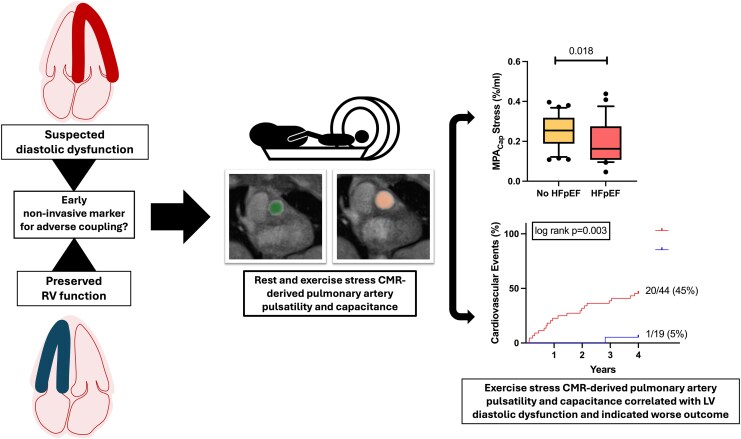 Figure 1
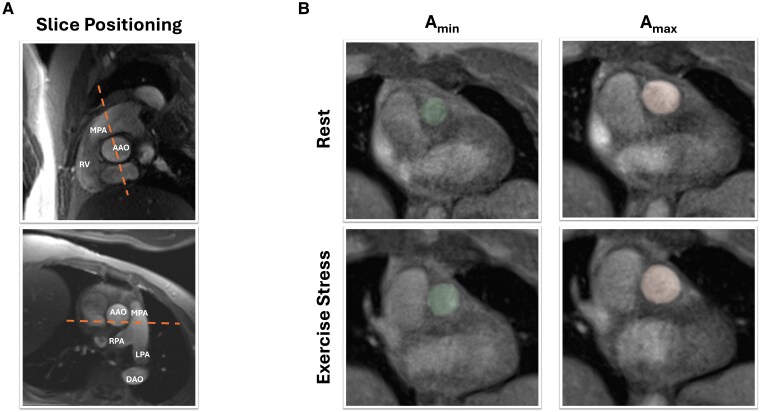 Figure 2
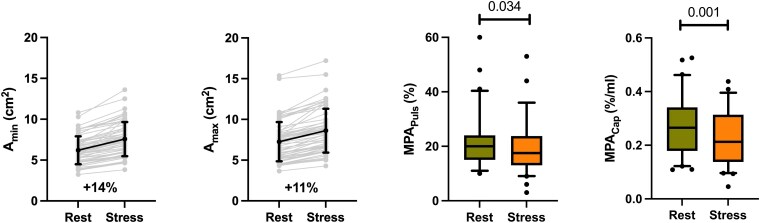 Figure 3
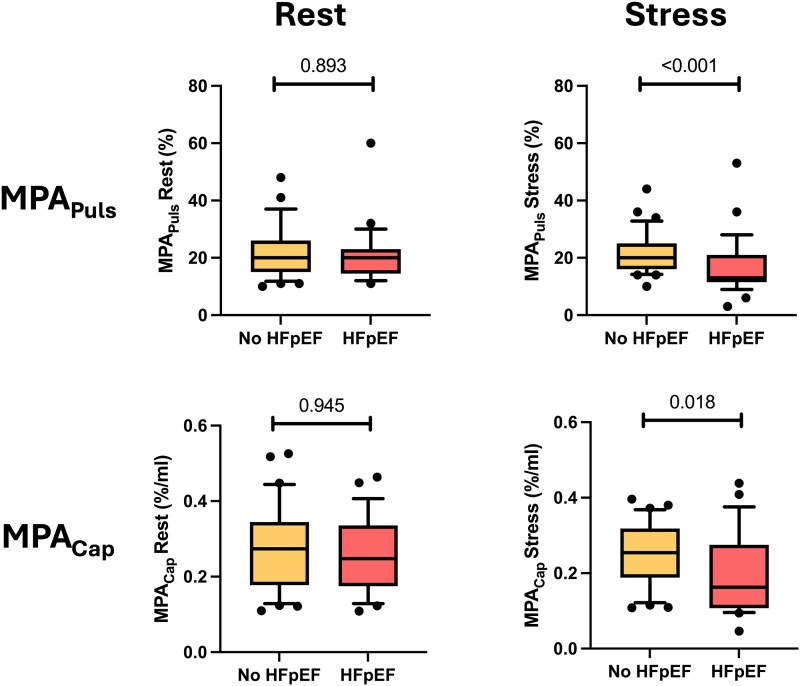 Figure 4
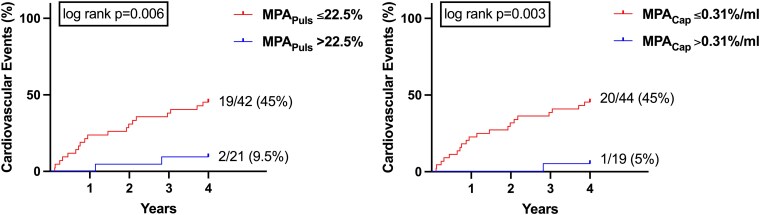 Figure 5
 Figure 6
Peer Reviews
No public reviews on file for this paper yet. If you reviewed it on a platform where reviews are public (OpenReview, ICLR, NeurIPS, ICML), you can paste yours below so the community can read it here.
Videos
No videos yet. Explain this paper in a talk, walkthrough, or lecture? Add one.
Taxonomy
TopicsCardiovascular Function and Risk Factors · Pulmonary Hypertension Research and Treatments · Cardiac Imaging and Diagnostics