Automorphy as a self-organizing DPP-dependent process that translates patterns into mechanical programs during Drosophila embryogenesis
Baptiste Tesson, Stéphane A. Vincent

TL;DR
The paper explains how BMPs, specifically DPP, use a process called automorphy to translate positional information into mechanical programs during fruit fly embryo development.
Contribution
The study introduces 'automorphy' as a novel concept where high local DPP activity self-organizes mechanical programs during embryogenesis.
Findings
DPP endows dorsal domains with mechanical programs through automorphy.
Automorphy translates positional information into physical potentials for morphogenesis.
Plasticity in cell elongation is crucial for adapting to mechanical constraints.
Abstract
Morphogens provide developing tissues with positional information to ensure coherent morphogenesis. Bone morphogenetic proteins (BMPs) initially form a gradient to pattern the dorsal domains of the Drosophila embryo. Here, we show that the BMP homolog decapentaplegic (DPP) endows dorsal domains with specific mechanical programs to organize morphogenesis. These domains self-organize using high local DPP activities, a process we call automorphy. Automorphy is key to inducing specific morphological changes while being faithful to the initial positional information. The BMP morphogen therefore uses a series of automorphic events to translate each position into physical potentials that later produce a contractile amnioserosa and a dorsal epidermis displaying plasticity. Plasticity allows cell elongation in wild-type embryos, and perturbations of cellular patterns reveal its crucial role in…
Genes, proteins, chemicals, diseases, species, mutations and cell lines named across the full text — each resolved to its canonical identifier and authoritative record.
Click any figure to enlarge with its caption.
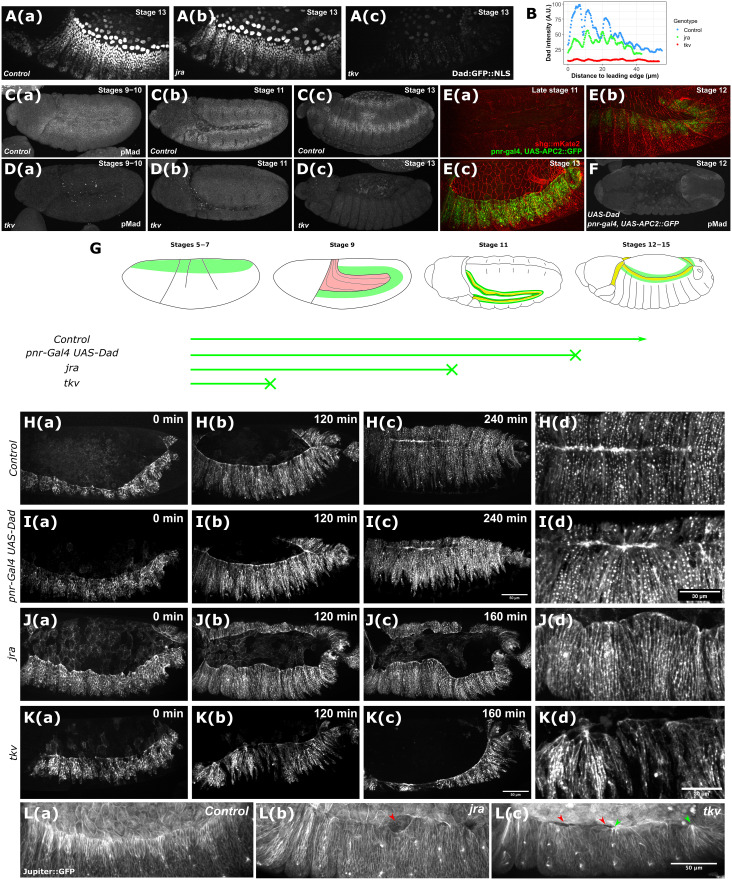 Figure 1
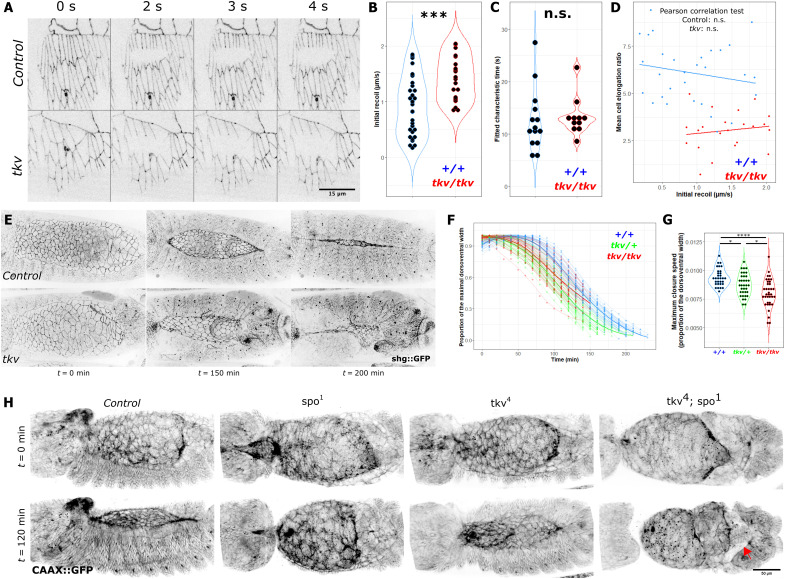 Figure 2
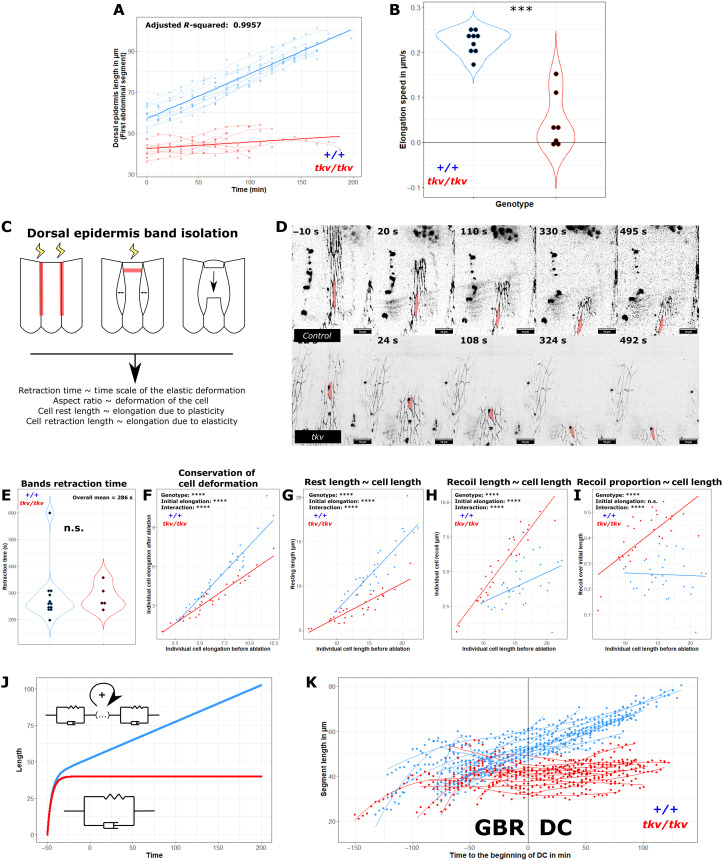 Figure 3
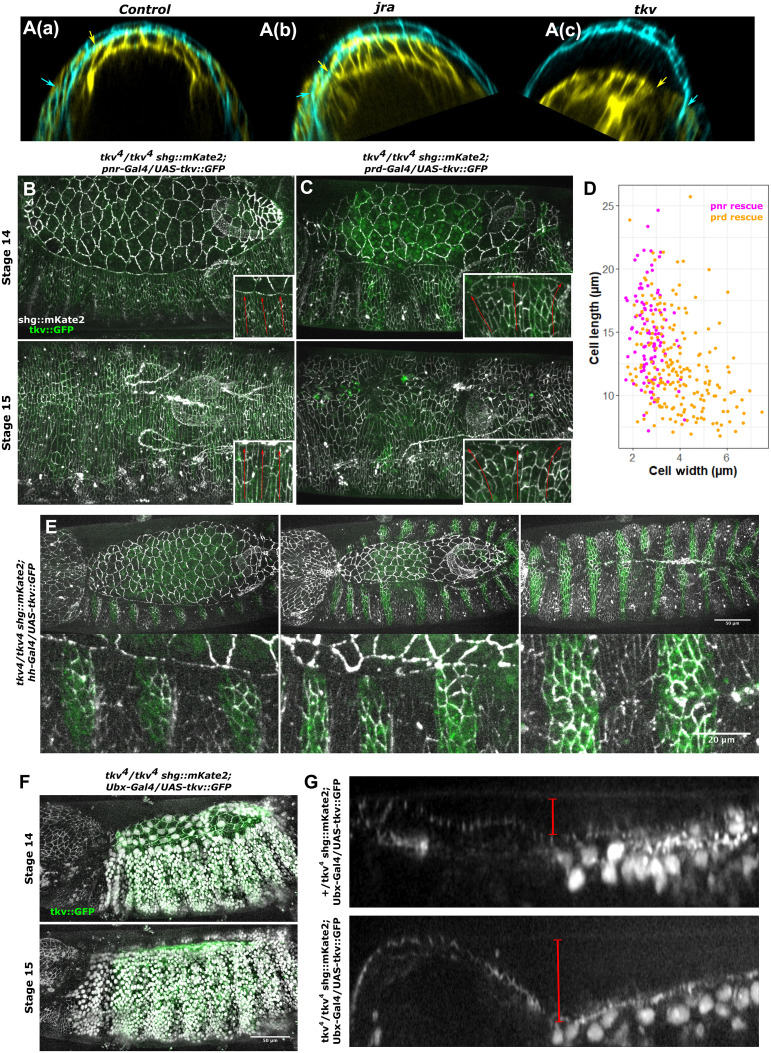 Figure 4
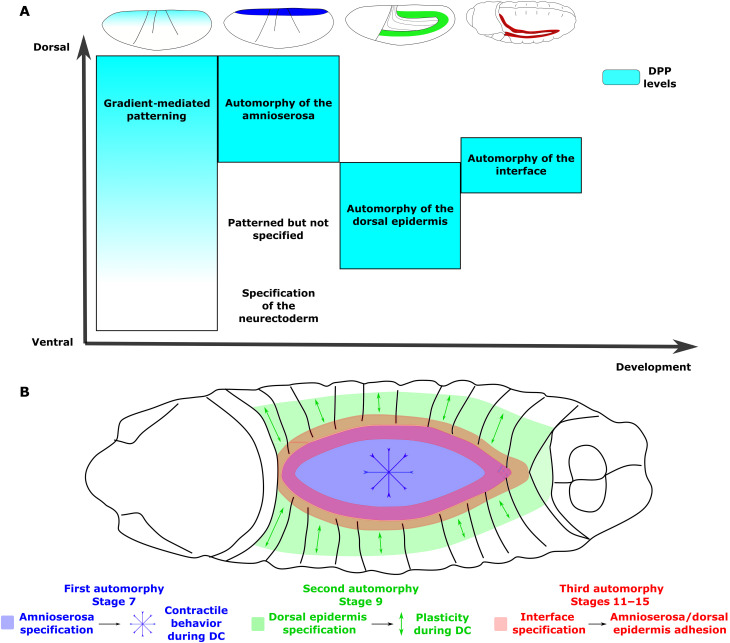 Figure 5
Peer Reviews
No public reviews on file for this paper yet. If you reviewed it on a platform where reviews are public (OpenReview, ICLR, NeurIPS, ICML), you can paste yours below so the community can read it here.
Videos
No videos yet. Explain this paper in a talk, walkthrough, or lecture? Add one.
Taxonomy
TopicsCellular Mechanics and Interactions · Developmental Biology and Gene Regulation · Hippo pathway signaling and YAP/TAZ