Utility of a Modified Penlight‐Cover Test for Neurolocalization of Lesions Based on Visual Suppression of Nystagmus in Dogs and Cats With Vestibular Disease
Alice Chan, Gemma E. Longson, Edward Ives, Claire Turner, Paul Freeman, Stacey Brady, Ana Martinez Loro, Bruno Scalia, Susana Monforte Monteiro, Sara Formoso, Sam Khan, An E. Vanhaesebrouck

TL;DR
A modified penlight-cover test can help distinguish between peripheral and central vestibular lesions in dogs and cats by observing changes in nystagmus.
Contribution
The study introduces and validates a modified penlight-cover test for neurolocalization in veterinary vestibular disease.
Findings
In peripheral vestibular lesions, 33% showed increased nystagmus beat frequency and 24% showed increased slow phase velocity after visual input removal.
Only one of 16 central vestibular cases showed increased beat frequency, and none showed increased slow phase velocity.
Abstract
Humans with peripheral vestibular disorders can suppress nystagmus through visual fixation, a capability often compromised in those with central vestibular disorders. Bedside tests that exploit this difference can aid neurolocalization in humans. These tests remain unexplored in veterinary medicine. Removal of visual input will reveal or enhance nystagmus in animals with peripheral vestibular disease, while animals with central vestibular disease would show little change. Twenty‐one dogs and cats with peripheral vestibular lesions and 16 with central vestibular lesions. Diagnosis was confirmed by MRI. A prospective study was conducted using a modified penlight‐cover test. Because animals cannot be easily instructed to fixate on a visual target, removal of visual input was used as a substitute for eliminating visual fixation, based on the assumption that visual fixation also occurs…
Genes, proteins, chemicals, diseases, species, mutations and cell lines named across the full text — each resolved to its canonical identifier and authoritative record.
Click any figure to enlarge with its caption.
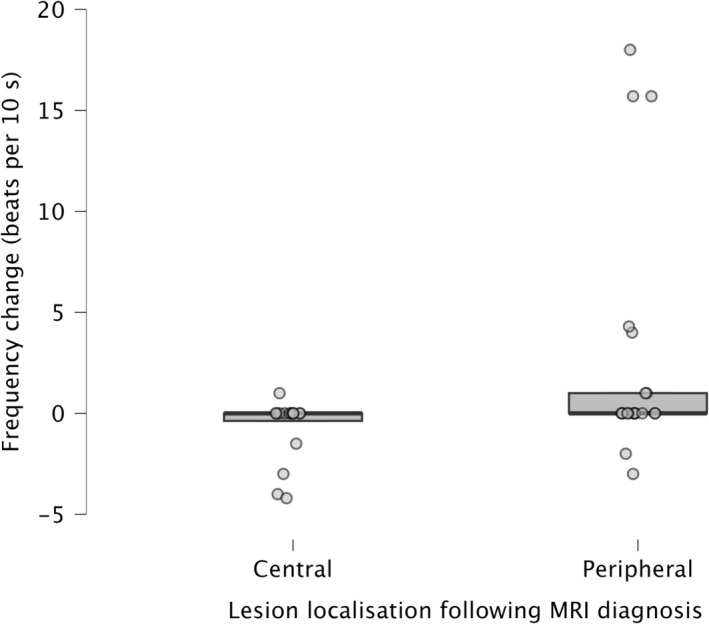 Figure 1
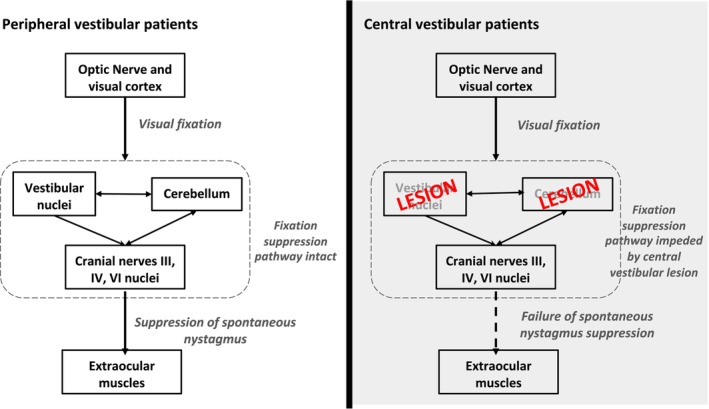 Figure 2
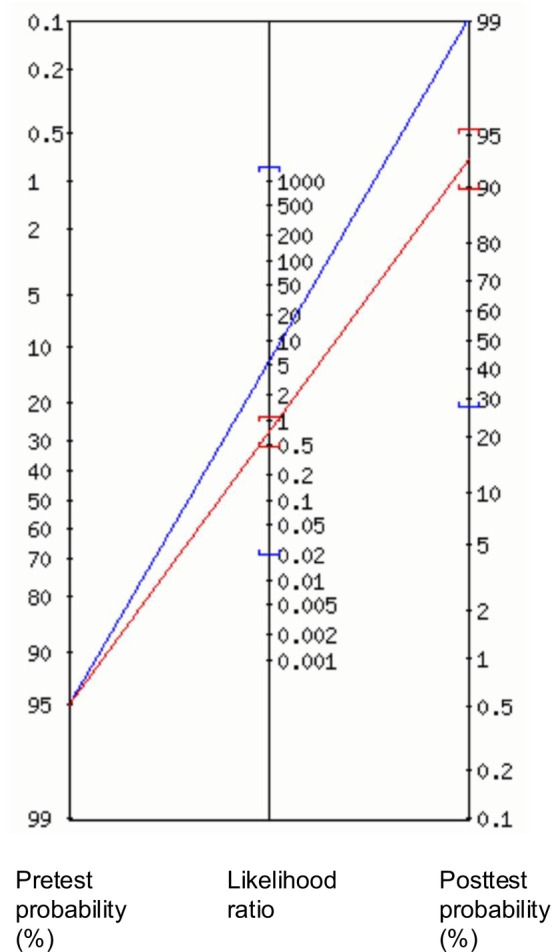 Figure 3
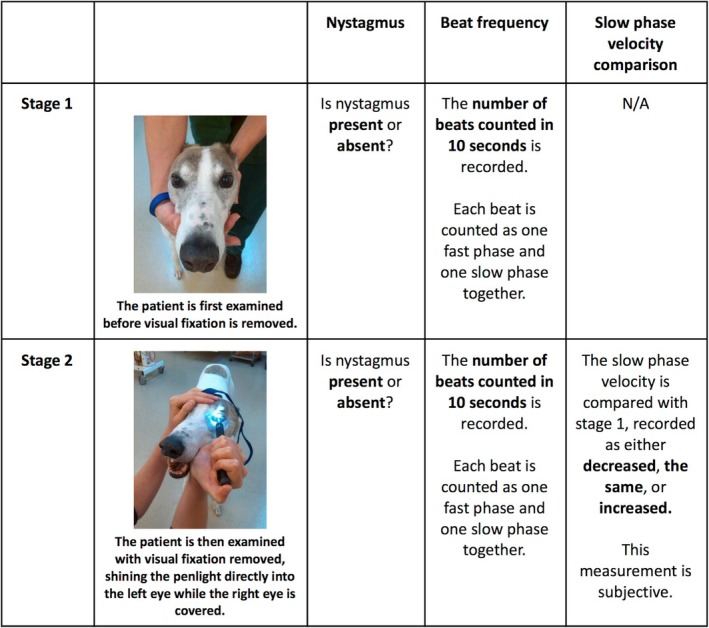 Figure 4
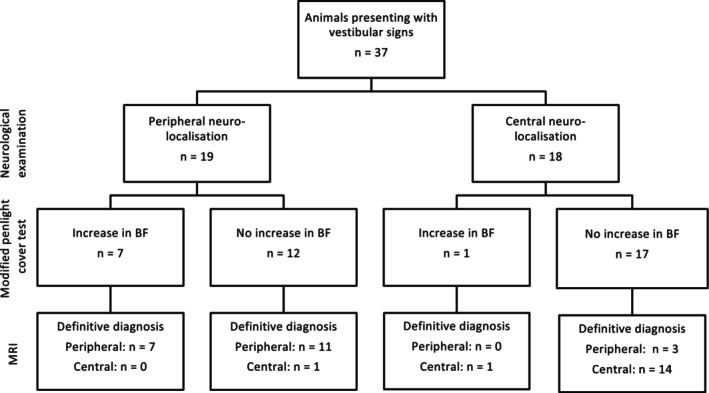 Figure 5
Peer Reviews
No public reviews on file for this paper yet. If you reviewed it on a platform where reviews are public (OpenReview, ICLR, NeurIPS, ICML), you can paste yours below so the community can read it here.
Videos
No videos yet. Explain this paper in a talk, walkthrough, or lecture? Add one.
Taxonomy
TopicsVestibular and auditory disorders · Hearing, Cochlea, Tinnitus, Genetics · Glaucoma and retinal disorders