Modeling Versus Balancing Approaches to Addressing Instrumental Variables in Weighting: A Comparison of the Outcome‐Adaptive Lasso, Stable Balancing Weighting, and Stable Confounder Selection
Byeong Yeob Choi, M. Alan Brookhart

TL;DR
This paper compares methods for handling instrumental variables in causal inference, finding that stable balancing weighting performs best in reducing errors when strong instrumental variables are present.
Contribution
The paper introduces and compares novel methods for addressing instrumental variables in weighting approaches to causal inference.
Findings
SBW outperformed OAL and SCS in reducing mean squared error with strong instrumental variables.
SBW effectively handles limited overlap in real-world applications like abciximab treatment analysis.
Highly correlated covariates benefit most from the SBW method in simulations.
Abstract
Variable selection is essential for propensity score (PS)‐weighted estimators. Recent work shows that including instrumental variables (IVs), associated with only treatment but not with the outcome, can impact both the bias and precision of the PS‐weighted estimators. The outcome‐adaptive lasso (OAL) is an innovative model‐based method adapting the popular adaptive lasso variable selection to causal inference. It attempts to identify IVs, so one can exclude them from the PS model. Unlike the model‐based approach, stable balancing weighting (SBW) estimates inverse probability weights directly while minimizing the variance of the weights and covariate imbalance simultaneously. Based on its variance optimization algorithm, SBW may provide some protection against the impact of IVs. Lastly, we considered stable confounder selection (SCS), which assesses the stability of model‐based effect…
Genes, proteins, chemicals, diseases, species, mutations and cell lines named across the full text — each resolved to its canonical identifier and authoritative record.
Click any figure to enlarge with its caption.
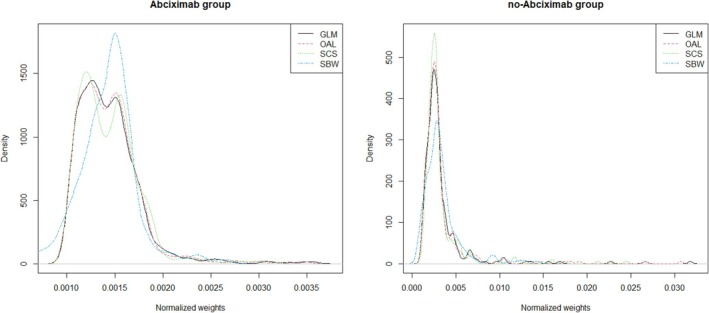 Figure 1
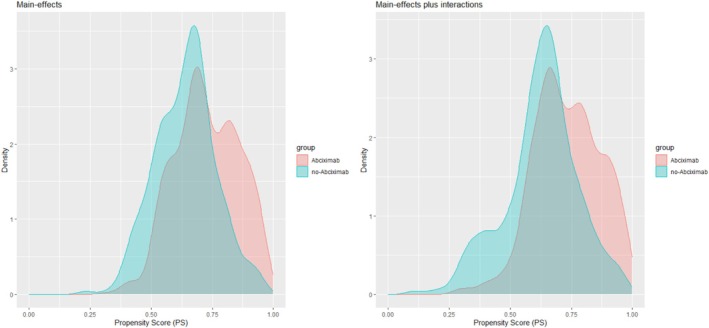 Figure 2
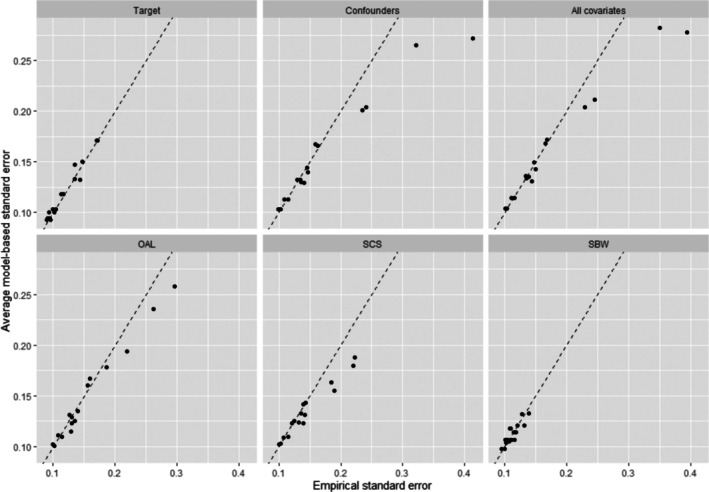 Figure 3
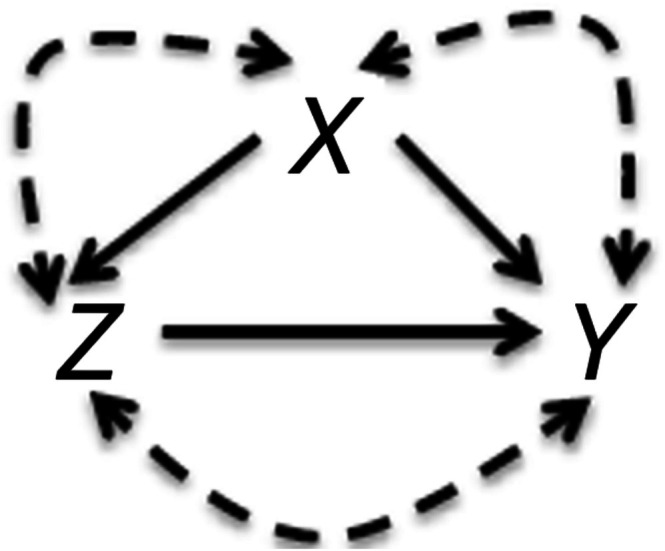 Figure 4
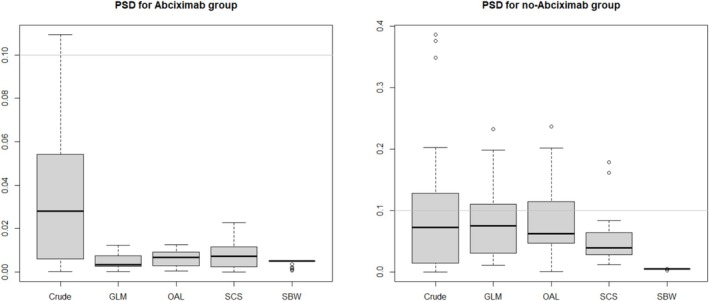 Figure 5
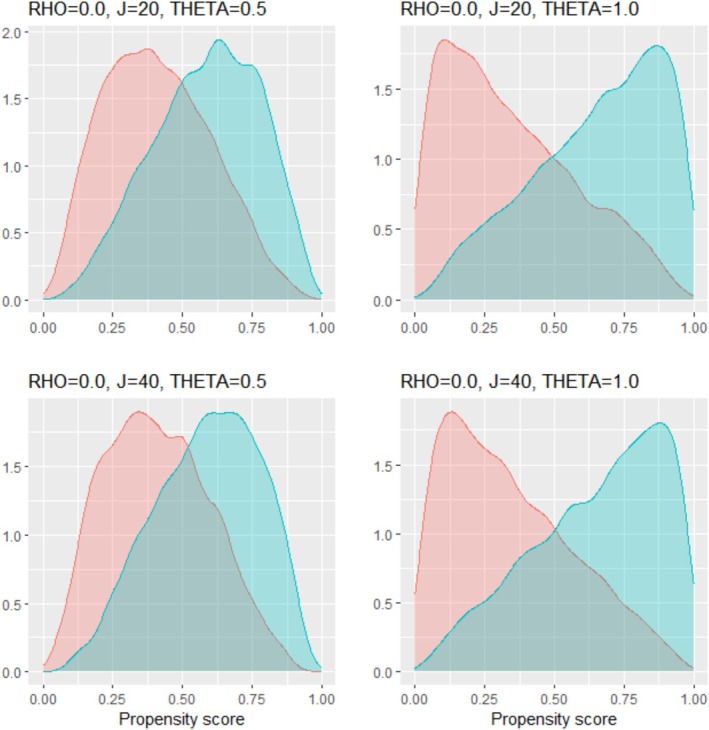 Figure 6
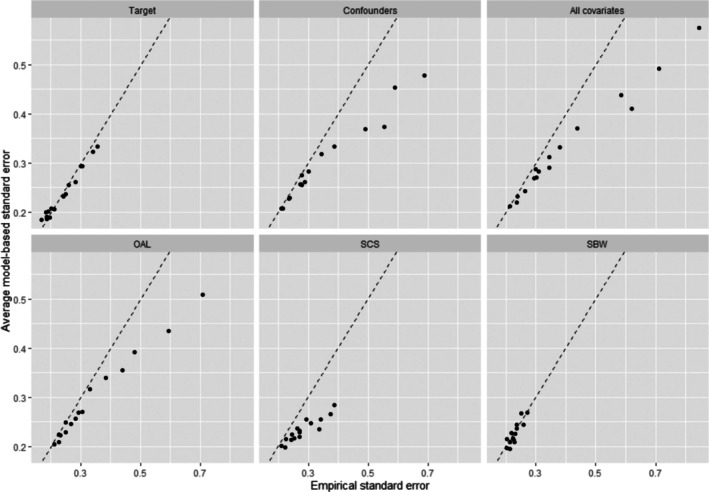 Figure 7
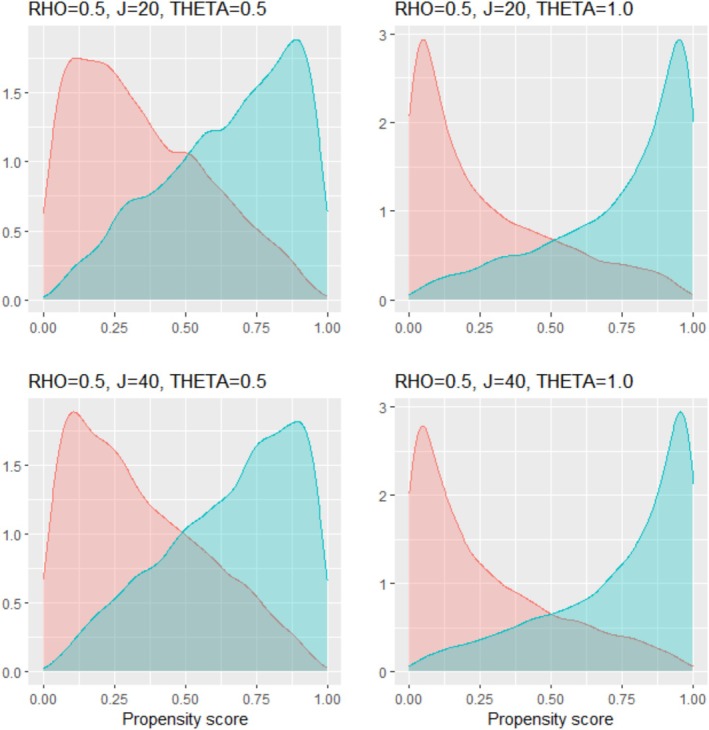 Figure 8
Peer Reviews
No public reviews on file for this paper yet. If you reviewed it on a platform where reviews are public (OpenReview, ICLR, NeurIPS, ICML), you can paste yours below so the community can read it here.
Videos
No videos yet. Explain this paper in a talk, walkthrough, or lecture? Add one.
Taxonomy
TopicsAdvanced Causal Inference Techniques · Statistical Methods and Inference · Statistical Methods and Bayesian Inference