Bath: a Bayesian approach to analyze epigenetic transitions reveals a dual role of H3K27me3 in chondrogenesis
Christoph Neu, Manuela Wuelling, Christoph Waterkamp, Daniel Hoffmann, Andrea Vortkamp

TL;DR
The study uses a Bayesian approach to analyze epigenetic changes during chondrogenesis, revealing H3K27me3's dual role in gene activation and repression.
Contribution
A new relativistic approach was developed to identify rare chromatin state transitions in chondrogenic differentiation.
Findings
Early chondrogenesis involves transitions to activating chromatin states on mesenchymal and chondrogenic genes.
H3K27me3 is part of a complex bivalent state that transitions into active promoters during early differentiation.
Mature chondrocytes show transitions where H3K27me3 is gained on active promoters, initiating gene repression.
Abstract
Histone modifications are key epigenetic regulators of cell differentiation and have been intensively studied in many cell types and tissues. Nevertheless, we still lack a thorough understanding of how combinations of histone marks at the same genomic location, so-called chromatin states, are linked to gene expression, and how these states change in the process of differentiation. To receive insight into the epigenetic changes accompanying the differentiation along the chondrogenic lineage we analyzed two publicly available datasets representing (1) the early differentiation stages from embryonic stem cells into chondrogenic cells and (2) the direct differentiation of mature chondrocyte subtypes. We used ChromHMM to define chromatin states of 6 activating and repressive histone marks for each dataset and tracked the transitions between states that are associated with the progression of…
Genes, proteins, chemicals, diseases, species, mutations and cell lines named across the full text — each resolved to its canonical identifier and authoritative record.
Click any figure to enlarge with its caption.
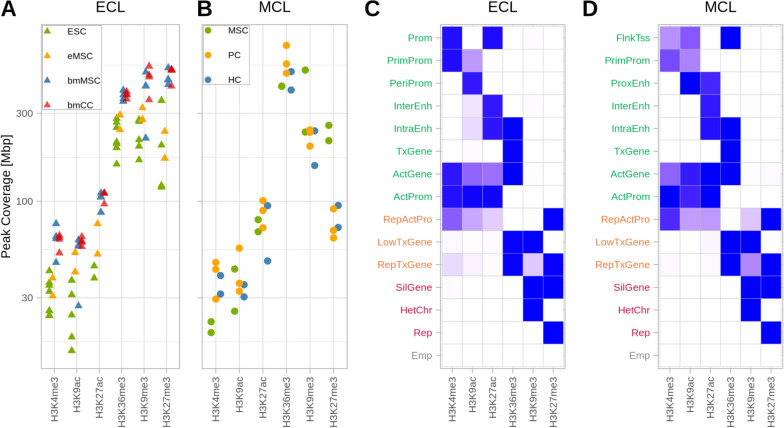 Figure 1
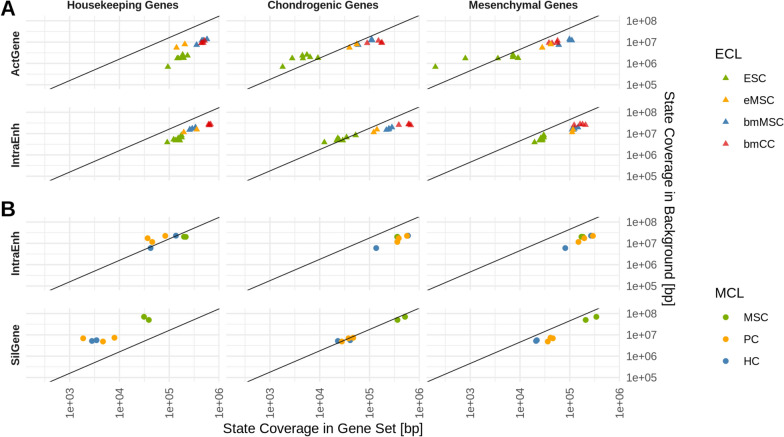 Figure 2
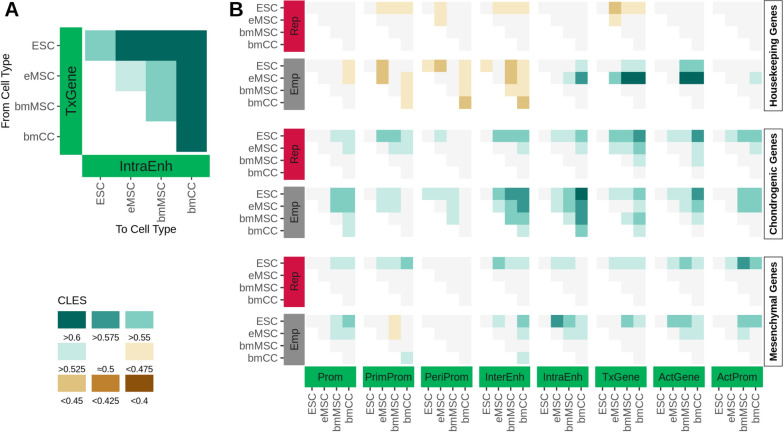 Figure 3
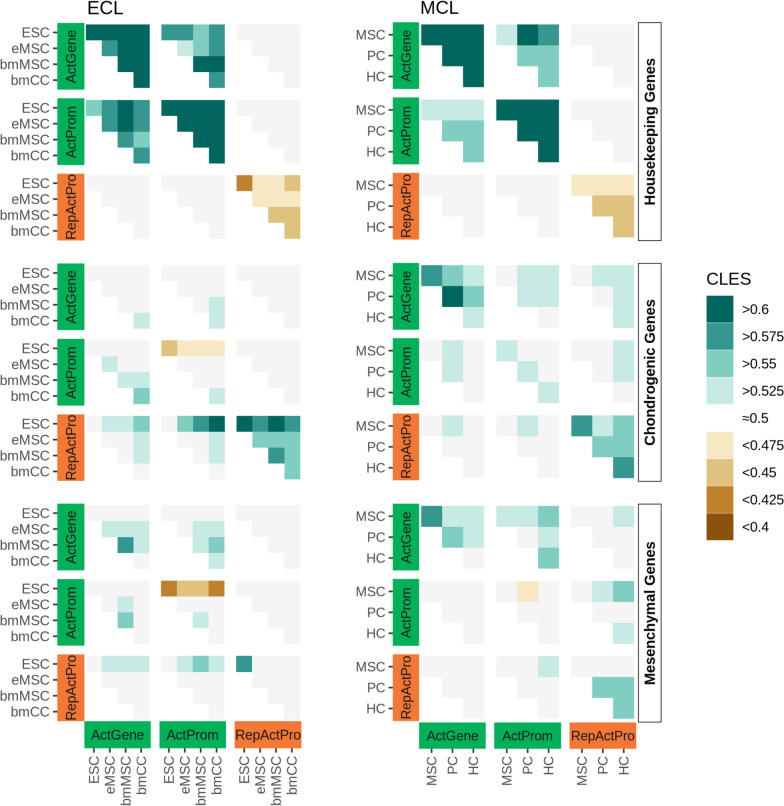 Figure 4
Peer Reviews
No public reviews on file for this paper yet. If you reviewed it on a platform where reviews are public (OpenReview, ICLR, NeurIPS, ICML), you can paste yours below so the community can read it here.
Videos
No videos yet. Explain this paper in a talk, walkthrough, or lecture? Add one.
Taxonomy
TopicsGenomics and Chromatin Dynamics · Cancer-related molecular mechanisms research · NF-κB Signaling Pathways