ebv-sisRNA-3 contributes to the formation of G4-associated R-loop upstream of EBV lytic replication origin in latently infected cells
Bo Wang, Grace Tin Yun Chung, Yi Shuai, Man Wu, Danyang Ji, Raymond Wai Ming Lung, Yuk Yu Chan, Ming Ting Liu, Ee Ling Kong, Shin Yee Hui, Hei Man Leung, Qian Wu, Melissa Sue Ann Chan, Xin Wang, Guang Zhu, Kevin Y. Yip, Chun Kit Kwok, Kwok Wai Lo, Chi Man Tsang

TL;DR
A new EBV non-coding RNA, ebv-sisRNA-3, is found to form DNA structures that may influence viral replication in cancer cells.
Contribution
Discovery and characterization of ebv-sisRNA-3, a novel EBV transcript involved in forming R-loops and G-quadruplexes.
Findings
ebv-sisRNA-3 is abundantly expressed in EBV-positive cancer cells and clinical specimens.
ebv-sisRNA-3 forms R-loops and G-quadruplexes upstream of the EBV lytic replication origin.
Endogenous G-quadruplexes are identified near EBER1 and EBNA1 promoters in the EBV genome.
Abstract
In EBV-associated epithelial cancers, only a limited number of viral proteins are translated, while multiple EBV-encoded non-coding RNAs are expressed to minimize activation of the host’s immune response. These non-coding RNAs have been shown to play regulatory roles in maintaining latency and promoting cancer progression while many aspects of them remain to be elucidated. Here we revealed abundant expression of ebv-sisRNA-3, a novel EBV transcript in nasopharyngeal carcinoma and EBV-associated gastric cancer. This 5–7 kb non-polyA transcript is derived from RPMS1 intron and is partially complementary to LF3. We observed high expression level of ebv-sisRNA-3 in multiple EBV-positive cancer cells and clinical specimens, with accumulation in the cell nucleus. Notably, ebv-sisRNA-3 invades the double-strand DNA in trans upstream of lytic replication origin in EBV genome and leads to the…
Genes, proteins, chemicals, diseases, species, mutations and cell lines named across the full text — each resolved to its canonical identifier and authoritative record.
Click any figure to enlarge with its caption.
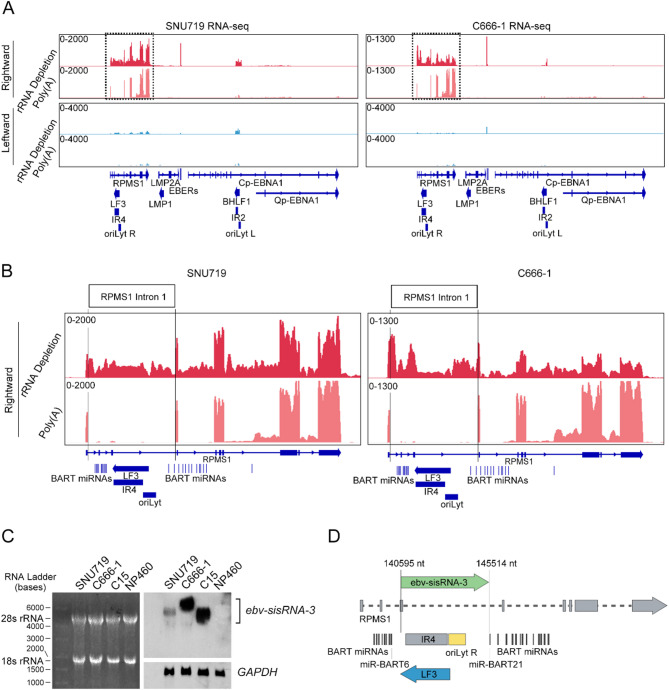 Figure 1
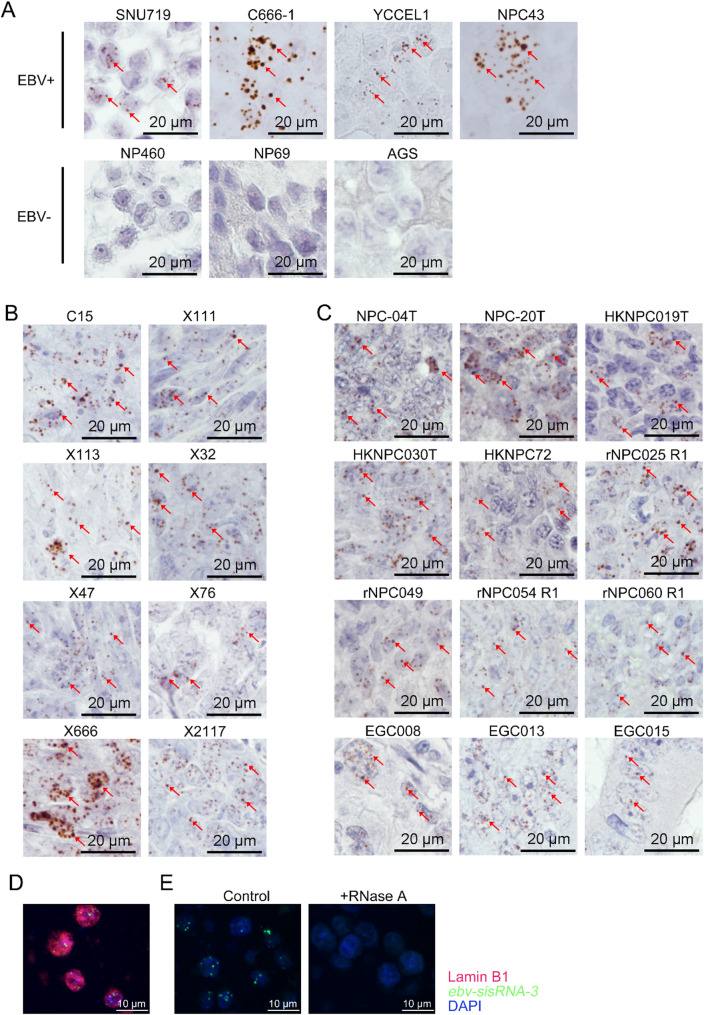 Figure 2
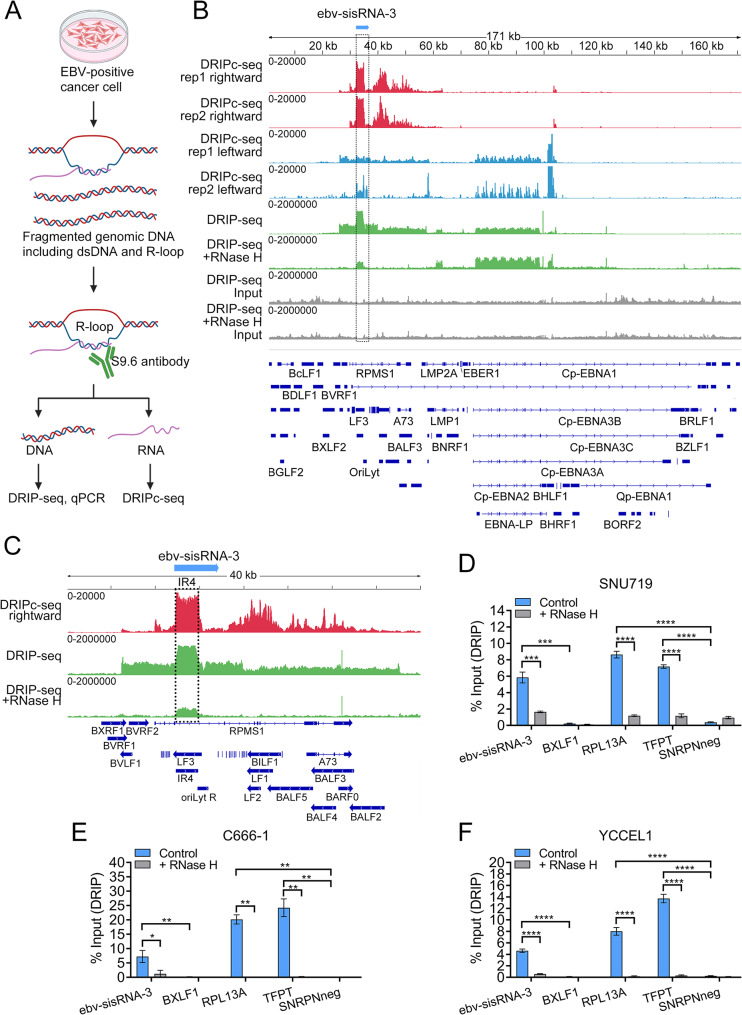 Figure 3
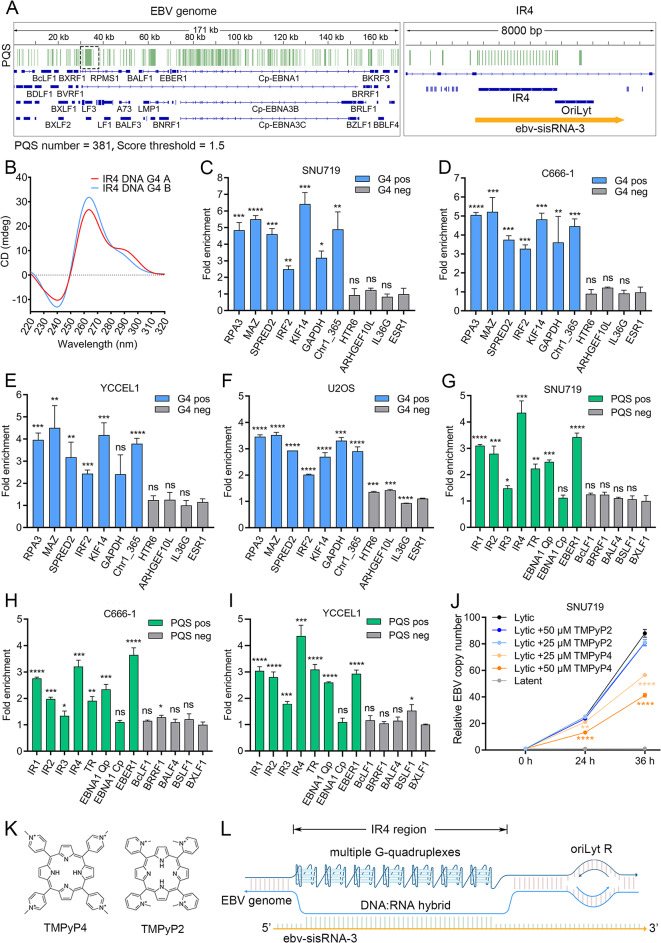 Figure 4
Peer Reviews
No public reviews on file for this paper yet. If you reviewed it on a platform where reviews are public (OpenReview, ICLR, NeurIPS, ICML), you can paste yours below so the community can read it here.
Videos
No videos yet. Explain this paper in a talk, walkthrough, or lecture? Add one.
Taxonomy
TopicsPolyomavirus and related diseases · RNA Interference and Gene Delivery · Bacteriophages and microbial interactions