Determinants of post-discharge stunting among diarrhoeal children aged 2–23 months in Bangladesh: findings from Antibiotics for Children with Severe Diarrhea (ABCD) trial
Sharika Nuzhat, Rina Das, Md. Farhad Kabir, Md. Ahshanul Haque, Abu Sadat Mohammad Sayeem Bin Shahid, Mehnaz Kamal, Md. Tanveer Faruk, Tahmeed Ahmed, Mohammod Jobayer Chisti

TL;DR
This study identifies factors that contribute to stunting in young children in Bangladesh after they are discharged from hospital treatment for severe diarrhea.
Contribution
The study introduces a predictive model to estimate post-discharge stunting risk without requiring follow-up measurements.
Findings
Stunting increased from 41.2% at enrollment to 49.3% by day 180 in followed children.
Predictive model estimated 18.4% of non-followed children would be stunted at 180 days.
Dehydration on admission and larger household size were linked to persistent stunting.
Abstract
Despite the global burden of stunting, data regarding the determinants of stunting observed on follow-up after discharge from health care facilities among children treated for severe diarrhoea are limited. We investigated factors influencing stunting during post-discharge follow-up among under-2 children treated for severe diarrhoea. We developed a predictive model to estimate stunting prevalence and identify risk factors without post-discharge anthropometry. We analysed data from two sites in Bangladesh participating in the multi-country, double-blind, randomised clinical trial on Antibiotics for Children with Severe Diarrhoea among children aged 2–23 months, from 2017 to 2019. Severe diarrhoea was defined as a child who had acute diarrhoea with severe/some dehydration, or moderate wasting, or severe stunting on admission. Multiple linear regression was constructed to predict the…
Genes, proteins, chemicals, diseases, species, mutations and cell lines named across the full text — each resolved to its canonical identifier and authoritative record.
Click any figure to enlarge with its caption.
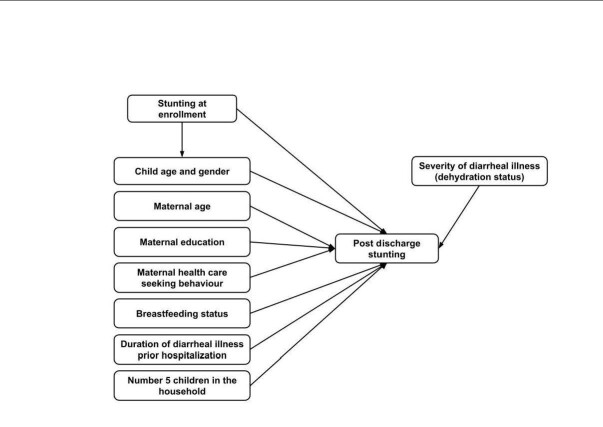 Figure 1
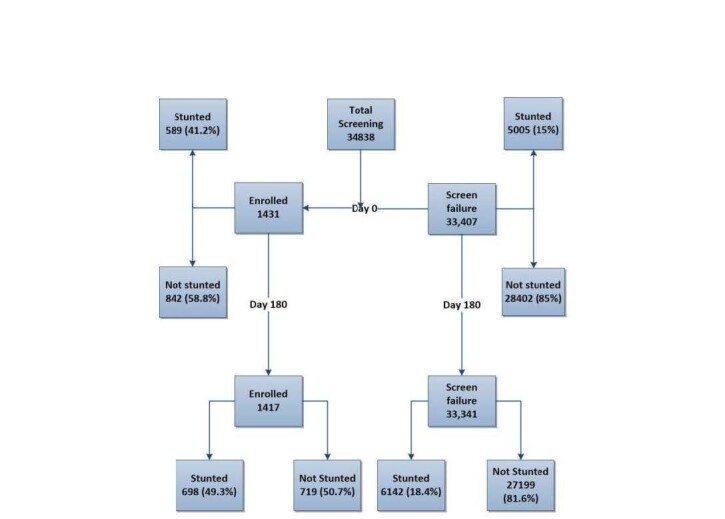 Figure 2
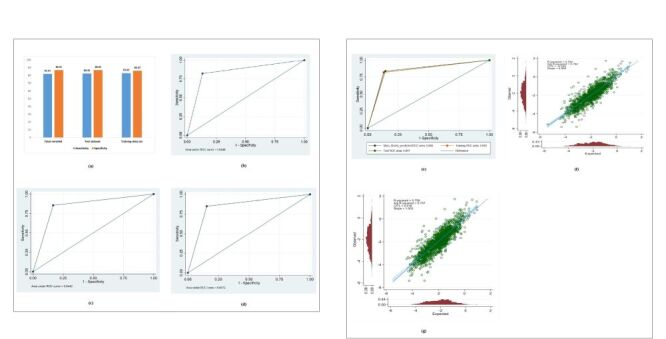 Figure 3
Peer Reviews
No public reviews on file for this paper yet. If you reviewed it on a platform where reviews are public (OpenReview, ICLR, NeurIPS, ICML), you can paste yours below so the community can read it here.
Videos
No videos yet. Explain this paper in a talk, walkthrough, or lecture? Add one.
Taxonomy
TopicsChild Nutrition and Water Access · Fecal contamination and water quality · Wastewater Treatment and Reuse