MECP2 duplication syndrome—Typical EEG characteristics
Walter Otu, Ritu Sudhakaran, German Garza‐Garcia, Krishna Parekh, Irfan S. Sheikh

Abstract
Genes, proteins, chemicals, diseases, species, mutations and cell lines named across the full text — each resolved to its canonical identifier and authoritative record.
Click any figure to enlarge with its caption.
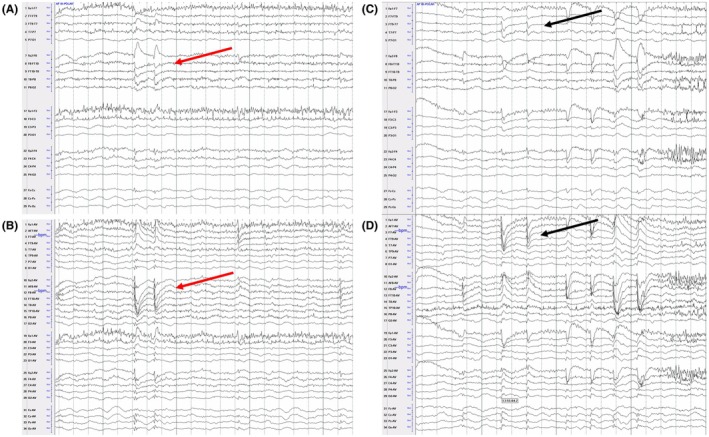 Figure 1
Peer Reviews
No public reviews on file for this paper yet. If you reviewed it on a platform where reviews are public (OpenReview, ICLR, NeurIPS, ICML), you can paste yours below so the community can read it here.
Videos
No videos yet. Explain this paper in a talk, walkthrough, or lecture? Add one.
Taxonomy
TopicsGenetics and Neurodevelopmental Disorders · Energy Harvesting in Wireless Networks · Congenital heart defects research
We report a 36‐year‐old male with a history of psychomotor and intellectual delay, right hemiparesis, and seizures since age 17 controlled on valproic acid, felbamate, and rufinamide. Chromosomal microarray performed at age 28 revealed a copy number gain of chromosome band Xq28 (3.273 Mb in size), including the MECP2 gene, consistent with MECP2 duplication syndrome (MDS).1 EEG demonstrated a poorly organized background with generalized delta slowing and bilateral independent frontotemporal interictal epileptiform discharges (Figure 1). EEG findings in patients with MDS can be consistent with generalized delta slowing and interictal findings of generalized slow spike‐andand‐wave asynchronous discharges with frontotemporal predominance. Additional EEG findings can include interictal sharp and slow wave discharges with frontotemporal predominance and generalized paroxysmal fast activity (GPFA).2, 3, 4 This patient's history is additionally notable for recurrent infections and autistic features, which are other common manifestations of MDS.5, 6
Test yourself
- Which EEG pattern can be seen in patients with MECP2 duplication syndrome?
- Normal background activity
- Generalized slowing with focal/multifocal discharges
- Continuous spike‐and‐wave during sleep
- Hypsarrhythmia
- Which of the following is a common comorbidity in MECP2 duplication syndrome?
- Cardiomyopathy
- Recurrent respiratory infections
- Renal failure
- Diabetes mellitus
- What is the inheritance pattern of MECP2 duplication syndrome?
- Autosomal dominant
- Autosomal recessive
- X‐linked recessive
- Mitochondrial
Answers may be found in the supporting information
Supporting information
Data S1.
Data S2.
The reference list from the paper itself. Each links out to its DOI / PubMed record.
- 1Collins BE , Neul JL . Rett syndrome and MECP 2 duplication syndrome: disorders of Me CP 2 dosage. Neuropsychiatr Dis Treat. 2022;18:2813–2835.36471747 10.2147/NDT.S 371483 PMC 9719276 · doi ↗ · pubmed ↗
- 2Caumes R , Boespflug‐Tanguy O , Villeneuve N , Lambert L , Delanoe C , Leheup B , et al. Late onset epileptic spasms is frequent in MECP 2 gene duplication: electroclinical features and long‐term follow‐up of 8 epilepsy patients. Eur J Paediatr Neurol. 2014;18(4):475–481.24703762 10.1016/j.ejpn.2014.03.005 · doi ↗ · pubmed ↗
- 3Lotti F , Geronzi U , Grosso S . Electroencephalographic and epilepsy findings in mecp 2 duplication syndrome. A family study. Brain Dev. 2019;41(5):456–459.30642617 10.1016/j.braindev.2018.12.008 · doi ↗ · pubmed ↗
- 4Vignoli A , Borgatti R , Peron A , Zucca C , Ballarati L , Bonaglia C , et al. Electroclinical pattern in MECP 2 duplication syndrome: eight new reported cases and review of literature. Epilepsia. 2012;53(7):1146–1155.22578097 10.1111/j.1528-1167.2012.03501.x · doi ↗ · pubmed ↗
- 5Ramocki MB , Tavyev YJ , Peters SU . The MECP 2 duplication syndrome. Am J Med Genet A. 2010;152A(5):1079–1088.20425814 10.1002/ajmg.a.33184 PMC 2861792 · doi ↗ · pubmed ↗
- 6Van Esch H . MECP 2 duplication syndrome. In: Adam MP , editor. Gene Reviews®. Seattle: University of Washington; 2008.