A case report of septic shock caused by opportunistic infections associated with anti-interferon-γ autoantibody positivity: diagnostic and therapeutic challenges
Jinlian Shao, Xiao Xu, Xunjie Xie, Yiqi Fan, Dacheng Zhang, Waijiao Tang

TL;DR
A case report describes a patient with a rare immune disorder causing severe infections and highlights the importance of early diagnosis and tailored treatment.
Contribution
This case report highlights the diagnostic and therapeutic challenges of AIGA-associated opportunistic infections and emphasizes the importance of early antibody detection.
Findings
Anti-gamma interferon antibody positivity was confirmed in a patient with severe mixed opportunistic infections.
Combination antimicrobial and immunoglobulin therapy led to significant clinical improvement.
Early identification of immune dysfunction and pathogens is critical for successful treatment.
Abstract
Since 2004, there has been an increasing number of reports on severe, persistent, or recurrent Salmonella infections in adults with adult immunodeficiency associated with anti-gamma interferon antibody positivity (AIGA). AIGA patients experience rapid disease progression upon infection with opportunistic pathogens, high mortality rates, and strong disease latency, posing significant challenges for diagnosis and treatment. This article discusses the diagnosis and treatment strategies for AIGA with opportunistic pathogen infection through the diagnosis and treatment process of a 61-year-old male patient. The patient presented with diarrhea and fever for 2 weeks and was diagnosed with non-typhoidal Salmonella infection at an external hospital. The condition progressed to shock and the patient was transferred to our EICU. After admission, the pathogens were confirmed through chest CT,…
Genes, proteins, chemicals, diseases, species, mutations and cell lines named across the full text — each resolved to its canonical identifier and authoritative record.
Click any figure to enlarge with its caption.
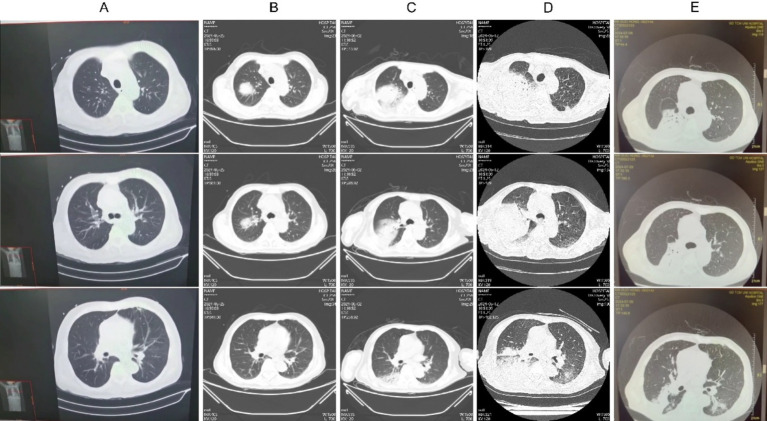 Figure 1
Peer Reviews
No public reviews on file for this paper yet. If you reviewed it on a platform where reviews are public (OpenReview, ICLR, NeurIPS, ICML), you can paste yours below so the community can read it here.
Videos
No videos yet. Explain this paper in a talk, walkthrough, or lecture? Add one.
Taxonomy
TopicsPneumocystis jirovecii pneumonia detection and treatment · Immunodeficiency and Autoimmune Disorders · Pneumonia and Respiratory Infections
Background
Since 2004, there has been an increase in reports of adult-onset immunodeficiency induced by adult-onset immunodeficiency induced by anti-interferon-γ autoantibodies (AIGA), which has been identified as a predisposing factor for individuals to develop severe, persistent, or recurrent systemic infections with Salmonella species and other pathogens (1). Patients with AIGA who develop opportunistic infections often experience rapid deterioration in their condition and a high mortality rate. The insidious nature of this condition presents a significant challenge to accurate diagnosis and management remain challenging. Identifying characteristic disease patterns and establishing standardized treatment protocols are areas warranting further exploration.
Case summary
A 61-year-old male, presented with diarrhea and fever for 2 weeks. Initial testing at an external hospital revealed non-typhoidal Salmonella in blood, urine, and stool samples. A chest CT scan (Figure 1A) showed no abnormalities. Due to the progression to shock, he was transferred to Emergency Intensive Care Unit (EICU) at our hospital. A post-admission chest CT scan (Figure 1B) revealed consolidation in the right lung, and a positive blood culture indicated the presence of non-typhoidal Salmonella. The patient received meropenem, levofloxacin, and azithromycin for infection control, which resulted in a reduction in body temperature, white blood cell count (15.7 to 11.38G/L), procalcitonin (PCT; 179.59 to 47.83 μg/L), C-reactive protein (CRP; 264 to 134 mg/L), and IL-6 (5,000 to 70.4 ng/L). The patient’s condition showed clinical improvement including the resolution of shock and an improvement in stool frequency. However, the platelet count exhibited a persistent decline, dropping from 10 to 3 G/L.
Chest CT imaging alterations during the patient’s clinical management. (A) May 14, 2014; (B) May 25, w2024; (C) June 2, 2024; (D) June 12, 2024; (E) July 9, 2024.
Metagenomic next-generation sequencing (mNGS) of blood samples revealed the presence of Legionella pneumophila and Salmonella. The patient’s symptoms worsened, with an increase in dyspnea and hypoxemia, and follow-up CT scans (Figures 1C,D) demonstrated a worsening of right lung consolidation and new involvement in the left lower lung. Bronchoalveolar lavage fluid (BALF) was sent for mNGS, which identified the following organisms: Enterococcus faecium, Legionella pneumophila, Candida tropicalis, Candida albicans, Herpes Simplex Virus type 1 (HSV-1), and Cytomegalovirus (CMV). Further immunological screening revealed CD4 + T cells at 303/μL, CD8 + T cells at 74/μL, and an HLA-DR positivity rate of 15.38%. Test result of HIV was negative, while anti-IFN-γ antibody level was elevated at 163.78 ng/mL, indicating the presence of adult-onset immunodeficiency induced by anti-interferon-γ autoantibodies (AIGA). Treatment with meropenem, linezolid, doxycycline, ganciclovir, and caspofungin, in conjunction with intravenous immunoglobulin (IVIG) at 20 g/day for 5 days, led to gradual absorption of pulmonary infiltrates (Figure 1E), an increase in platelet counts, and significant improvement in overall condition, thereby allowing discharge.
Discussion
Extraintestinal dissemination of non-typhoidal Salmonella is commonly observed in immunocompromised individuals. Studies have shown that in Southeast Asia, 88% of individuals with multiple opportunistic infections have detectable anti-IFN-γ autoantibodies (2). Consequently, an anti-IFN-γ antibody test was conducted, which returned positive. The absence of a distinctive phenotype makes early diagnosis of AIGA a challenge. In this patient, HIV was negative, and there was no history of long-term immunosuppressive therapy, corticosteroid use, malignancy, or autoimmune disorders. The presence of extraintestinal dissemination of Salmonella and multiple opportunistic infections indicated the possibility of AIGA. This prompts the question of whether non-typhoidal Salmonella-infected patients with extraintestinal spread should be screened for anti-IFN-γ antibody levels for early diagnosis and targeted treatment.
The patient’s initial lung consolidations were presumed to be due to Salmonella or Legionella pneumonia. However, as lesions progressed despite treatment, mNGS confirmed the involvement of multiple opportunistic pathogens. This highlights that, even if blood cultures are positive for Salmonella, suboptimal response to treatment in such patients warrants early use of diverse diagnostic methods to confirm the presence of alternative opportunistic infections. Additionally, treatment for the primary disease is critical. Based on related literature (3), immunosuppressants or corticosteroids were deemed unsuitable for this patient after evaluation. Thus, a five-day IVIG regimen of 20 g/day was administered. The patient experienced no recurrence of infection, and pulmonary imaging gradually improved, ultimately leading to recovery and discharge. However, since the patient has AIGA and belongs to a high-risk group for opportunistic pathogen infections, there is a significant likelihood of recurrent infections caused by opportunistic pathogens such as NTM (Nontuberculous Mycobacteria), Salmonella, and Legionella in the future. The patient should closely monitor their immune status and seek medical attention promptly if any abnormalities are detected. It is imperative to acknowledge that our study is subject to certain methodological constraints that warrant explicit disclosure. For example, we need to dynamically monitor the serum IFNγ antibody concentration and IFNγ level of AIGAs patients, and preferably measure the level of anti-IFNγ neutralizing antibodies.
Conclusion
Patients with AIGA often experience rapid disease progression upon acquiring opportunistic infections. Timely differentiation of AIGA and early identification of additional opportunistic pathogens beyond Salmonella, coupled with appropriate immunotherapy, are crucial for the effective treatment of this patient population.
The reference list from the paper itself. Each links out to its DOI / PubMed record.
- 1Zhang B Fan J Huang C Fan H Chen J Huang X. Characteristics and outcomes of anti-interferon gamma antibody-associated adult onset immunodeficiency. J Clin Immunol. (2023) 43:1660–70. doi: 10.1007/s 10875-023-01537-0, PMID: 37365453 PMC 10499688 · doi ↗ · pubmed ↗
- 2Browne SK Burbelo PD Chetchotisakd P Suputtamongkol Y Kiertiburanakul S Shaw PA. Adult-onset immunodeficiency in Thailand and Taiwan. N Engl J Med. (2012) 367:725–34. doi: 10.1056/NEJ Moa 1111160, PMID: 22913682 PMC 4190026 · doi ↗ · pubmed ↗
- 3Qiu Y Fang G Ye F Zeng W Tang M Wei X. Pathogen spectrum and immunotherapy in patients with anti-IFN-gamma autoantibodies: a multicenter retrospective study and systematic review. Front Immunol. (2022) 13:1051673. doi: 10.3389/fimmu.2022.1051673, PMID: 36569827 PMC 9772057 · doi ↗ · pubmed ↗