Successful biliary cannulation in complex anatomy: effectiveness of a novel rotatable sphincterotome in a case of billroth-I gastrectomy and periampullary diverticulum
Shohei Kondo, Yasuhiro Kuraishi, Akira Nakamura

Abstract
Genes, proteins, chemicals, diseases, species, mutations and cell lines named across the full text — each resolved to its canonical identifier and authoritative record.
Click any figure to enlarge with its caption.
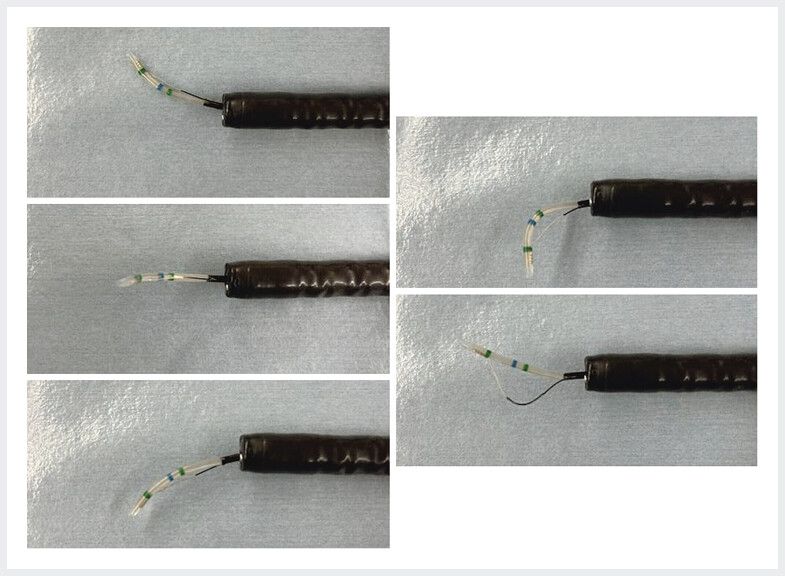 Fig. 1
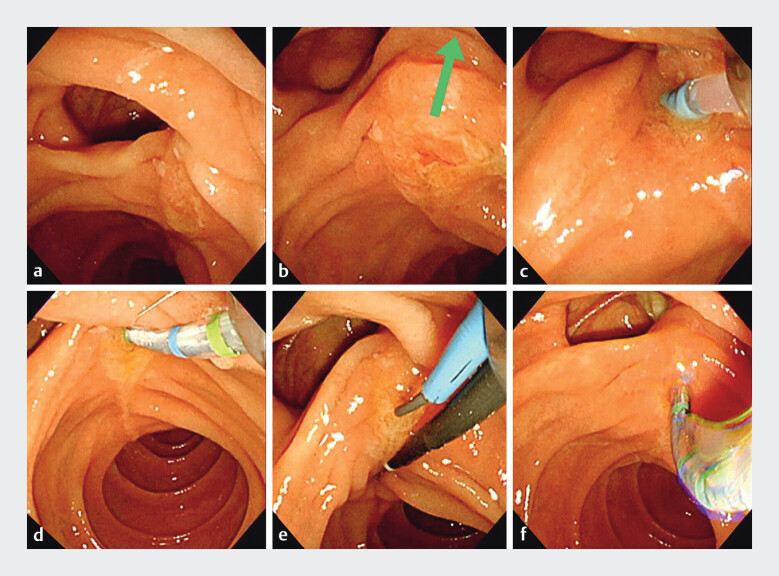 Fig. 2
Peer Reviews
No public reviews on file for this paper yet. If you reviewed it on a platform where reviews are public (OpenReview, ICLR, NeurIPS, ICML), you can paste yours below so the community can read it here.
Videos
No videos yet. Explain this paper in a talk, walkthrough, or lecture? Add one.
Taxonomy
TopicsGallbladder and Bile Duct Disorders · Biliary and Gastrointestinal Fistulas · Pediatric Hepatobiliary Diseases and Treatments
Biliary cannulation is a critical step in therapeutic endoscopic retrograde cholangiopancreatography (ERCP), but often poses challenges due to anatomical variations. In patients with Billroth-I gastrectomy, the duodenoscope tends to be positioned too closely to the papilla, which complicates cannulation with a standard catheter due to the difficulty in achieving an upward-facing view 1 . Moreover, in cases of periampullary diverticulum, the bile duct course frequently deviates, thereby complicating alignment with the duct axis 2 . A newly developed sphincterotome (ENGETSU, KANEKA Medix) offers enhanced rotational capability and adjustable blade angulation to enable precise adjustments in both vertical and horizontal planes ( Fig. 1 ). This functionality may be advantageous in overcoming the challenges from difficult anatomical orientations. We herein describe the successful implementation of this novel sphincterotome for biliary canulation in a patient with Billroth-I gastrectomy and periampullary diverticulum.
A newly developed sphincterotome (ENGETSU, KANEKA Medix) offers enhanced rotational capability and adjustable blade angulation to enable precise adjustments in both vertical and horizontal planes.
A 82-year-old man who had undergone Billroth-I gastrectomy presented with obstructive jaundice due to hilar cholangiocarcinoma and underwent ERCP for biliary drainage ( Fig. 2 , Video 1 ). The major papilla was located at the lower right edge of the diverticulum. Initial attempts at biliary cannulation using a standard ERCP catheter and a conventional sphincterotome were unsuccessful due to misalignment with the bile duct axis as being improperly oriented either downward or to the left. Employment of the two-devices-in-one-channel technique 3 was also ineffective. Biliary cannulation was then attempted using ENGETSU. By adjusting its rotation and angulation, the sphincterotome could successfully be aligned with the bile duct axis in vertical and horizontal planes to enable cannulation. Cholangiography revealed a hilar bile duct stricture. Following endoscopic sphincterotomy using ENGETSU, we performed trans-papillary biliary biopsy and drainage with a plastic stent.
a The major papilla was located at the lower right edge of the diverticulum. b Arrow indicates the bile duct axis. c and d Initial attempts at biliary cannulation using a standard ERCP catheter and a conventional sphincterotome were unsuccessful due to misalignment with the bile duct axis by improper orientation either downward or to the left. e Selective biliary cannulation with the two-devices-in-one-channel technique was also ineffective. f By adjusting the rotation and angulation of the ENGETSU sphincterotome, close alignment with the bile duct axis was achieved in both vertical and horizontal planes, enabling successful cannulation. Abbreviation: ERCP, endoscopic retrograde cholangiopancreatography.
A novel rotatable sphincterotome enabled successful selective biliary cannulation in a challenging case of Billroth-I gastrectomy with periampullary diverticulum.Video 1
ENGETSU’s rotational and angulation capabilities provided precise control around the bile duct axis and facilitated biliary cannulation. This device may significantly improve the success rate of ERCP in cases of challenging anatomy.
Endoscopy_UCTN_Code_TTT_1AR_2AB
The reference list from the paper itself. Each links out to its DOI / PubMed record.
- 1Krutsri C Kida M Yamauchi H Current status of endoscopic retrograde cholangiopancreatography in patients with surgically altered anatomy World J Gastroenterol 2019253313333331341358 10.3748/wjg.v 25.i 26.3313 PMC 6639547 · doi ↗ · pubmed ↗
- 2Panteris V Vezakis A Filippou G Influence of juxtapapillary diverticula on the success or difficulty of cannulation and complication rate Gastrointest Endosc 20086890391010.1016/j.gie.2008.03.109218635174 · doi ↗ · pubmed ↗
- 3Fujita N Noda Y Kobayashi G Ercp for intradiverticular papilla: Two-devices-in-one-channel method. Endoscopic retrograde cholangiopancreatography Gastrointest Endosc 19984851752010.1016/s 0016-5107(98)70096-39831843 · doi ↗ · pubmed ↗