Knowledge and Practice of Eyelid Hygiene Among the General Population in Al-Qunfudah Governorate, Saudi Arabia: A Cross-Sectional Study
Safa H Alkalash, Hassan A Alzubaidi, Nawaf M Alsuhaymi, Abdulwahab A Alzubaidi, Ali N Alfaqih, Mohammed H Alothiqi, Khaled A Alfaqih

TL;DR
This study examines eyelid hygiene practices and knowledge among people in Al-Qunfudah, Saudi Arabia, finding good habits but gaps in understanding certain eye conditions.
Contribution
The study provides insights into eyelid hygiene behaviors and awareness of ocular surface diseases in a specific Saudi population.
Findings
Most participants washed their face and eyelashes regularly, indicating good hygiene practices.
Awareness of meibomian gland dysfunction was low despite common use of eye cosmetics.
Higher income and eyelid cleaning habits correlated with better knowledge of dry eye disease.
Abstract
Introduction: It is believed that ocular surface diseases (OSDs) represent a public health issue. Common disorders include blepharitis, dry eyes, and meibomian gland dysfunction (MGD). Eyelid cleanliness remains essential for preserving eyelid health and relieving ocular symptoms. Objectives: This study aims to assess the knowledge and practice of eyelid hygiene and its associated factors among the general population in Al-Qunfudah governorate, Saudi Arabia. Methods: A cross-sectional study was conducted on a sample of 273 adults who are above 18 years of age and live in Al-Qunfudah. The data collection tool was a validated self-administered online questionnaire, which was preceded by consent and insurance to maintain the participant's confidentiality. Results: A total of 273 eligible participants completed the study questionnaire with a mean age of 26.9 ± 9.2 years. Exactly 196…
Genes, proteins, chemicals, diseases, species, mutations and cell lines named across the full text — each resolved to its canonical identifier and authoritative record.
Click any figure to enlarge with its caption.
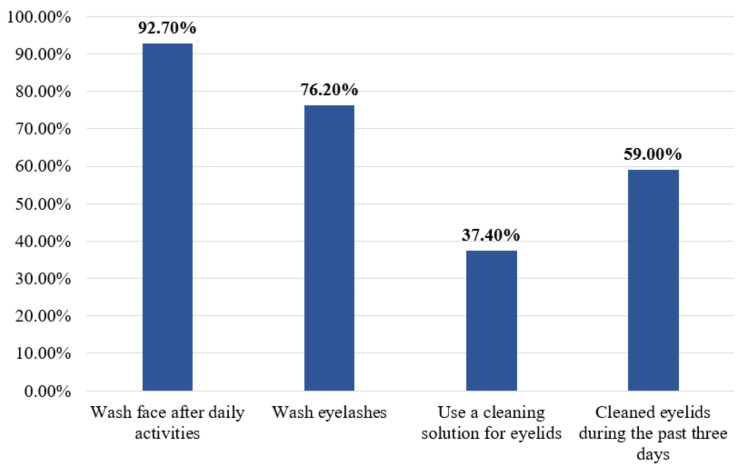 Figure 1
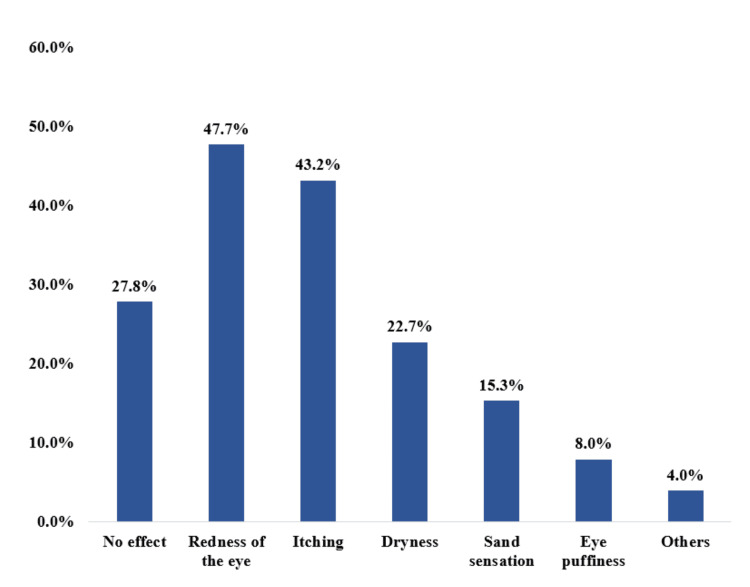 Figure 2
| Variables | N | % |
| Age in years | ||
| 18-20 | 67 | 24.5 |
| 21-25 | 84 | 30.8 |
| 26-30 | 51 | 18.7 |
| 31-40 | 44 | 16.1 |
| >40 | 27 | 9.9 |
| Mean ± SD | 26.9 ± 9.2 | |
| Gender | ||
| Male | 77 | 28.2 |
| Female | 196 | 71.8 |
| Nationality | ||
| Saudi | 272 | 99.6 |
| Non-Saudi | 1 | 0.4 |
| Marital status | ||
| Single | 182 | 66.7 |
| Married | 91 | 33.3 |
| Educational level | ||
| Below secondary | 18 | 6.6 |
| Secondary | 58 | 21.2 |
| University/above | 197 | 72.2 |
| Employment | ||
| Unemployed | 50 | 18.3 |
| Student | 164 | 60.1 |
| Employed | 52 | 19.0 |
| Retired | 7 | 2.6 |
| Monthly income | ||
| <5,000 SR | 101 | 37.0 |
| 5,000-10,000 SR | 84 | 30.8 |
| >10,000 SR | 88 | 32.2 |
| Variables | N | % |
| Background regarding dry eye disease | ||
| Yes | 199 | 72.9 |
| No | 74 | 27.1 |
| Definition of dry eye disease | ||
| A multifactorial disease that affects tears and the surface of the eye | 86 | 31.5 |
| Functional abnormalities of the meibomian glands (eye gland) | 31 | 11.4 |
| Opacity of the eye lens | 9 | 3.3 |
| Group of diseases associated with optic nerve damage | 20 | 7.3 |
| Don’t know | 127 | 46.5 |
| Background regarding meibomian gland dysfunction | ||
| Yes | 51 | 18.7 |
| No | 222 | 81.3 |
| Definition of meibomian gland dysfunction | ||
| Functional abnormalities of the meibomian glands (eye gland) | 87 | 31.9 |
| It is a multifactorial disease that affects the tears and the surface of the eye | 11 | 4.0 |
| Group of diseases associated with optic nerve damage | 5 | 1.8 |
| Don't know | 170 | 62.3 |
| Having a history of dry eye symptoms | ||
| Never | 50 | 18.3 |
| Sometimes | 172 | 63.0 |
| Mostly | 51 | 18.7 |
| Having a history of a foreign body sensation inside eyes | ||
| Never | 84 | 30.8 |
| Sometimes | 157 | 57.5 |
| Mostly | 32 | 11.7 |
| Having a history of eye fatigue | ||
| Never | 56 | 20.5 |
| Sometimes | 170 | 62.3 |
| Mostly | 47 | 17.2 |
| Suffered from any uncomfortable feeling in the eye | ||
| Never | 49 | 17.9 |
| Sometimes | 183 | 67.0 |
| Mostly | 41 | 15.0 |
| Eye care products used when symptoms appear | ||
| Eye drops without a prescription | 66 | 24.2 |
| Prescribed eye drops | 52 | 19.0 |
| Cleaning the eyelid | 19 | 7.0 |
| Protective glasses | 19 | 7.0 |
| Eye warming | 21 | 7.7 |
| Nothing | 96 | 35.2 |
| Variables | N | % | |
| Use eye cosmetics | Yes | 176 | 89.8 |
| No | 20 | 10.2 | |
| If yes, how many? (n=176) | 1 | 69 | 39.2 |
| 2 | 35 | 19.9 | |
| 3 | 41 | 23.3 | |
| 4+ | 31 | 17.6 | |
| Type of used eye cosmetics? | Mascara | 154 | 88.0 |
| Eye shadow | 136 | 77.7 | |
| Kohl | 114 | 65.1 | |
| Contact lenses | 64 | 36.6 | |
| Eyeliner | 64 | 36.6 | |
| Artificial eyelashes | 19 | 10.9 | |
| Frequency of using mascara | 3 to 4 times a week | 68 | 43.9 |
| 1-2 times a week | 38 | 24.5 | |
| Once a month | 29 | 18.7 | |
| Less than once a month | 20 | 12.9 | |
| Frequency of using eye shadow | 3 to 4 times a week | 19 | 14.0 |
| 1-2 times a week | 32 | 23.5 | |
| Once a month | 45 | 33.1 | |
| Less than once a month | 40 | 29.4 | |
| Frequency of using eyeliner | 1-2 times a week | 9 | 14.1 |
| Once a month | 28 | 43.8 | |
| Less than once a month | 27 | 42.2 | |
| Frequency of using artificial eyelashes | 1-2 times a week | 3 | 23.1 |
| Once a month | 1 | 7.7 | |
| Less than once a month | 9 | 69.2 | |
| Frequency of using contact lenses | 3 to 4 times a week | 13 | 19.7 |
| 1-2 times a week | 14 | 21.2 | |
| Once a month | 22 | 33.3 | |
| Less than once a month | 17 | 25.8 | |
| Wash face and eyes before applying makeup | Yes | 149 | 84.7 |
| No | 27 | 15.3 | |
| Make sure the tools are clean before using them on the eye area | Yes | 145 | 82.4 |
| No | 31 | 17.6 | |
| Share cosmetics and tools used to apply them to the eyes with another person | Yes | 86 | 48.9 |
| No | 90 | 51.1 | |
| Use a cleanser to remove cosmetics | Yes | 149 | 84.7 |
| No | 27 | 15.3 | |
| Use sanitizer or wash hands before putting on and removing contact lenses | Yes | 62 | 93.9 |
| No | 4 | 6.1 | |
| Solution used for contact lens | Lens solution | 57 | 86.4 |
| Sterile materials | 5 | 7.6 | |
| Tap water | 4 | 6.1 | |
| Variables | Knew about dry eye disease | χ2 test | p-value | |||
| Yes | No | |||||
| N | % | N | % | |||
| Age in years | 3.502 | 0.478 | ||||
| 18-20 | 45 | 67.2 | 22 | 32.8 | ||
| 21-25 | 63 | 75.0 | 21 | 25.0 | ||
| 26-30 | 37 | 72.5 | 14 | 27.5 | ||
| 31-40 | 31 | 70.5 | 13 | 29.5 | ||
| >40 | 23 | 85.2 | 4 | 14.8 | ||
| Gender | 0.415 | 0.520 | ||||
| Male | 54 | 70.1 | 23 | 29.9 | ||
| Female | 145 | 74.0 | 51 | 26.0 | ||
| Marital status | 0.454 | 0.500 | ||||
| Single | 135 | 74.2 | 47 | 25.8 | ||
| Married | 64 | 70.3 | 27 | 29.7 | ||
| Educational level | 1.704 | 0.427 | ||||
| Below secondary | 11 | 61.1 | 7 | 38.9 | ||
| Secondary | 41 | 70.7 | 17 | 29.3 | ||
| University/above | 147 | 74.6 | 50 | 25.4 | ||
| Employment | 8.034^ | 0.045*^ | ||||
| Unemployed | 34 | 68.0 | 16 | 32.0 | ||
| Student | 128 | 78.0 | 36 | 22.0 | ||
| Employed | 31 | 59.6 | 21 | 40.4 | ||
| Retired | 6 | 85.7 | 1 | 14.3 | ||
| Monthly income | 7.511 | 0.023* | ||||
| <5,000 SR | 66 | 65.3 | 35 | 34.7 | ||
| 5,000-10,000 SR | 60 | 71.4 | 24 | 28.6 | ||
| >10,000 SR | 73 | 83.0 | 15 | 17.0 | ||
| Washing face after daily activities | 11.818^ | 0.001*^ | ||||
| Yes | 191 | 75.5 | 62 | 24.5 | ||
| No | 8 | 40.0 | 12 | 60.0 | ||
| Washing eyelashes | 2.959 | 0.085 | ||||
| Yes | 157 | 75.5 | 51 | 24.5 | ||
| No | 42 | 64.6 | 23 | 35.4 | ||
| Usage of a cleaning solution for eyelids | 12.085 | 0.001* | ||||
| Yes | 62 | 60.8 | 40 | 39.2 | ||
| No | 137 | 80.1 | 34 | 19.9 | ||
| Cleaned eyelids during the past three days | 3.098 | 0.078 | ||||
| Yes | 111 | 68.9 | 50 | 31.1 | ||
| No | 88 | 78.6 | 24 | 21.4 | ||
| Variables | Knew about meibomian gland dysfunction | χ2 test | p-value | |||
| Yes | No | |||||
| N | % | N | % | |||
| Age in years | 6.655 | 0.155 | ||||
| 18-20 | 12 | 17.9 | 55 | 82.1 | ||
| 21-25 | 21 | 25.0 | 63 | 75.0 | ||
| 26-30 | 7 | 13.7 | 44 | 86.3 | ||
| 31-40 | 4 | 9.1 | 40 | 90.9 | ||
| >40 | 7 | 25.9 | 20 | 74.1 | ||
| Gender | 0.815 | 0.367 | ||||
| Male | 17 | 22.1 | 60 | 77.9 | ||
| Female | 34 | 17.3 | 162 | 82.7 | ||
| Marital status | 2.713 | 0.100 | ||||
| Single | 39 | 21.4 | 143 | 78.6 | ||
| Married | 12 | 13.2 | 79 | 86.8 | ||
| Educational level | 4.261 | 0.119 | ||||
| Below secondary | 6 | 33.3 | 12 | 66.7 | ||
| Secondary | 7 | 12.1 | 51 | 87.9 | ||
| University/above | 38 | 19.3 | 159 | 80.7 | ||
| Employment | 6.132^ | 0.093^ | ||||
| Unemployed | 13 | 26.0 | 37 | 74.0 | ||
| Student | 33 | 20.1 | 131 | 79.9 | ||
| Employed | 5 | 9.6% | 47 | 90.4 | ||
| Retired | 0 | 0.0 | 7 | 100.0 | ||
| Monthly income | 1.522 | 0.467 | ||||
| <5,000 SR | 16 | 15.8 | 85 | 84.2 | ||
| 5,000-10,000 SR | 15 | 17.9 | 69 | 82.1 | ||
| >10,000 SR | 20 | 22.7 | 68 | 77.3 | ||
| Washing face after daily activities | 1.071^ | 0.301^ | ||||
| Yes | 49 | 19.4 | 204 | 80.6 | ||
| No | 2 | 10.0 | 18 | 90.0 | ||
| Washing eyelashes | 13.674 | 0.001* | ||||
| Yes | 49 | 23.6 | 159 | 76.4 | ||
| No | 2 | 3.1 | 63 | 96.9 | ||
| Usage of a cleaning solution for eyelids | 0.390 | 0.532 | ||||
| Yes | 21 | 20.6 | 81 | 79.4 | ||
| No | 30 | 17.5 | 141 | 82.5 | ||
| Cleaned eyelids during the past three days | 7.935 | 0.005* | ||||
| Yes | 39 | 24.2 | 122 | 75.8 | ||
| No | 12 | 10.7 | 100 | 89.3 | ||
Peer Reviews
No public reviews on file for this paper yet. If you reviewed it on a platform where reviews are public (OpenReview, ICLR, NeurIPS, ICML), you can paste yours below so the community can read it here.
Videos
No videos yet. Explain this paper in a talk, walkthrough, or lecture? Add one.
Taxonomy
TopicsOcular Surface and Contact Lens · Ocular Infections and Treatments · Acne and Rosacea Treatments and Effects
Introduction
A thin transparent membrane known as the conjunctiva covers the surface of the eye as well as the inner surface of the eyelid [1]. The meibomian gland is a sebaceous gland located on the superior and inferior tarsal plates. It secretes meibum, which stabilizes the tear film and protects against microbiological agents [2,3]. The epithelial layer covering the cornea and conjunctiva is compromised by ocular surface diseases such as keratitis, conjunctivitis, and dry eye syndrome, which may negatively affect the patient's visual acuity, leading to poor quality of life [4-6].
In Saudi Arabia, the prevalence of dry eye syndrome in adults is 38.4% [7]. In the United States, it has been diagnosed in 8.1% of adult Americans, with a higher incidence in women and older individuals, while meibomian gland dysfunction prevalence is 21.2% [8]. Dry eye syndrome is primarily a chronic condition caused by insufficient and low-quality tears, as well as a loss of eye lubrication and inflammatory agents [9]. In addition to redness, fluctuating vision, contact lens sensitivity, and eye fatigue, the most typical symptoms of dry eye syndrome include a dry, gritty, sandy feeling in the eyes [10].
Women of all ages use eye cosmetics frequently; nevertheless, despite intensive testing to ensure their safety, they still have negative effects on the eye surface, such as exacerbating dry eye symptoms and causing tear film instability [11,12]. Poor eyelid hygiene can also lead to ocular surface disorders (OSDs), which can cause irreversible injury to the cornea and conjunctiva [13]. Proper management and hygiene when using eye cosmetics are crucial preventative measures to support eye health and prevent pollution, debris, and application of eye cosmetics from irritating the eyes and the occurrence of infection [12]. Traditional methods of eyelid hygiene, such as warming, massaging, and washing with face cloths and baby shampoo, have been the standard [14]. However, new eyelid-warming devices provide constant and controlled moist heat therapy, while tear supplementation through artificial tears can make eye hygiene care easier and more comfortable and encourage compliance [15]. Due to the scarcity of studies in Al-Qunfudah governorate covering ocular surface diseases and cosmetic use, the current study aimed to assess the knowledge and practice of eyelid hygiene and their associated factors among the general population in Al-Qunfudah governorate, Saudi Arabia.
Materials and methods
Study design and setting
A descriptive cross-sectional study was conducted among adults in Al-Qunfudah, Saudi Arabia, in 2024. The study targeted all adults in Al-Qunfudah aged 18 years or more, while respondents who refused to participate or had incomplete survey answers and those who were suffering from any eye disease were excluded.
Sample size
The online sample size calculator program EPI-Info™ (CDC, Atlanta, GA) was used to estimate the sample size, with a 95% confidence level and a 5% acceptable margin of error. The general population of the Al-Qunfudah governorate consists of 300,516 individuals, and according to a prior Saudi survey, 18.4% of them had adequate knowledge about eyelid hygiene [16]. The minimum sample size was 231, and it was increased to cover the non-response rate, making the sample size 273.
Study tool
The study questionnaire was initiated by the study researchers after an intensive literature review and field expert consultation. The questionnaire was composed of 37 questions and divided into five sections (Appendix A). The first section included the socio-demographic profile, while the second section included questions about eyelid hygienic habits, the third part covered knowledge of ocular surface disease, and the fourth section was about recognition of ocular symptoms. Questions concerning the ocular cosmetics used by women were included in the fifth section, which was only meant for women to complete. At the end of the questionnaire, the participants were asked what daily eyelid care practices they employ when the symptoms arise. A group of professionals examined the study questionnaire to ensure that it was clear and had valid information. The tool's validity and reliability were evaluated in a pilot study including 15 participants; Cronbach's alpha was 0.69. The final study sample did not include the pilot sample. The study researchers posted the completed questionnaire online via social media channels.
Ethical considerations
Prior to participating in the questionnaire, each participant was given the choice to participate, and their informed consent was taken, and confidentiality of their responses was ensured, as it was only utilized for research purposes. Ethical approval was obtained from the Umm Al-Qura University Research Ethics Committee, Makkah, Saudi Arabia, with approval number (HAPO-02-K-012-2023-04-1565).
Data analysis
After being gathered and examined, the data was entered into IBM Inc.'s Statistical Package for Social Sciences version 26 (Armonk, NY, USA). All statistical methods used were two-tailed with an alpha level of 0.05, considering significance if p-values were less than or equal to 0.05. Descriptive analysis was done by prescribing frequency distribution and percentage for study categorical variables, while quantitative variables were presented as mean with standard deviation. All study sections, including demographics, eye disease knowledge, eye symptoms, and cosmetic use, were tabulated or graphed. Cross-tabulation was used to show factors associated with participants' knowledge about meibomian gland dysfunction and dry eye disease using the Pearson chi-squared test and exact probability test for small frequency distributions.
Results
A total of 273 eligible participants completed the study questionnaire. Participants' ages ranged from 18 to 66 years, with a mean age of 26.9 ± 9.2 years. Exactly 196 (71.8%) were females, and nearly all (99.6%) were Saudi, except for one (0.4%) respondent who was non-Saudi. A total of 182 (66.7%) were single, and 91 (33.3%) were married. As for educational level, 197 (72.2%) had a university education. Exactly 164 (60.1%) were students. A total of 101 (37% of respondents) reported a monthly income of less than 5,000 SR, while 88 (32.2%) reported more than 10,000 SR (Table 1).
Regarding eyelid hygienic habits among study participants, 253 (92.7%) wash their face after daily activities, 208 (76.2%) wash their eyelashes, 102 (37.4%) use a cleaning solution for eyelids, and 161 (59.0%) cleaned their eyelids during the past three days (Figure 1).
Eyelid hygienic habits among study participants, Al-Qunfudah, Saudi Arabia (n=273)
A total of 199 (72.9%) had heard about dry eye disease; 86 (31.5%) said dry eye is a multifactorial disease that affects the tears and the surface of the eye, while 31 (11.4%) said it is a functional abnormality of the meibomian glands (eye gland), but 127 (46.5%) did not know about it. Only 51 (18.7%) heard about meibomian gland dysfunction, whereas 87 (31.9%) defined it as a functional abnormality of the meibomian glands, but 170 (62.3%) did not know about the disease (Table 2).
Considering reported eye symptom frequency and management, 223 (81.7%) reported complaints of dry eye, 189 (69.2%) had foreign body sensation, 217 (79.5%) had eye fatigue, and 224 (82.1%) suffered from any uncomfortable feeling in the eye. As for eye care products used when symptoms appear, 66 (24.2%) use eye drops without a prescription, 21 (7.7%) use eye warming, 19 (7%) clean their eyelids, and 19 (7.0%) use protective glasses. A total of 96 (35.2%) do nothing. A total of 176 (98.8%) female participants reported using eye cosmetics; 69 (39.2%) use one type. As for used types, the most reported were mascara 154 (88%), eyeshadow 136 (77.7%), kohl 114 (65.1%), contact lenses 64 (36.6%), eyeliner 64 (36.6%), and artificial eyelashes 19 (10.9%). Mascara use was three to four times a week among 68 (43.9%), contact lenses once a month among 22 (33.3%), and artificial eyelashes less than once a month among nine (69.2%). A total of 149 (84.7%) wash their face and eyes after applying makeup, 145 (82.4%) make sure the tools are clean before using them on the eye area, and 149 (84.7%) use a cleanser to remove cosmetics. A total of 86 (48.9%) share cosmetics and tools used to apply them to the eyes with another person. As for contact lens use, 62 (93.9%) use sanitizer or wash their hands before putting on and removing contact lenses, and 57 (86.4%) keep them in lens solution (Table 3).
The most often reported ocular effects of cosmetic use among female participants were sand sensation 42 (15.3%), dryness 62 (22.7%), itching 118 (43.2%), and eye redness 130 (47.7%), while 76 (27.8%) had no effect on the eye due to the cosmetic use (Figure 2).
Eye effect of cosmetic use among female participants who used cosmetics, Al-Qunfudah, Saudi Arabia (n=176)
The majority of the retired individuals, six (85.7%), and those with high salaries, 73 (83.0%), had heard about dry eye syndrome, with p-values of 0.045 and 0.001, respectively. A total of 137 (80.1%) individuals who did not use an eyelid cleaning solution recalled hearing about dry eye disease, while 62 (60.8%) of those who did use it had heard of the disease (p=0.001; Table 4).
Table 4: Factors associated with participants knowledge about dry eye diseaseThe data has been represented as N and %. SR: Riyal Saudi, χ2: chi-squared test. ^: Exact probability test; * p < 0.05 is considered statistically significant.
Forty-nine participants (23.6%) who wash their eyelashes learned about meibomian gland malfunction, compared to two (3.1%) who did not (p=0.001). In addition, 39 (24.2%) of those who cleaned their eyelids in the last three days heard about it, compared to 12 (10.7%) of those who did not (p=0.005; Table 5).
Table 5: Factors associated with participants' knowledge about meibomian gland dysfunctionThe data has been represented as N and %. SR: Riyal Saudi, χ2: chi-squared test. ^: Exact probability test, * p < 0.05 is considered statistically significant.
Discussion
The current study aimed to assess the knowledge and practice of eyelid hygiene among the general population of Al-Qunfudah governorate, Saudi Arabia. This study reflected that eyelid and face hygiene was good, as most participants washed their faces and eyelashes after daily activities. Cleaning eyelids was reported among more than half of the participants, 161 (59.0%); however, about 102 (37.4%) use cleaning solution for eyelids. A previous study in Saudi Arabia revealed that 600 (54.4%) of the participants washed their eyelids regularly, and only 276 (25%) of them did not wash their face daily, which is similar to the current study findings [16]. Motoko in Japan reported poor awareness about eyelid hygiene, as only 243 (23.0%) participants reported consciously cleaning their eyelids daily [17]. Maintaining the margins of the eyelids is crucial for treating meibomian gland dysfunction (MGD), as it reduces eye discomfort and enhances the stability of the tear film [18]. The meibomian orifice, which is connected to MGD and dry eye, can get blocked by an unclean lid edge. Furthermore, Demodex, a common human ectoparasite associated with blepharitis, might proliferate due to unclean lash roots [19].
Even though most survey respondents had heard of dry eye disease, only around 86 (31.5%) of them could correctly describe it, according to the existing study. On the other hand, 51 (18.7%) of them heard about MGD. Similar results were reported by a few studies [16,20-22]; however, AlSomali et al. reported that 149 (28.5%) of their study respondents in the Eastern Saudi region were aware of dry eye, which is much lower than the estimated level in the current study [23]. In disagreement with this study's results, another Saudi study detected that few participants, 43 (8.7%), knew about dry eye disease [24].
According to the ongoing research, the most common eye symptoms mentioned were eye fatigue, dry eye, foreign body sensation, and irritation in the eye. As for eye care products used when symptoms appear, 66 (24.2%) study participants used eye drops without a prescription, and 52 (19.0 %) used eye drops with a prescription, but a smaller percentage used eye warming and cleaning the eyelid. About 96 (35.2%) of those with eye symptoms did nothing. Alhamazani et al. documented that 1,039 (94.3%) respondents reported irritation, which was the chief complaint in patients with dry eye [16].
Considering cosmetic use among the female participants, the current study showed that most of the female participants reported using eye cosmetics, where the most reported were mascara, eye shadow, kohl, contact lenses, and eyeliner, but with much less frequency, artificial eyelashes. While contact lenses, eyeshadow, and eyeliner were used once a month, mascara was used three to four times. According to research by Alhamazani et al., 841 (76.3%) of respondents were female, and 611 (72.7%) of them mentioned they used eye cosmetics [16]. Ng et al. found that 1,129 (83.0%) of their participants used eye makeup at least three times a week, with mascara being the most popular product, and 721 (53.0%) routinely used at least three different eye makeup items [12]. The current study detected that most women wash their face and eyes after applying makeup, make sure the tools are clean before using them on the eye area, and also use a cleanser to remove cosmetics. However, approximately 86 (48.9%) share eye makeup and the instruments needed to apply it with another individual. The majority of contact lens users wash their hands or use hand sanitizer before putting on, taking off, and storing their lenses in solution. This acceptable cosmetic practice demonstrates a high level of understanding regarding the impact of eye cosmetics on the eye and how they relate to OSDs. According to Motoko, the majority of the female participants in their study who applied eye cosmetics were not aware of the possibility of developing ocular surface conditions such as MGD and blepharitis [17]. Other studies have shown that public awareness of the effects of ocular cosmetics is generally low; the results of the Nigerian study indicate that respondents are aware of the impacts of ocular cosmetics but still do not have a thorough understanding of the latent consequences, which typically manifest later in life [25]. The percentage of people with dry eyes who used lenses every day was 48.8%, whereas the percentage of people who used them every year was 25%, according to a previous study conducted in Asir Region, Saudi Arabia [26].
Regarding the eye effect of cosmetic use among female participants, the most reported included eye redness, itching, dryness, and sand sensation, while 76 (27.8%) had no effect on the eye due to the cosmetic use. Similar findings were reported by another study [27]. On the other hand, Xie et al. found that in comparison to control patients who received only artificial tears and lid warming, patients who received lid margin cleaning with a deep cleaning device along with artificial tears and lid warming showed significantly better improvements in dry eye symptoms, according to a prospective study on patients with MGD-associated dry eye [15]. Mylla Boso et al. encouraged ocular surface practices without the need to discontinue glaucoma medication [28].
In this study, retired people, those who had high incomes, and those who did not use a cleaning solution for eyelids were significantly more aware of dry eye disease than other participants, with p-values of 0.045, 0.001, and 0.001, respectively. This finding is different from that acquired by AlSomali et al., who found that good knowledge is higher among young people and those who have work related to health care [23].
Considering the insightful information this study offered, a few restrictions have to be noted. Causal inferences are limited by the cross-sectional design, and biases may be introduced by the use of self-reported data. Future studies should include objective clinical assessments and take longitudinal techniques into account. Additionally, the study participants were selected as a convenience sample, which may result in a maldistribution of the target population. However, a straightforward probability sampling approach like simple random or systematic random sampling could be used in the future to get around this. Despite the previously mentioned limitations, this study highlighted eye hygiene, as its ignorance may lead to permanent disability and negatively affect the individual's quality of life.
Conclusions
In conclusion, the current study showed good eyelid and face cleaning practices among the study participants with adequate awareness about dry eye disease, eye cosmetic use, and its ocular effects. On the other hand, poor awareness about meibomian gland dysfunction was reported with one unhealthy practice, which is sharing cosmetic tools with others. Most of the eye cosmetic users experienced one of the eye-associated complaints, such as eye redness and itching. It is suggested that ophthalmologists and primary care physicians raise patients' awareness about MGD, eye dryness, and proper eye cleanliness procedures. There is currently inadequate data in the literature to support the benefits of maintaining good eyelid hygiene in a healthy population free of MGD symptoms and clinical indications. Before we actively promote eyelid hygiene as a regular habit for the public, more research and data are required.
The reference list from the paper itself. Each links out to its DOI / PubMed record.
- 1Eye anatomy: parts of the eye and how we see Am Acad Ophthalmol 5 2024 Boyd K Turbert D 2023 https://www.aao.org/eye-health/anatomy/parts-of-eye
- 2The international workshop on meibomian gland dysfunction: executive summary Invest Ophthalmol Vis Sci Nichols KK Foulks GN Bron AJ 192219295220112145091310.1167/iovs.10-6997 a PMC 3072157 · doi ↗ · pubmed ↗
- 3Meibomian gland disease: classification and grading of lid changes Eye (Lond) Bron AJ Benjamin L Snibson GR 39541151991174335510.1038/eye.1991.65 · doi ↗ · pubmed ↗
- 4Characteristics of the human ocular surface epithelium Prog Retin Eye Res Kinoshita S Adachi W Sotozono C Nishida K Yokoi N Quantock AJ Okubo K 6396732020011147045410.1016/s 1350-9462(01)00007-6 · doi ↗ · pubmed ↗
- 5Editorial: Advances in ocular surface disease Front Med Qi H Yuan J Yoon KC Liang H 135727510202310.3389/fmed.2023.1357275 PMC 1080501238264040 · doi ↗ · pubmed ↗
- 6Ocular emergencies: red eye Med Clin North Am Tarff A Behrens A 61563910120172837271710.1016/j.mcna.2016.12.013 · doi ↗ · pubmed ↗
- 7Prevalence and risk factors of dry eye disease among adults in Saudi Arabia Saudi J Med Med Sci Helayel HB Al Abdulhadi HA Aloqab A 2422491120233753365510.4103/sjmms.sjmms_251_22PMC 10393092 · doi ↗ · pubmed ↗
- 8Prevalence and incidence of dry eye and meibomian gland dysfunction in the United States: a systematic review and meta-analysis JAMA Ophthalmol Mc Cann P Abraham AG Mukhopadhyay A 1181119214020223630155110.1001/jamaophthalmol.2022.4394 PMC 9614673 · doi ↗ · pubmed ↗