Association between epidural catheter tip malposition and anesthesiologists’ experience after graduation: A cross-sectional study using postoperative CT images
Mitsuhiro Matsuo, Natsumi Sakamoto, Mariko Takebe, Tomonori Takazawa, Alessandro De Cassai, Alessandro De Cassai, Alessandro De Cassai

TL;DR
This study found that about 13% of epidural catheters were improperly placed, and more experienced anesthesiologists were more likely to have these malpositions.
Contribution
The study is the first to use postoperative CT images to assess epidural catheter tip malposition in relation to anesthesiologists' experience.
Findings
Epidural catheter tip malposition occurred in 12.7% of cases based on postoperative CT images.
Anesthesiologists with more postgraduate experience were significantly more likely to have malpositioned catheters.
Malpositioned catheters were found in various locations, including vertebrae and soft tissues.
Abstract
This study aimed to examine the incidence of epidural catheter tip malposition using postoperative CT images, and investigated its relationship with anesthesiologist and patient characteristics. Patients who had undergone epidural anesthesia at our hospital during the previous 18 years, and who had a thorax and abdominal CT scan within 5 days after surgery were included. Malposition was defined if the tip of the catheter did not penetrate the ligamentum flavum in postoperative CT images. Among 189 eligible patients (median age 71 years, range 15–89), 78 (41%) were female. The median number of years of postgraduate experience of the physicians inserting the epidural catheter was 5.7 years (range 2.0–35.4). All epidural catheters were inserted using the paramedian approach in the left lateral decubitus position. The puncture site was the middle (48%) or lower (49%) thoracic spine.…
Genes, proteins, chemicals, diseases, species, mutations and cell lines named across the full text — each resolved to its canonical identifier and authoritative record.
Click any figure to enlarge with its caption.
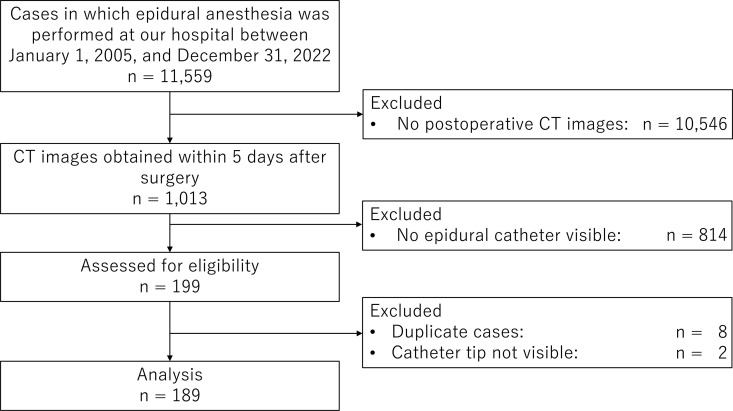 Figure 1
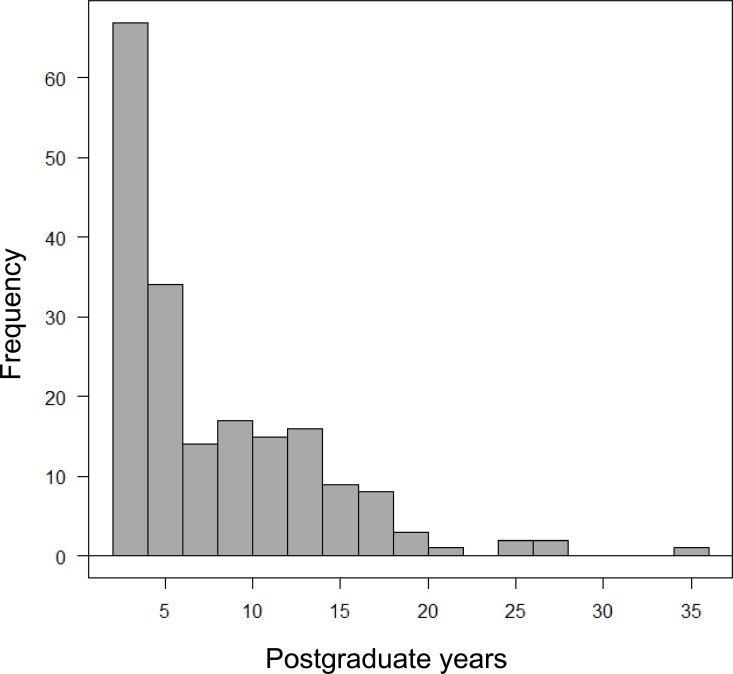 Figure 2
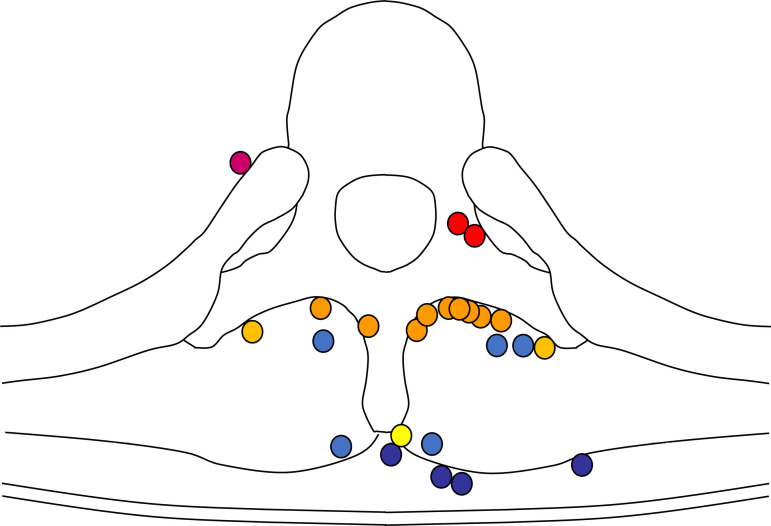 Figure 3
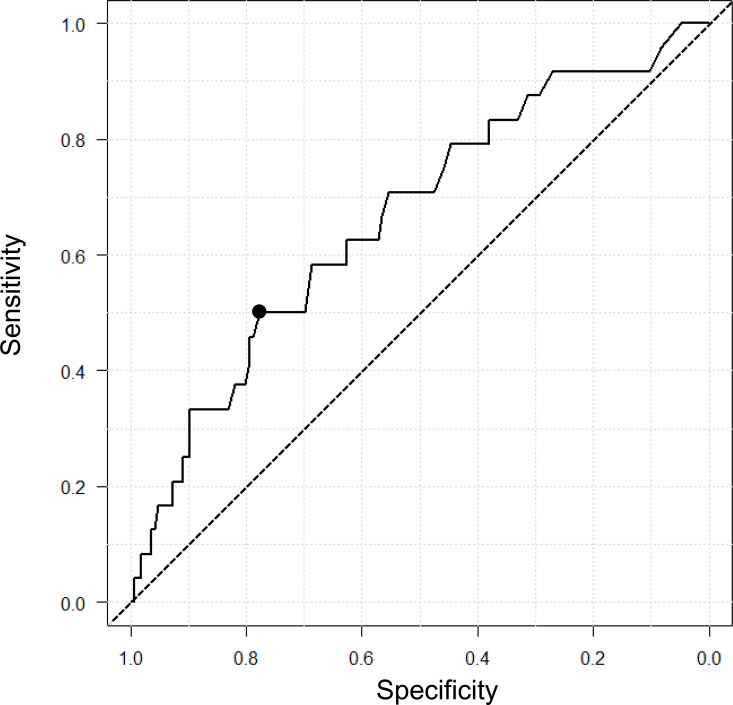 Figure 4
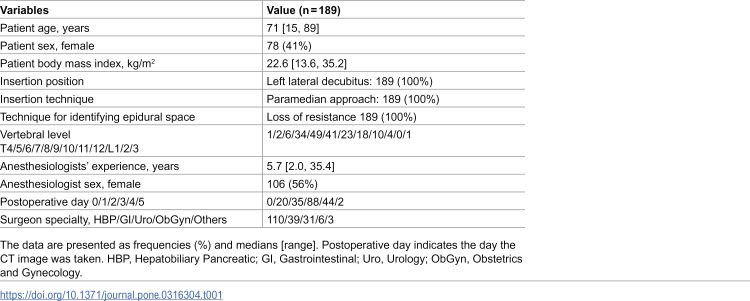 Figure 5
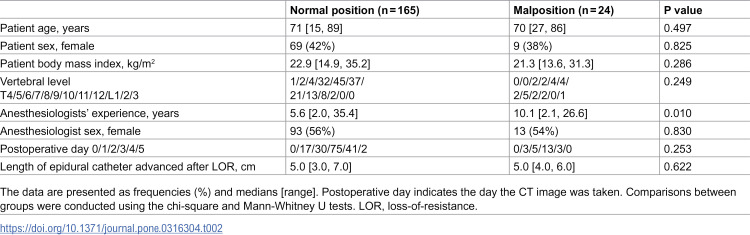 Figure 6
Peer Reviews
No public reviews on file for this paper yet. If you reviewed it on a platform where reviews are public (OpenReview, ICLR, NeurIPS, ICML), you can paste yours below so the community can read it here.
Videos
No videos yet. Explain this paper in a talk, walkthrough, or lecture? Add one.
Taxonomy
TopicsAnesthesia and Pain Management · Spine and Intervertebral Disc Pathology · Cardiac, Anesthesia and Surgical Outcomes