Influence of capping agents on physicochemical properties and leukemic cytotoxicity of copper oxide nanoparticles biosynthesized using Caesalpinia sappan extract
Mathurada Sasarom, Songyot Anuchapreeda, Wim E. Hennink, Siriporn Okonogi

TL;DR
This study shows that capping agents like PEG and P80 improve the effectiveness of copper oxide nanoparticles against leukemia cells while sparing healthy cells.
Contribution
The study demonstrates that PEG and P80 capped CuONPs have the highest selectivity for leukemic cells over healthy cells.
Findings
PEG and P80 capped CuONPs showed higher selectivity for leukemic cells compared to healthy PBMC.
CuONPs with PEG and P80 had IC50 values in the range of 26–41 µg/mL for leukemic cells.
CuONPs using gelatin had a much lower zeta potential (−3 mV) compared to others (−30 to −35 mV).
Abstract
The aim of this study was to investigate the effects of capping agents on the physicochemical and biological properties, particularly their leukemic cytotoxicity, of copper oxide nanoparticles (CuONPs) using a Caesalpinia sappan extract as a reducing agent. Gelatin, polyethylene glycol 400 (PEG), polysorbate 80 (P80), octyl phenol ethoxylate, sodium lauryl ether sulfate and mannitol were added as capping agents to ensure colloidal stability of the formed CuONPs. As a control, CuONPs were also synthesized using gelatin and sodium borohydride as the capping and reducing agent, respectively. The physicochemical properties of the obtained CuONPs were determined using dynamic light scattering, zeta-potential measurements, energy dispersive X-ray spectroscopy, and Fourier-transform infrared spectroscopy. Their cytotoxic effects were investigated using normal human peripheral blood mononuclear…
Genes, proteins, chemicals, diseases, species, mutations and cell lines named across the full text — each resolved to its canonical identifier and authoritative record.
Click any figure to enlarge with its caption.
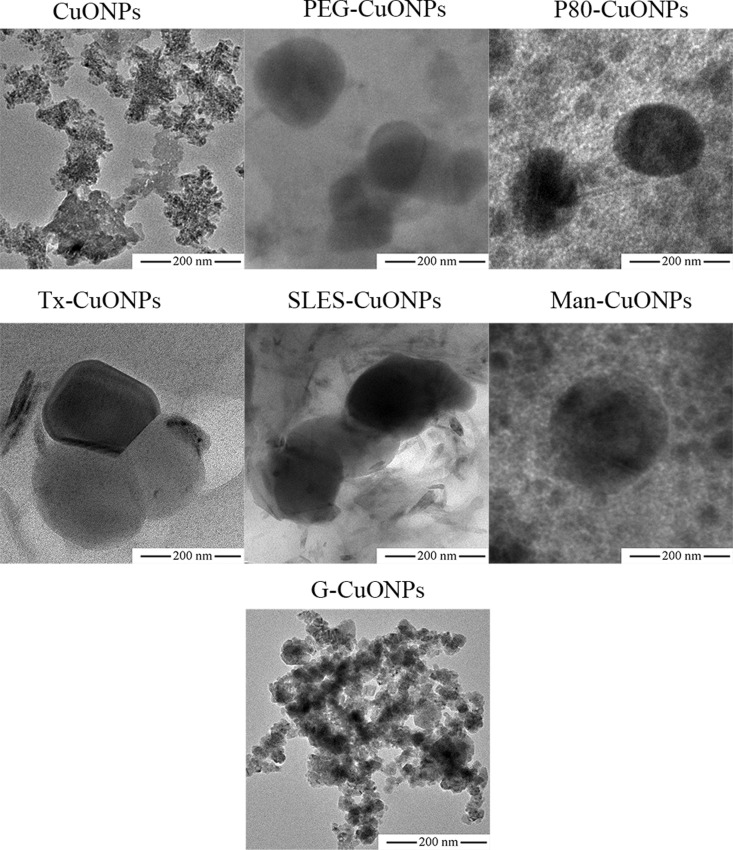 Figure 1
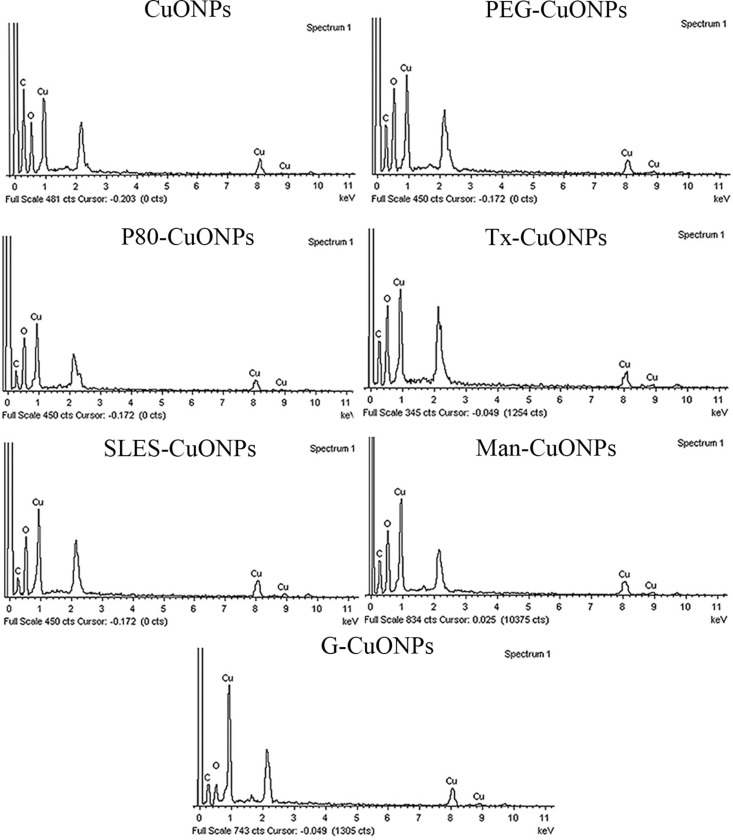 Figure 2
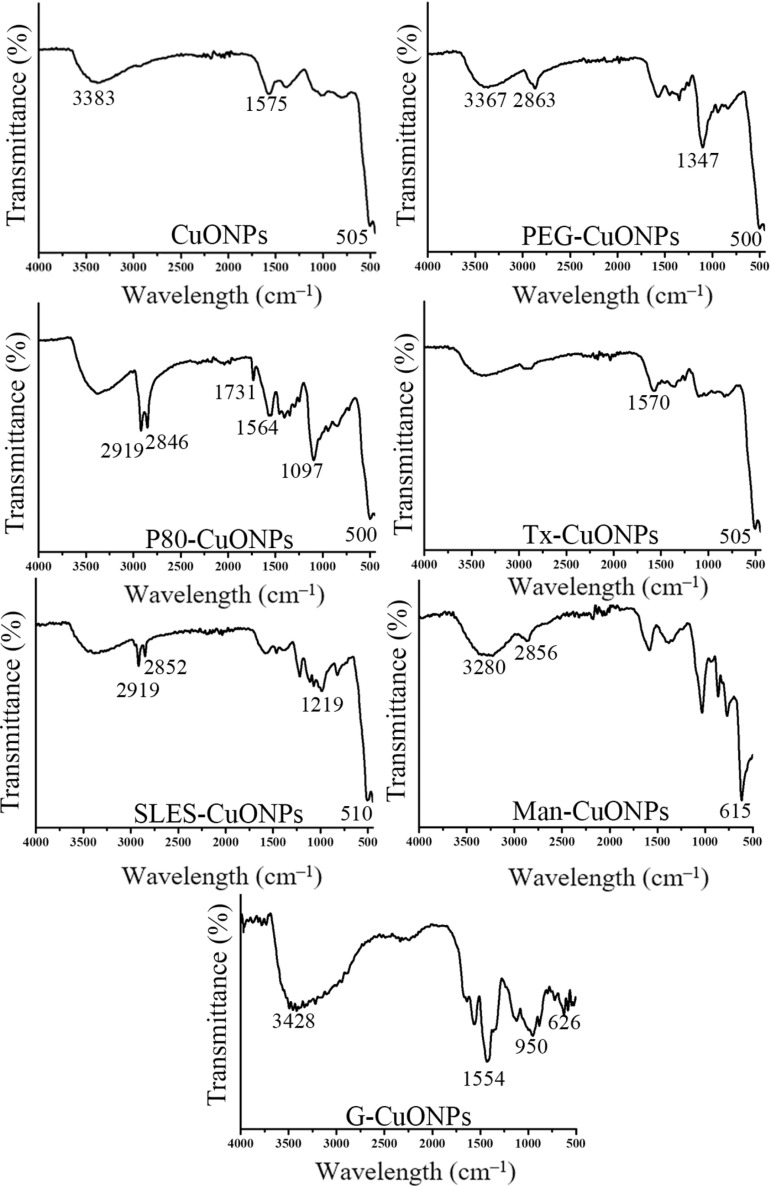 Figure 3
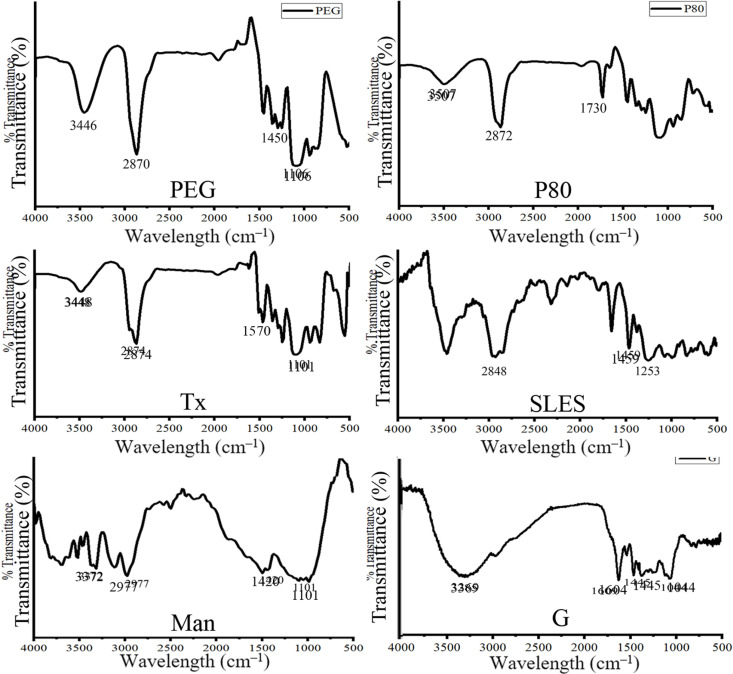 Figure 4
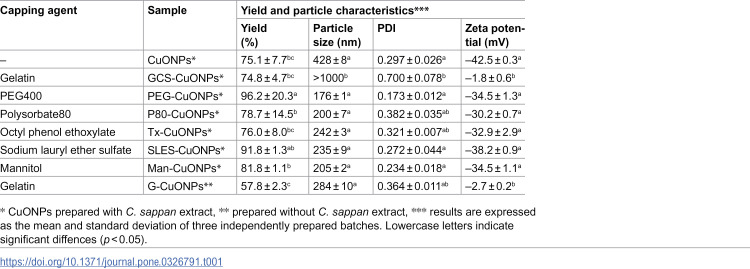 Figure 5
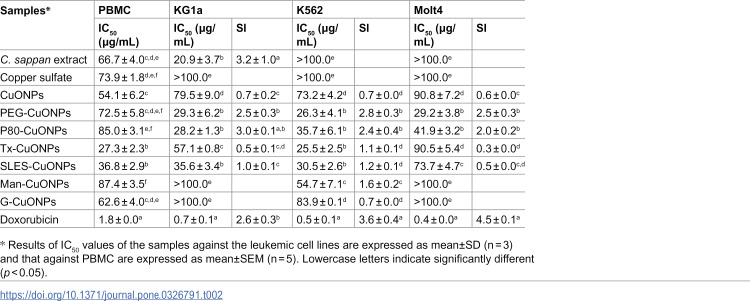 Figure 6
 Figure 7
Peer Reviews
No public reviews on file for this paper yet. If you reviewed it on a platform where reviews are public (OpenReview, ICLR, NeurIPS, ICML), you can paste yours below so the community can read it here.
Videos
No videos yet. Explain this paper in a talk, walkthrough, or lecture? Add one.
Taxonomy
TopicsBiological Stains and Phytochemicals · Plant-Derived Bioactive Compounds