A dose scaling antivenin protocol in treatment of Daboia palaestinae envenomation may reduce morbidity and costs
Daniel J. Jakobson, Zurab Zakariashvili, Enzo F. Galicia H., Mohammad Abu Issa, Miguel M. Glatstein, Frederic S. Zimmerman, Timothy Omara, Timothy Omara, Timothy Omara, Timothy Omara, Timothy Omara

TL;DR
A new protocol for treating snakebites from Daboia palaestinae uses smaller antivenin doses, reducing side effects and costs without increasing risk.
Contribution
A dose-scaling antivenin protocol is proposed and validated for Daboia palaestinae envenomation.
Findings
A median antivenin dose of 15 ml was effective, with half of patients needing only 10 ml.
Two patients had antivenin-related allergic reactions, but no deaths occurred.
The protocol reduced antivenin use and associated costs without increasing mortality.
Abstract
Daboia palaestinae is a leading cause of snakebite envenomation in the eastern Mediterranean, with substantial mortality in the absence of antivenin. Current recommended antivenin dose is 50 ml; however, antivenin is costly, may be difficult to obtain and is associated with substantial side effects. Thus, this study was designed to define the minimal effective antivenin dose and identify patients who can be safely managed without antivenin. This retrospective single-center study was conducted in adults with suspected or confirmed D. palaestinae envenomation. Patients were treated via our previously developed envenomation protocol: no antivenin use for local symptoms and dose scaling for mild or severe systemic symptoms – initially 10 ml antivenin, with repeat dosing for ongoing systemic symptoms. The main outcomes measured were morbidity and mortality associated with this protocol.…
Genes, proteins, chemicals, diseases, species, mutations and cell lines named across the full text — each resolved to its canonical identifier and authoritative record.
Click any figure to enlarge with its caption.
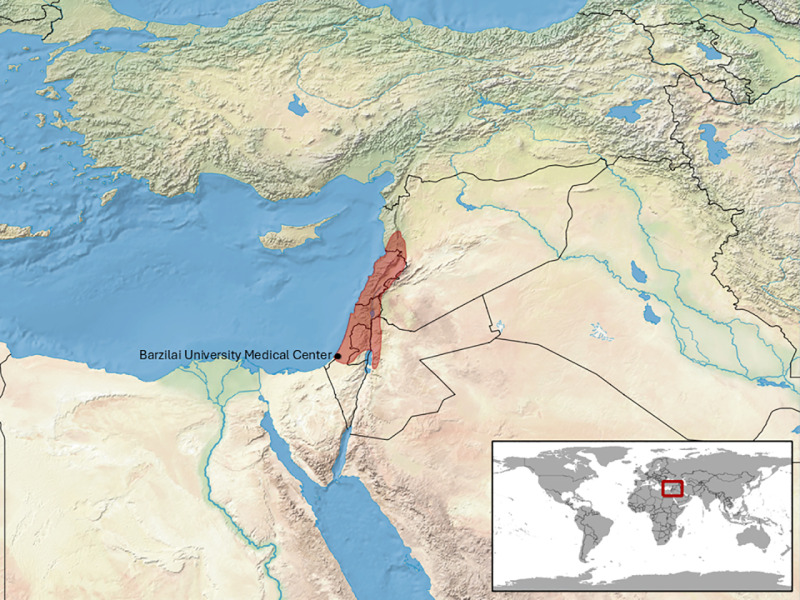 Figure 1
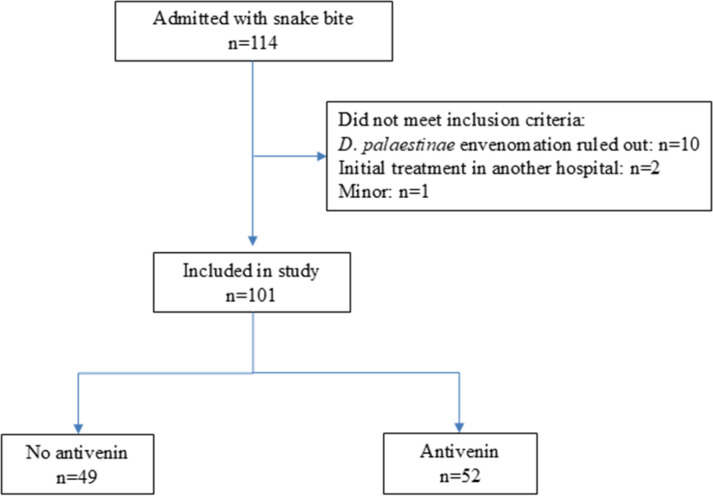 Figure 2
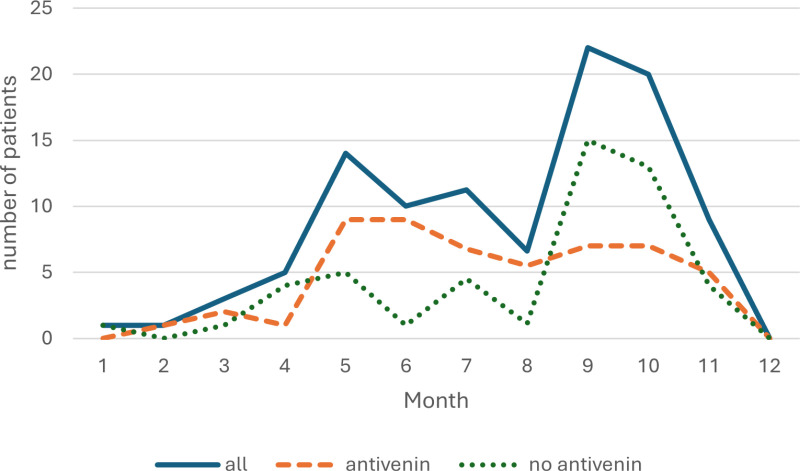 Figure 3
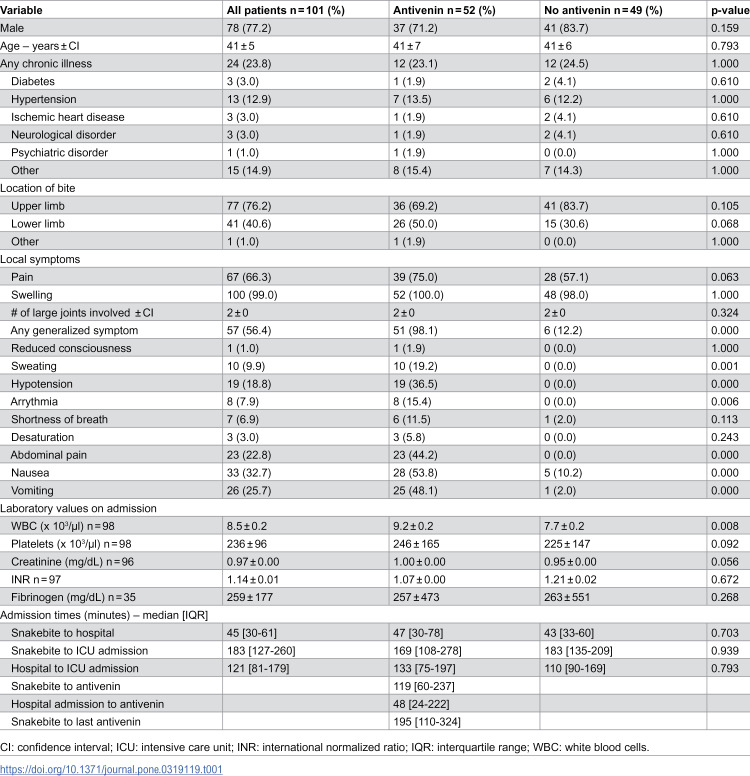 Figure 4
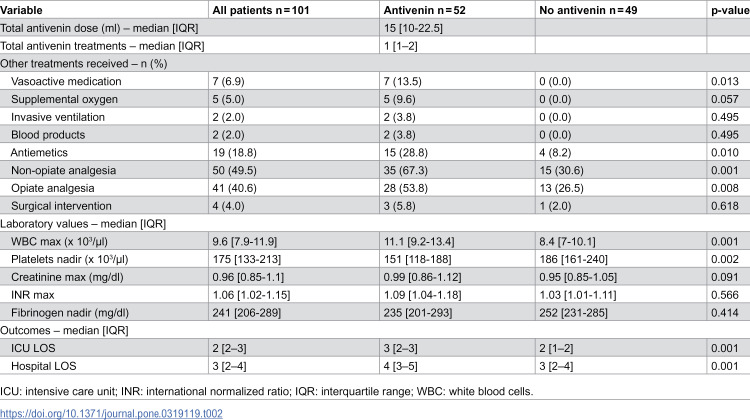 Figure 5
Peer Reviews
No public reviews on file for this paper yet. If you reviewed it on a platform where reviews are public (OpenReview, ICLR, NeurIPS, ICML), you can paste yours below so the community can read it here.
Videos
No videos yet. Explain this paper in a talk, walkthrough, or lecture? Add one.
Taxonomy
TopicsVenomous Animal Envenomation and Studies · Rabies epidemiology and control · Marine Invertebrate Physiology and Ecology