A novel dual-branch network for comprehensive spatiotemporal information integration for EEG-based epileptic seizure detection
Xiaobing Deng, Yuvaraj Rajamanickam, Yuvaraj Rajamanickam, Yuvaraj Rajamanickam, Yuvaraj Rajamanickam

TL;DR
This paper introduces a new dual-branch network to accurately detect epileptic seizures using EEG data by better integrating spatial and temporal information.
Contribution
The novel Deepwalk-TS model combines spatiotemporal fusion strategies to improve seizure detection accuracy.
Findings
The Deepwalk-TS model achieved 99.54% accuracy in seizure detection.
The model outperforms existing methods in capturing spatial and temporal EEG relationships.
Abstract
Epilepsy is a neurological disorder characterized by recurrent seizures caused by abnormal brain activity, which can severely affects people’s normal lives. To improve the lives of these patients, it is necessary to develop accurate methods to predict seizures. Electroencephalography (EEG), as a non-invasive and real-time technique, is crucial for the early diagnosis of epileptic seizures by monitoring abnormal brain activity associated with seizures. Deep learning EEG-based detection methods have made significant progress, but still face challenges such as the underutilization of spatial relationships, inter-individual physiological variability, and sequence intricacies. To tackle these challenges, we introduce the Dual-Branch Deepwalk-Transformer Spatiotemporal Fusion Network (Deepwalk-TS), which effectively integrates spatiotemporal information from EEG signals to enable accurate and…
Genes, proteins, chemicals, diseases, species, mutations and cell lines named across the full text — each resolved to its canonical identifier and authoritative record.
Click any figure to enlarge with its caption.
 Figure 1
 Figure 2
 Figure 3
 Figure 4
 Figure 5
 Figure 6
 Figure 7
 Figure 8
 Figure 9
 Figure 10
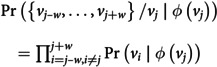 Figure 11
 Figure 12
 Figure 13
 Figure 14
 Figure 15
 Figure 16
 Figure 17
 Figure 18
 Figure 19
 Figure 20
 Figure 21
 Figure 22
 Figure 23
 Figure 24
 Figure 25
 Figure 26
 Figure 27
 Figure 28
 Figure 29
 Figure 30
 Figure 31
 Figure 32
 Figure 33
 Figure 34
 Figure 35
 Figure 36
 Figure 37
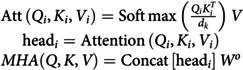 Figure 38
 Figure 39
 Figure 40
 Figure 41
 Figure 42
 Figure 43
 Figure 44
 Figure 45
 Figure 46
 Figure 47
 Figure 48
 Figure 49
 Figure 50
Peer Reviews
No public reviews on file for this paper yet. If you reviewed it on a platform where reviews are public (OpenReview, ICLR, NeurIPS, ICML), you can paste yours below so the community can read it here.
Videos
No videos yet. Explain this paper in a talk, walkthrough, or lecture? Add one.
Taxonomy
TopicsEEG and Brain-Computer Interfaces · Blind Source Separation Techniques · Epilepsy research and treatment