Progression and natural history of Atypical Parkinsonism (ATPARK): Protocol for a longitudinal follow-up study from an underrepresented population
Ravi Yadav, Saikat Dey, Ravichandiran Kumar, Athira P. Mohanan, Geethu T. Vasudevan, Manasi Harish, Nitish Kamble, Vikram V. Holla, Rohan R. Mahale, Pooja Mailankody, Monojit Debnath, Jitender Saini, Keshav Kumar, Anita Mahadevan, Sarada Subramanian, Phalguni Alladi

TL;DR
This study tracks the progression of atypical Parkinsonian disorders in an underrepresented population to better understand their causes and improve diagnosis and treatment.
Contribution
The study introduces a longitudinal dataset from an underrepresented population to explore molecular mechanisms and disease progression in atypical Parkinsonism.
Findings
The study will collect comprehensive molecular and clinical data from 400 APS patients over time.
Machine learning models will be developed to aid in early diagnosis and differentiation of APS types.
Longitudinal data will enhance understanding of symptom progression and management in APS.
Abstract
Atypical Parkinsonian Syndromes (APS) form the third largest group of neurodegenerative disorders including Progressive Supranuclear Palsy (PSP), Multiple System Atrophy (MSA), and Corticobasal Syndrome (CBS). These conditions are characterized by rapid progression, poor prognosis, low survival rates, and limited treatment options. Few studies have suggested that genetic, environmental factors and inflammation contribute to the pathobiology of these complex disorders, however, the etiology of disease and progression remains unclear. A multicenter prospective longitudinal (3-time point) study will be conducted with a total sample size of 400 across all the groups (PSP, MSA, CBS). Patients with APS will be recruited after a detailed evaluation by movement disorder specialists and obtaining valid informed consent. The socio-demographic data and whole exome sequencing will be performed…
Genes, proteins, chemicals, diseases, species, mutations and cell lines named across the full text — each resolved to its canonical identifier and authoritative record.
Click any figure to enlarge with its caption.
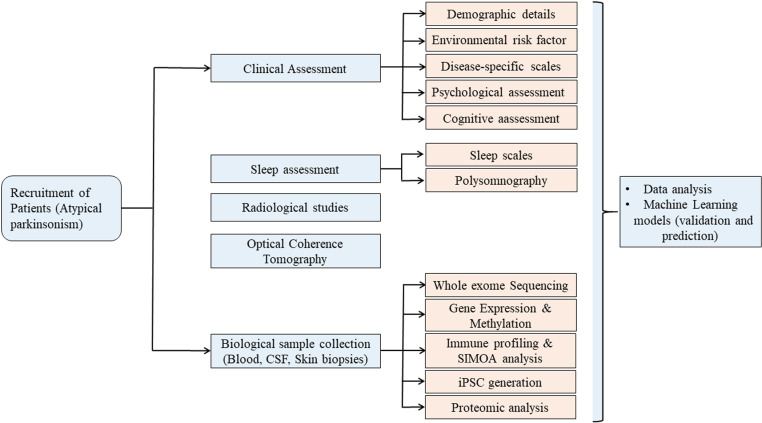 Figure 1
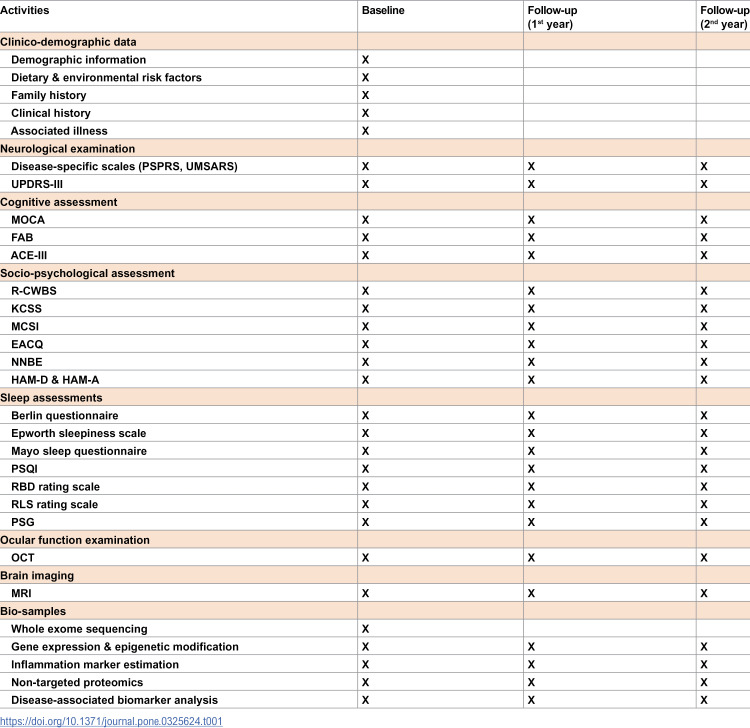 Figure 2
Peer Reviews
No public reviews on file for this paper yet. If you reviewed it on a platform where reviews are public (OpenReview, ICLR, NeurIPS, ICML), you can paste yours below so the community can read it here.
Videos
No videos yet. Explain this paper in a talk, walkthrough, or lecture? Add one.
Taxonomy
TopicsParkinson's Disease Mechanisms and Treatments · Neurological diseases and metabolism · Neurological disorders and treatments