Long QT Interval Syndrome and Female Sex—Review and Case Report
Lana Maričić, Livija Sušić, Damir Mihić, Nikolina Šego

TL;DR
This paper reviews Long QT Syndrome, focusing on a female patient with a KCNH2 mutation and her treatment, highlighting the importance of early diagnosis and management.
Contribution
The paper presents a case report emphasizing the role of genetic analysis and treatment adjustments in female LQTS patients.
Findings
A young woman with LQTS was found to have a KCNH2 mutation confirmed in her children.
Beta blockers were used, but a cardioverter defibrillator was implanted postpartum due to reduced progesterone levels.
Timely recognition and treatment are critical for preventing adverse events in LQTS patients.
Abstract
Background and Clinical Significance: Congenital LQTS is a life-threatening condition, resulting from a mutation of the gene encoding the cardiac ion channels, which results in prolongation of the ventricular action potential. Genetic screening of family members in symptomatic and asymptomatic patients is crucial for the prevention of sudden cardiac death. There are a number of detected mutations of congenital LQTS, of which the three forms LQT1, LQT2, and LQT3 are the best described. In addition to the described ECG morphology, the key triggers and treatment approach are described. This emphasizes even more the importance of timely screening of these patients, and the decision for therapy. It should be emphasized that the phenotypic manifestations significantly depend on the affected genes. The guidelines in the treatment approach are very clear, although it should be emphasized that…
Genes, proteins, chemicals, diseases, species, mutations and cell lines named across the full text — each resolved to its canonical identifier and authoritative record.
Click any figure to enlarge with its caption.
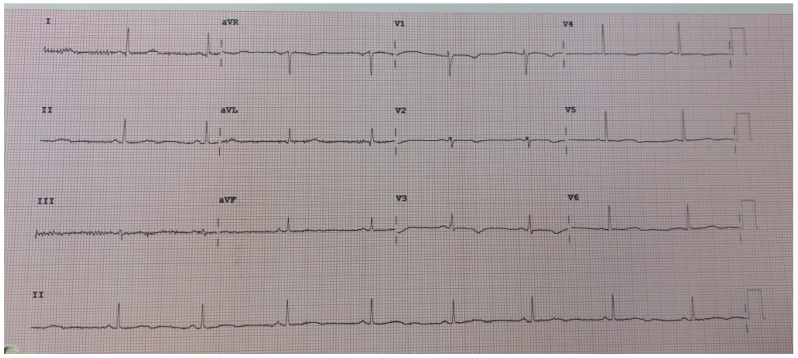 Figure 1
Peer Reviews
No public reviews on file for this paper yet. If you reviewed it on a platform where reviews are public (OpenReview, ICLR, NeurIPS, ICML), you can paste yours below so the community can read it here.
Videos
No videos yet. Explain this paper in a talk, walkthrough, or lecture? Add one.
Taxonomy
TopicsCardiac electrophysiology and arrhythmias · Ion channel regulation and function · Cardiac pacing and defibrillation studies