Micro-sub regional synapse weakening by mimicking the hyperphosphorylation of microtubule associated protein Tau in dendritic spines
Scott J Mitchell, Seung-Chan Kim, Chotchanit Sunrat, Saviana A Barbati, Keshvi Shah, Ambra Annibali, Kwangwook Cho

TL;DR
This study shows that mimicking Tau phosphorylation weakens specific synapses in brain cells, revealing a key role for the protein PACSIN1 in this process.
Contribution
The study identifies regional synapse weakening by phosphomimic Tau and highlights PACSIN1 as a critical mediator in this mechanism.
Findings
Tau-PHF1E selectively weakens synapses in distal CA1 dendrites but not proximal regions.
PACSIN1 is essential for the synapse weakening caused by Tau-PHF1E.
Phosphomimic Tau impairs PSD-95 expression and synaptic plasticity in distal dendrites.
Abstract
The role of microtubule associated protein Tau (Tau) in synaptic function is critical, yet many aspects remain unknown. However, increasing levels of tau phosphorylation has implications for physiological and pathophysiological plasticity. Utilizing human full-length (2N4R) phosphomimic Tau transfection in organotypic hippocampal slice culture, we revealed a regional specificity of synapse dysfunction in dendrites of Cornu Ammonis 1 (CA1) neurons. Specifically, phosphorylation mimic at S396/404 (Tau-PHF1E), a site important for pathophysiology, selectively weakened synapses in the distal portion of CA1 secondary apical dendrites within stratum radiatum, while the proximal region of the same dendrites remained unaltered. Furthermore, in the distal region, the expression of TauPHF1E impaired postsynaptic density-95 expression and dysregulated synaptic plasticity. This phenomenon was…
Genes, proteins, chemicals, diseases, species, mutations and cell lines named across the full text — each resolved to its canonical identifier and authoritative record.
Click any figure to enlarge with its caption.
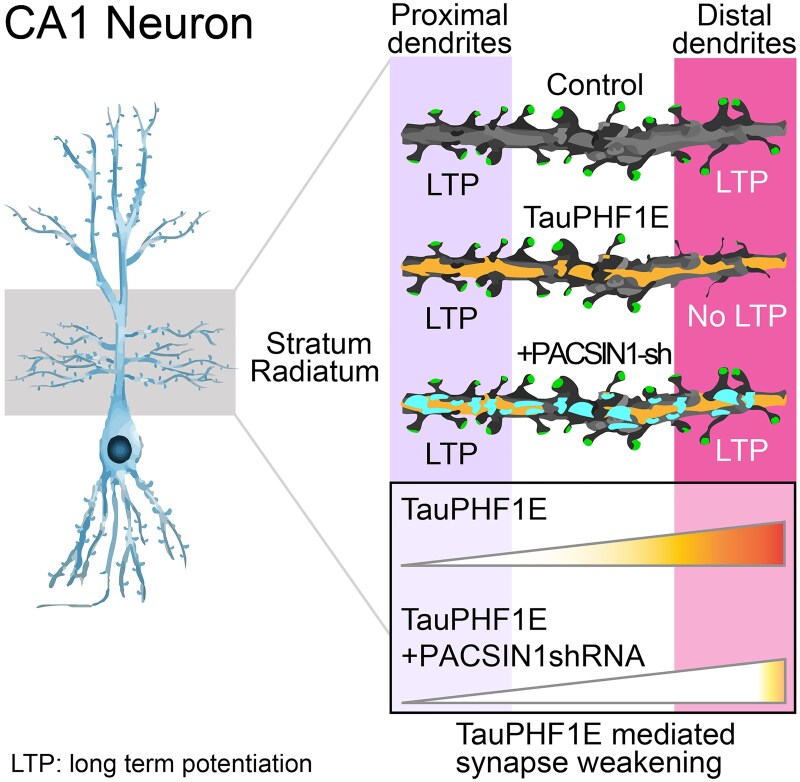 Figure 1
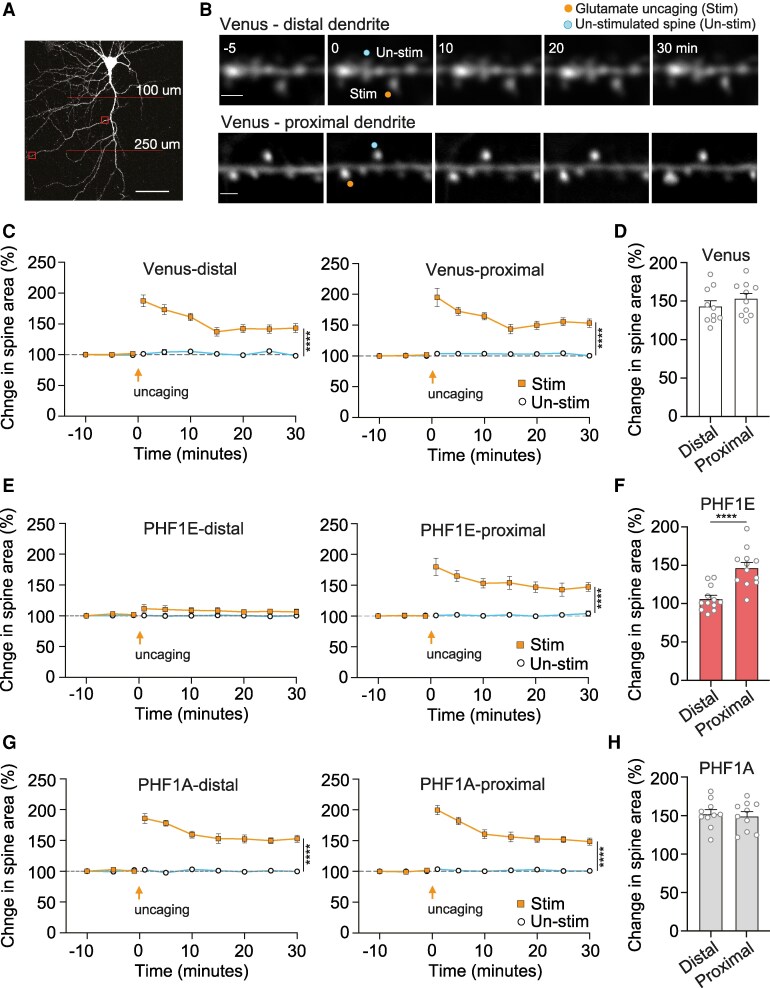 Figure 2
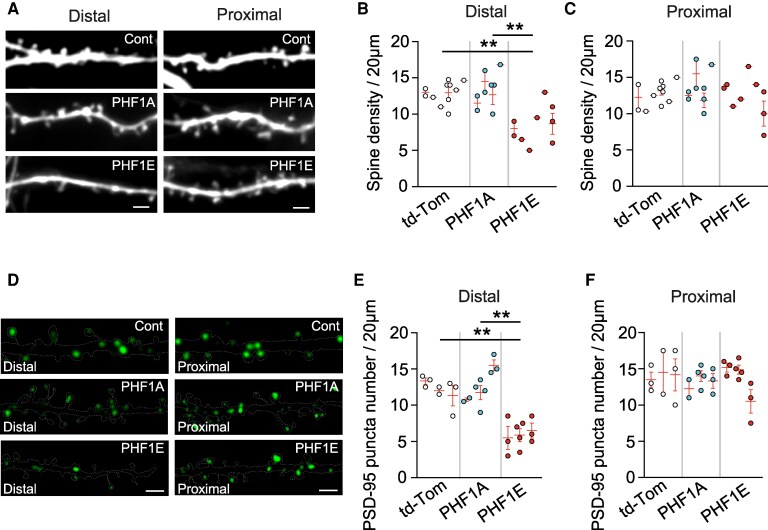 Figure 3
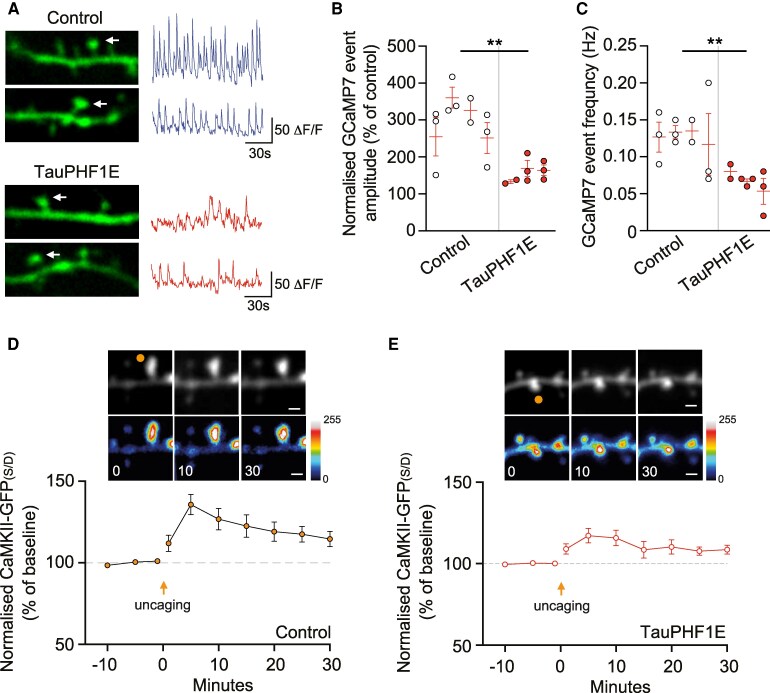 Figure 4
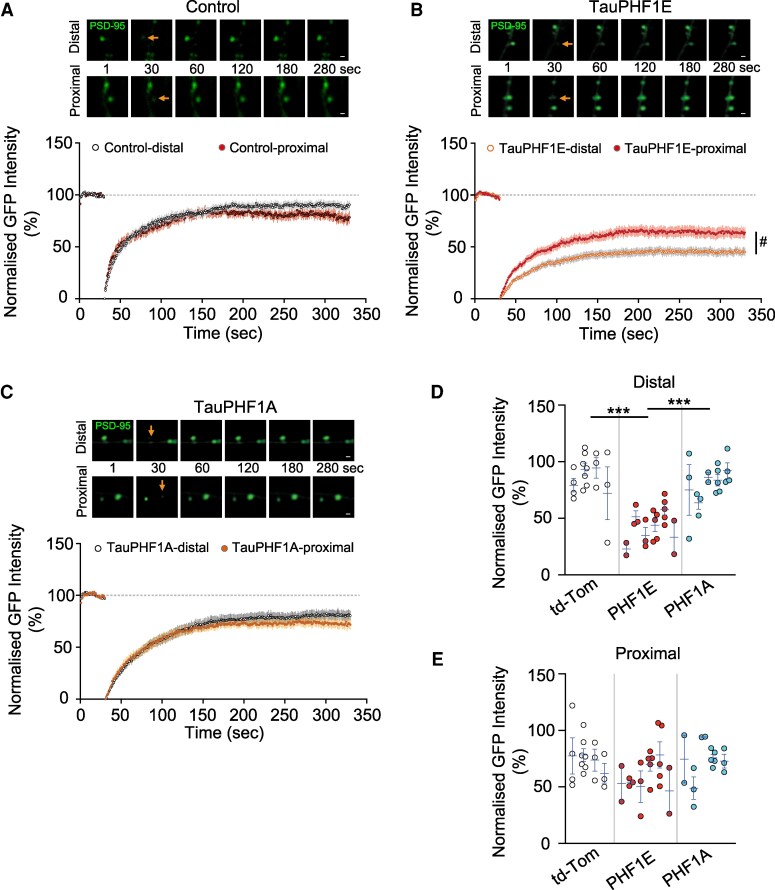 Figure 5
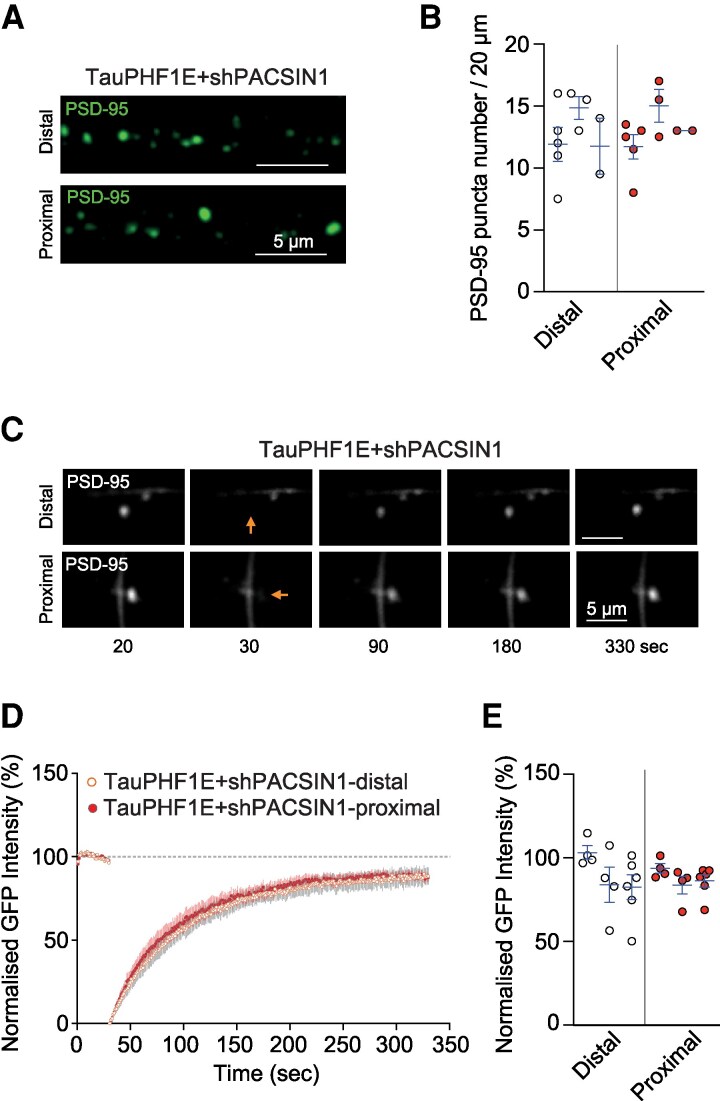 Figure 6
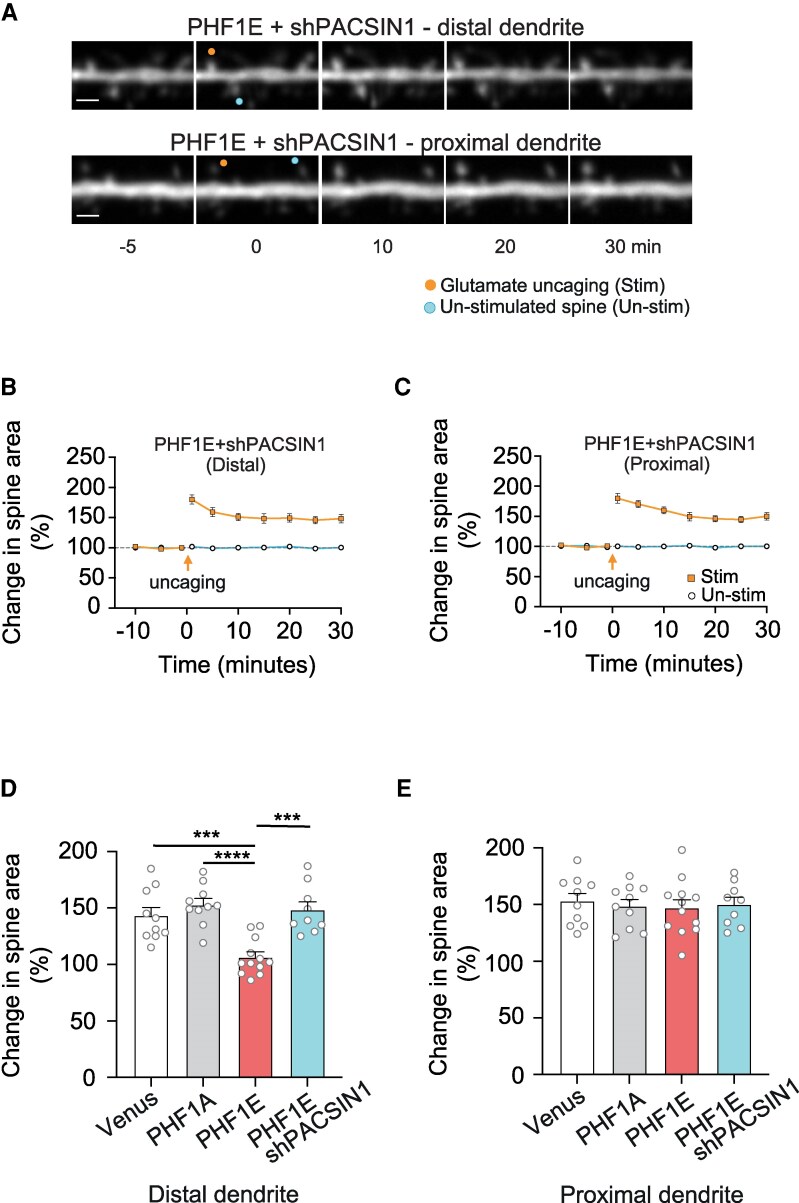 Figure 7
Peer Reviews
No public reviews on file for this paper yet. If you reviewed it on a platform where reviews are public (OpenReview, ICLR, NeurIPS, ICML), you can paste yours below so the community can read it here.
Videos
No videos yet. Explain this paper in a talk, walkthrough, or lecture? Add one.
Taxonomy
TopicsNeuroscience and Neuropharmacology Research · Alzheimer's disease research and treatments · Photoreceptor and optogenetics research