Baseline total lesion glycolysis identifies high-risk patients with immunosuppressive signatures in early-stage natural killer/T-cell lymphoma
Xiao Gao, Jie Xiong, Xin-Yun Huang, Hao-Xu Yang, Hui-Juan Zhong, Shu Cheng, Xu-Feng Jiang, Wei-Li Zhao

TL;DR
Baseline total lesion glycolysis (TLG) from PET/CT scans helps identify high-risk early-stage natural killer/T-cell lymphoma patients with immunosuppressive features.
Contribution
Baseline TLG is shown to be a novel and effective radiomic biomarker for predicting long-term outcomes in early-stage NKTCL.
Findings
High TLG values were associated with significantly worse progression-free and overall survival.
Patients with high TLG had greater infiltration of immunosuppressive inflammatory dendritic cells.
TLG outperformed existing models using post-treatment Deauville scale and EBV-DNA in predicting outcomes.
Abstract
The post-treatment Deauville scale (DS) and circulating Epstein-Barr virus (EBV)-DNA were used for prediction of long-term remission in natural killer/T-cell lymphoma (NKTCL). However, the baseline biomarkers still remain lacking for clinical application. Here, we hypothesized that 18F-FDG PET/CT, as a measure of total tumor burden, would be a baseline biomarker to identify high-risk NKTCL patients. We analyzed PET/CT data in early-stage NKTCL patients (n = 192) receiving pegaspargase-based regimens from 2 independent clinical trials. The prognostic values of radiomic markers including total lesion glycolysis (TLG), standardized uptake value, and metabolic tumor volume were evaluated in the training (n = 127) and validation cohorts (n = 65) with a median follow-up of 37 months. Total lesion glycolysis was a prognosticator of progression-free survival (PFS) and overall survival (OS),…
Genes, proteins, chemicals, diseases, species, mutations and cell lines named across the full text — each resolved to its canonical identifier and authoritative record.
Click any figure to enlarge with its caption.
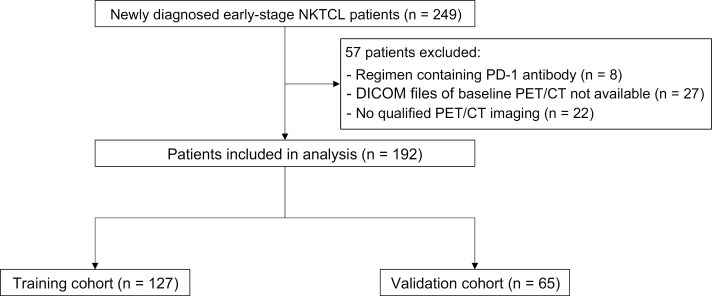 Figure 1
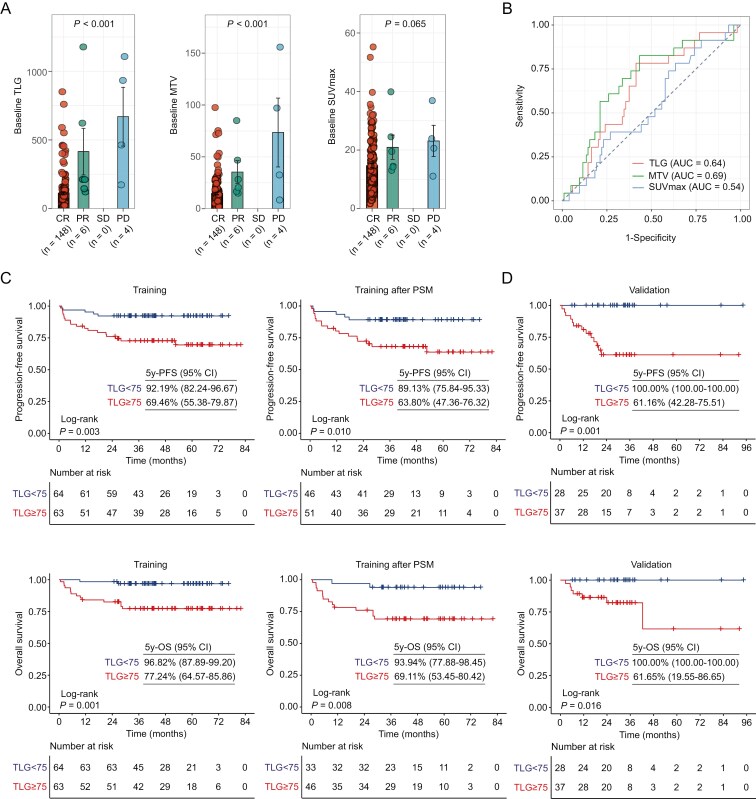 Figure 2
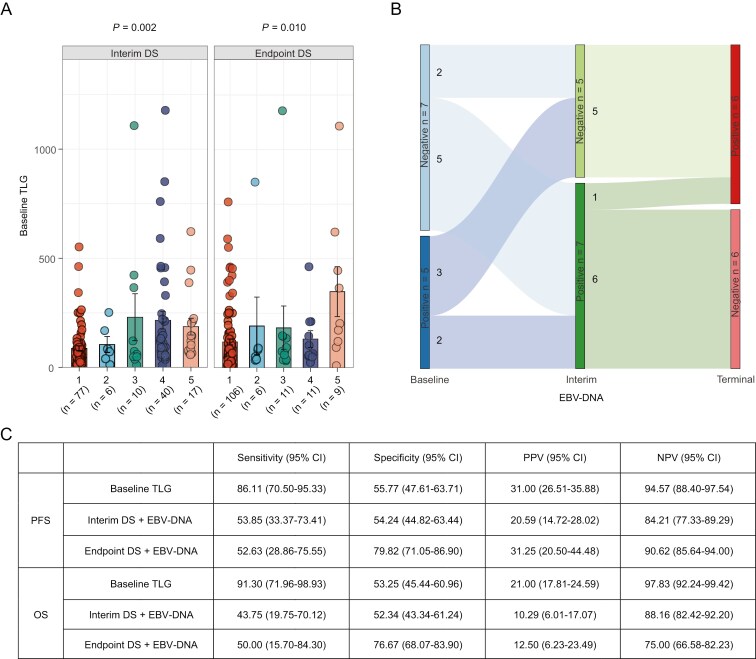 Figure 3
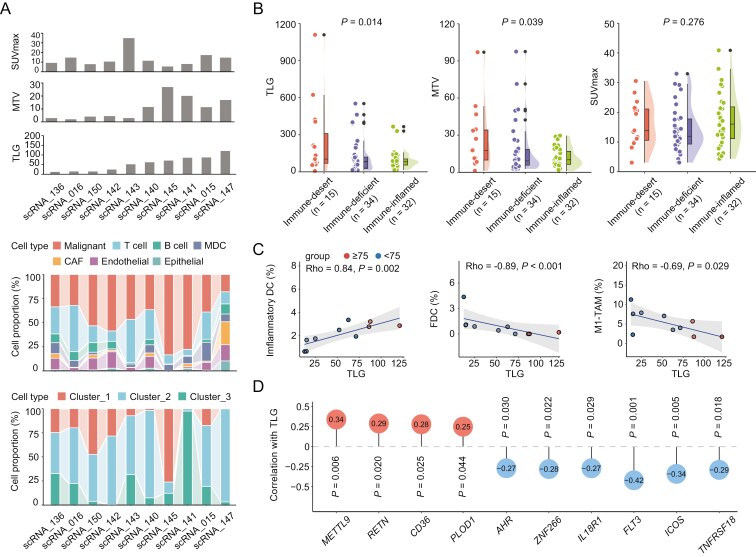 Figure 4
Peer Reviews
No public reviews on file for this paper yet. If you reviewed it on a platform where reviews are public (OpenReview, ICLR, NeurIPS, ICML), you can paste yours below so the community can read it here.
Videos
No videos yet. Explain this paper in a talk, walkthrough, or lecture? Add one.
Taxonomy
TopicsLymphoma Diagnosis and Treatment · Viral-associated cancers and disorders · Chronic Lymphocytic Leukemia Research