Preemptive Propofol Administration in Spinal Cord Injury: Effects on Pain‐Induced Hypertension, Neuroinflammation, and Functional Recovery in Rats
Qun Cheng, Xiang‐Yu Fang, Rong‐En Qiu

TL;DR
Administering propofol before spinal cord injury in rats reduces pain-related hypertension, inflammation, and improves recovery compared to delayed treatment.
Contribution
This study demonstrates that preemptive propofol administration significantly mitigates secondary damage and improves functional recovery in SCI rats.
Findings
Preemptive propofol reduced pain-induced hypertension and inflammatory markers to levels similar to unstimulated SCI rats.
Preemptive treatment preserved myelin integrity and reduced gliosis, while delayed treatment had no significant effect on hemorrhage.
Rats receiving preemptive propofol showed improved locomotor recovery, motor coordination, and balance compared to controls.
Abstract
Spinal cord injury (SCI) triggers secondary damage, including pain‐induced hypertension, inflammation, and hemorrhage, impairing recovery. This study evaluated the efficacy of general anesthesia with preemptive propofol administration in mitigating secondary damage in SCI rats. SCI was induced in rats using a contusion model. Propofol (100 mg/kg) was administered intraperitoneally either 30 min before (preemptive) or 30 min after intermittent tail shock. Systolic blood pressure (SBP), body weight, food intake, inflammatory markers (interleukin‐1 beta [IL‐1β], interleukin‐6 [IL‐6]), hemorrhage markers, and serum levels of SCI biomarkers (glial fibrillary acidic protein [GFAP], myelin basic protein [MBP]) were measured. Functional recovery was assessed over 28 days using the Basso, Beattie, and Bresnahan (BBB) scale, horizontal ladder test, and rotarod test. Preemptive propofol…
Genes, proteins, chemicals, diseases, species, mutations and cell lines named across the full text — each resolved to its canonical identifier and authoritative record.
Click any figure to enlarge with its caption.
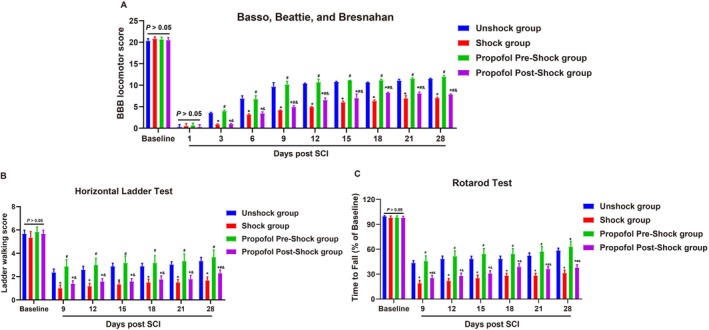 Figure 1
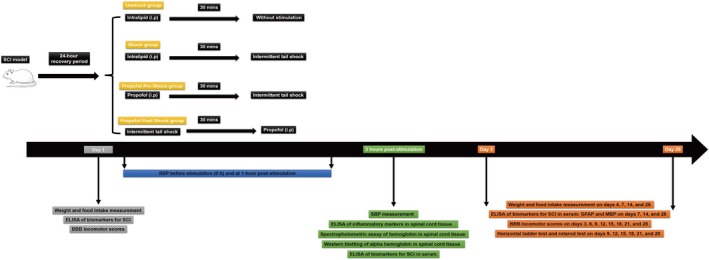 Figure 2
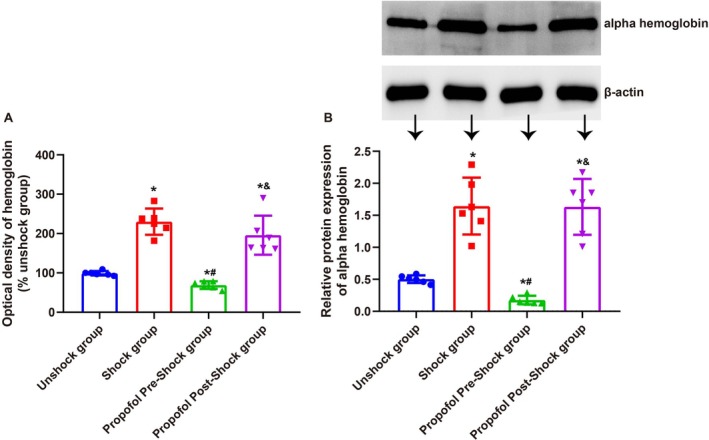 Figure 3
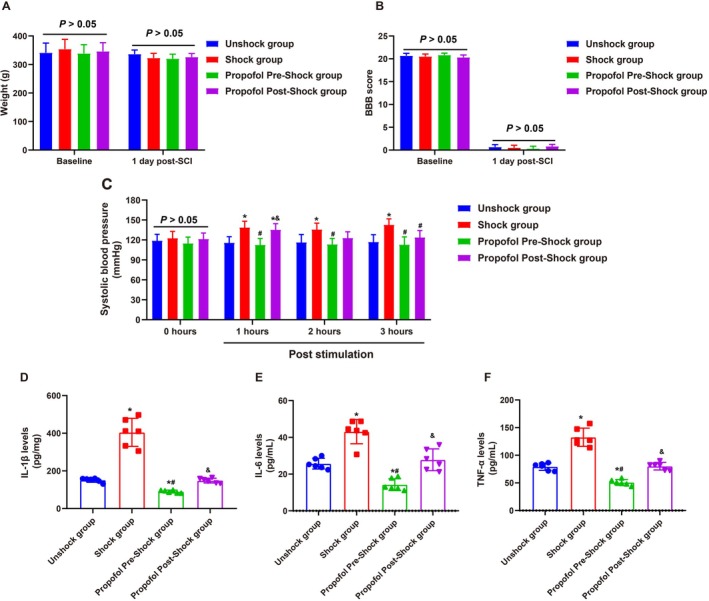 Figure 4
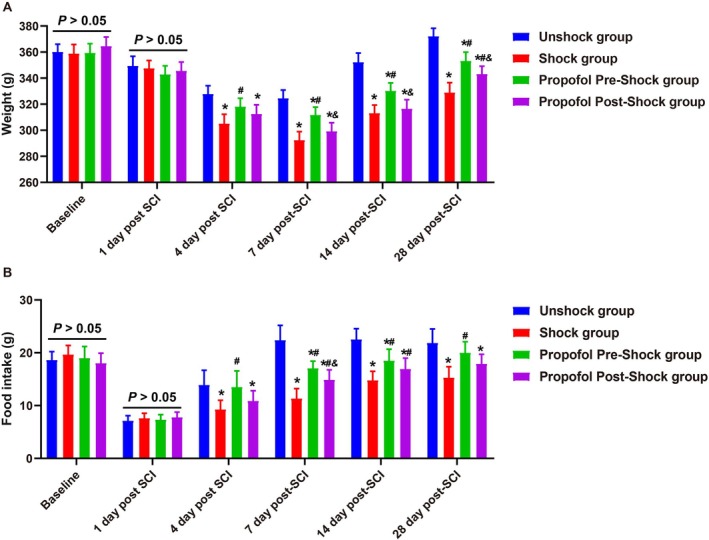 Figure 5
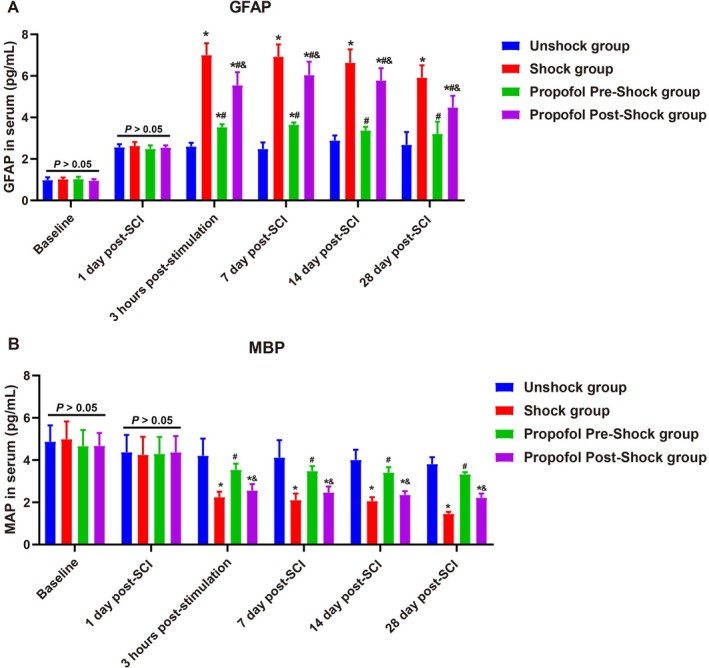 Figure 6
Peer Reviews
No public reviews on file for this paper yet. If you reviewed it on a platform where reviews are public (OpenReview, ICLR, NeurIPS, ICML), you can paste yours below so the community can read it here.
Videos
No videos yet. Explain this paper in a talk, walkthrough, or lecture? Add one.
Taxonomy
TopicsSpinal Cord Injury Research · Cardiac Ischemia and Reperfusion · Pain Mechanisms and Treatments