Tunable and unconventional Fermi arcs of two-dimensional transition-metal dichalcogenide modulated photonic Dirac semimetal
Yang Yang, Hongye Qiu, Ke Bi, Biao Yang

TL;DR
This paper explores how two-dimensional transition-metal dichalcogenides can modulate Fermi arcs in photonic Dirac semimetals, enabling tunable and unconventional surface states.
Contribution
The study introduces a novel method to modulate Fermi arcs using TMDC layers, revealing nonlocal effects and unconventional termination behaviors.
Findings
TMDC layers split the Dirac point into two triple degeneracy points, each associated with a Fermi arc.
Fermi arcs can terminate between type III TDPs, not at the degeneracy points.
Topological transitions between open and closed equi-frequency contours are observed at TDPs.
Abstract
Fermi arcs are nontrivial surface states that exist in topological semimetals, which exhibit a variety of interesting effects, such as anomalous transport properties and chiral anomaly induced phenomena. Recently, the emerged Two-dimensional transition-metal dichalcogenide (TMDC) shows distinctive optical and electrical properties, makes it a promising platform for efficient modulation of Fermi arcs. By covering TMDC sheets on a photonic Dirac metamaterial (PDS), the quadrupole Dirac point splits into two triple degeneracy points (TDPs), each TDP share one Fermi arc. Through tuning the characteristics of TMDC layers, Fermi arcs and transmissions of PDS can be effectively modulated in multi-degrees of freedom. Unconventionally, we find the Fermi arcs may do not terminate at the degeneracy points but between the two type III TDPs. Fermi arcs with nonlocal effect are also investigated.…
Genes, proteins, chemicals, diseases, species, mutations and cell lines named across the full text — each resolved to its canonical identifier and authoritative record.
Click any figure to enlarge with its caption.
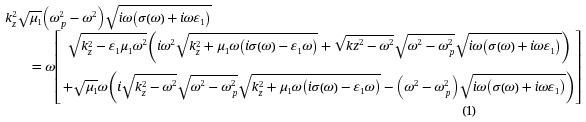 Figure 1
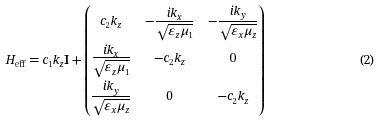 Figure 2
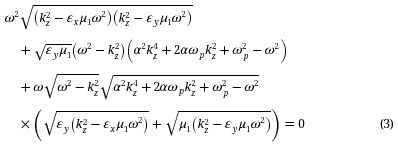 Figure 3
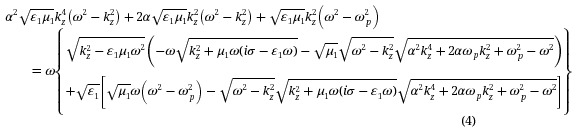 Figure 4
 Figure 5
 Figure 6
 Figure 7
 Figure 8
 Figure 9
 Figure 10
 Figure 11
 Figure 12
 Figure 13
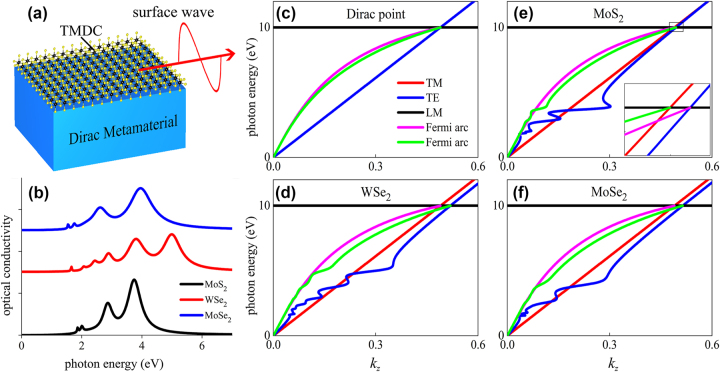 Figure 1
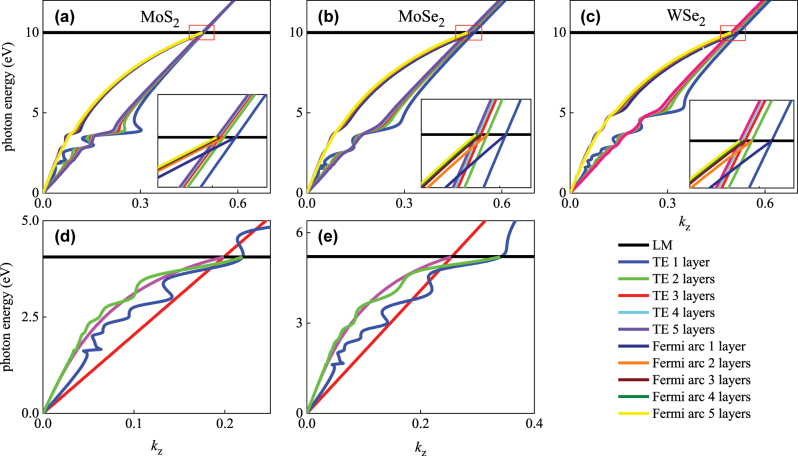 Figure 2
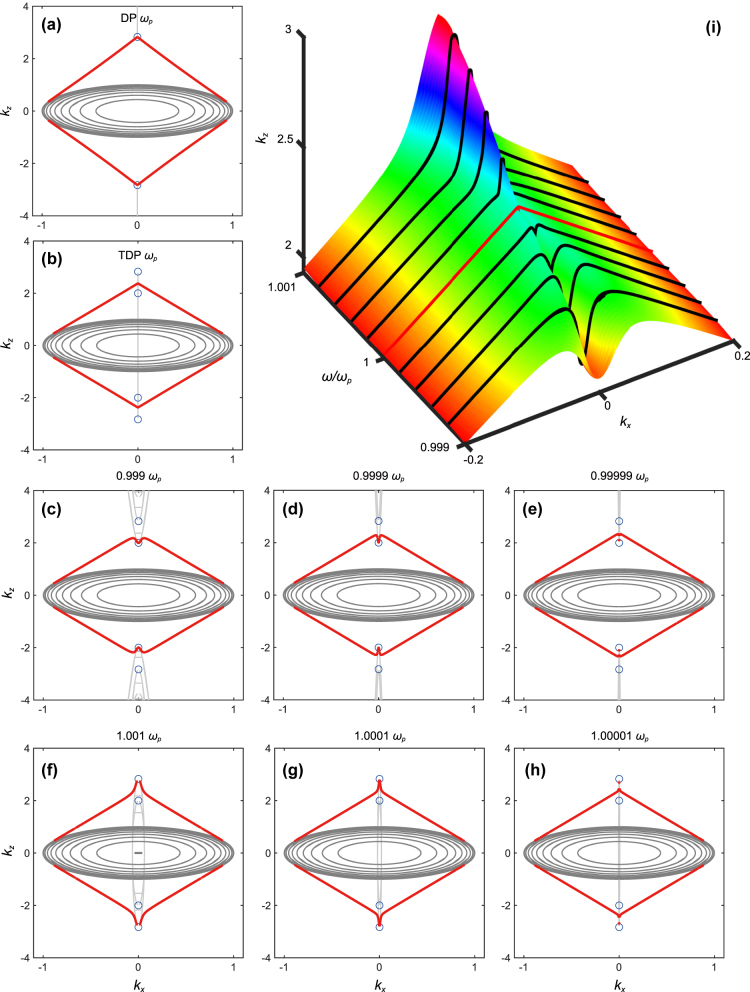 Figure 3
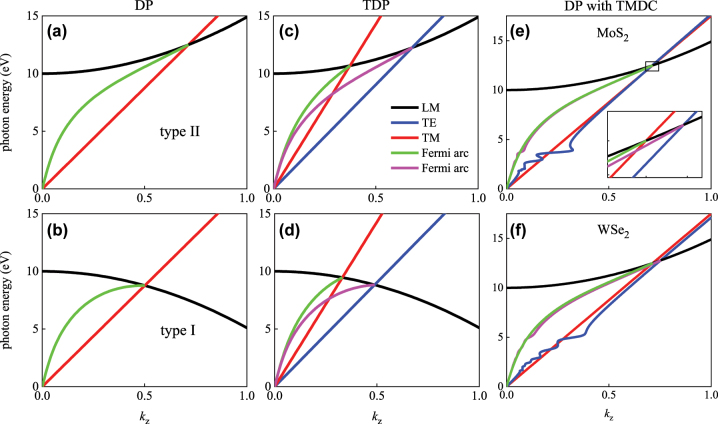 Figure 4
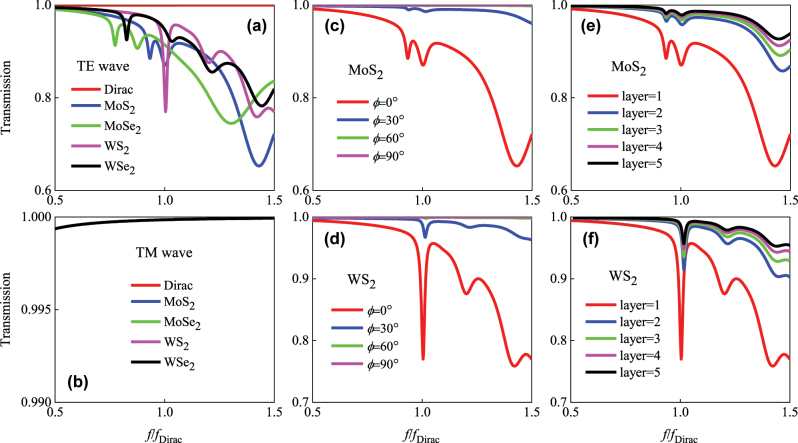 Figure 5
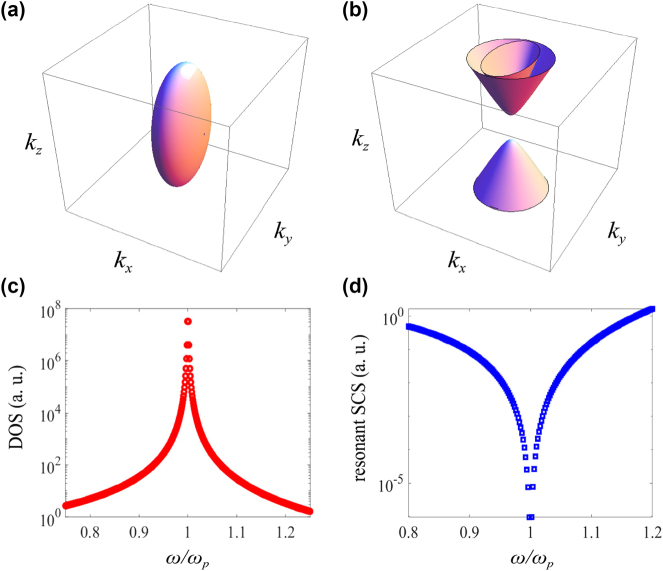 Figure 6
 Figure 20
 Figure 21
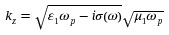 Figure 22
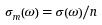 Figure 23
 Figure 24
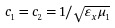 Figure 25
 Figure 26
 Figure 27
 Figure 28
 Figure 29
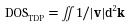 Figure 30
 Figure 31
 Figure 32
Peer Reviews
No public reviews on file for this paper yet. If you reviewed it on a platform where reviews are public (OpenReview, ICLR, NeurIPS, ICML), you can paste yours below so the community can read it here.
Videos
No videos yet. Explain this paper in a talk, walkthrough, or lecture? Add one.
Taxonomy
TopicsTopological Materials and Phenomena · Metamaterials and Metasurfaces Applications · 2D Materials and Applications