Accelerating Variable Cell Shape Molecular Dynamics with a Position-Dependent Mass Matrix
Martin Sommer-Jörgensen, Marco Krummenacher, Stefan Goedecker

TL;DR
This paper introduces a new method in molecular dynamics simulations that increases time steps by using a position-dependent mass matrix, allowing faster and more efficient simulations.
Contribution
The novel contribution is adapting MTMD with a position-dependent mass matrix for variable cell shape systems and demonstrating its efficiency.
Findings
The method increased the time step by a factor of 4.4 in molecular crystal simulations.
An acceleration factor of 2.8 was achieved in liquid water simulations at the density function theory level.
Abstract
In molecular dynamics (MD), the accessible time scales are limited by the necessity to choose sufficiently small time steps so that the fastest vibrations of the system can still be modeled. Mass tensor molecular dynamics (MTMD) aims to increase the time step by augmenting the Hamiltonian with a position-dependent mass matrix. Higher masses are assigned to modes with fast vibrations. These modes are identified by using an approximate Hessian matrix. The approximate Hessian matrix presented in this paper is applicable to the simulation of molecular systems, where no changes in the bonding pattern occur. We have adapted the MTMD method to variable cell shape systems and present a suitable symplectic integrator. The efficiency of the method is demonstrated for a system of molecular crystals consisting of N-(4-Methylbenzylidene)-4-methylaniline, where we could sample transitions between two…
Genes, proteins, chemicals, diseases, species, mutations and cell lines named across the full text — each resolved to its canonical identifier and authoritative record.
Click any figure to enlarge with its caption.
 Figure 1
 Figure 2
 Figure 3
 Figure 4
 Figure 5
 Figure 6
 Figure 7
 Figure 8
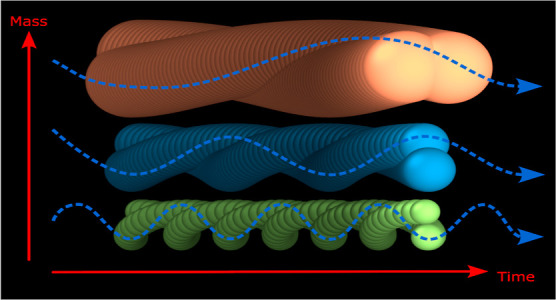 Figure 9
 Figure 10
 Figure 11
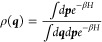 Figure 12
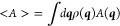 Figure 13
 Figure 14
 Figure 15
 Figure 16
 Figure 17
 Figure 18
 Figure 19
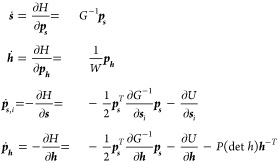 Figure 20
 Figure 21
 Figure 22
 Figure 23
 Figure 24
 Figure 25
 Figure 26
 Figure 27
 Figure 28
 Figure 29
 Figure 30
 Figure 31
 Figure 32
 Figure 33
 Figure 34
 Figure 35
 Figure 36
 Figure 37
 Figure 38
Peer Reviews
No public reviews on file for this paper yet. If you reviewed it on a platform where reviews are public (OpenReview, ICLR, NeurIPS, ICML), you can paste yours below so the community can read it here.
Videos
No videos yet. Explain this paper in a talk, walkthrough, or lecture? Add one.
Taxonomy
TopicsForce Microscopy Techniques and Applications · Protein Structure and Dynamics · Origins and Evolution of Life