Epileptiform Activity and Seizure Risk Follow Long‐Term Non‐Linear Attractor Dynamics
Richard E Rosch, Brittany Scheid, Kathryn A Davis, Brian Litt, Arian Ashourvan

TL;DR
This study uses a mathematical framework to model seizure risk patterns in epilepsy patients, enabling better prediction and personalized treatment.
Contribution
The novel use of HAVOK analysis to model nonlinear seizure dynamics and improve multi-day seizure risk forecasting in epilepsy.
Findings
Seizures occur in regions of strongly nonlinear dynamics within multi-day attractor cycles.
HAVOK analysis accurately predicts slower multi-day rhythms using short-period forcings.
The framework provides a pathway for personalized, data-driven epilepsy interventions.
Abstract
Many biological systems display circadian and slow multi‐day rhythms, such as hormonal and cardiac cycles. In patients with epilepsy, these cycles also manifest as slow cyclical fluctuations in seizure propensity. However, such fluctuations in symptoms are consequences of the complex interactions between the underlying physiological, pathophysiological, and external causes. Therefore, identifying an accurate model of the underlying system that governs the multi‐day rhythms allows for a more reliable seizure risk forecast and targeted interventions. The primary aim is to develop a personalized strategy for inferring long‐term trajectories of epileptiform activity and, consequently, seizure risk for individual patients undergoing long‐term ECoG sampling via implantable neurostimulation devices. To achieve this goal, the Hankel alternative view of Koopman (HAVOK) analysis is adopted to…
Genes, proteins, chemicals, diseases, species, mutations and cell lines named across the full text — each resolved to its canonical identifier and authoritative record.
Click any figure to enlarge with its caption.
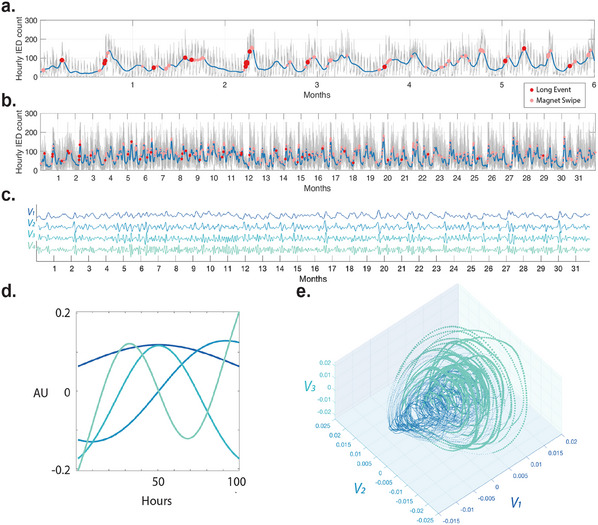 Figure 1
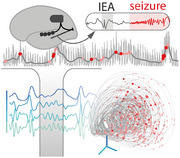 Figure 2
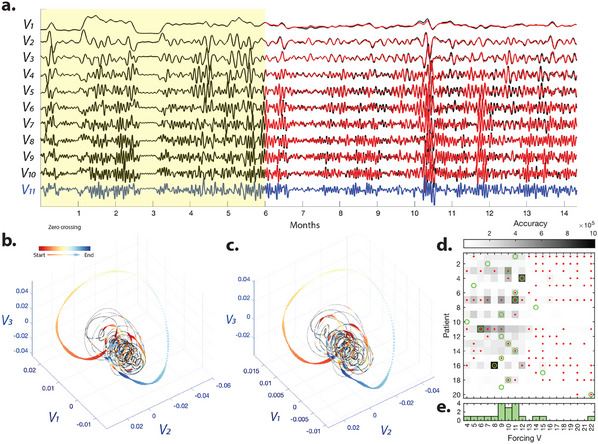 Figure 3
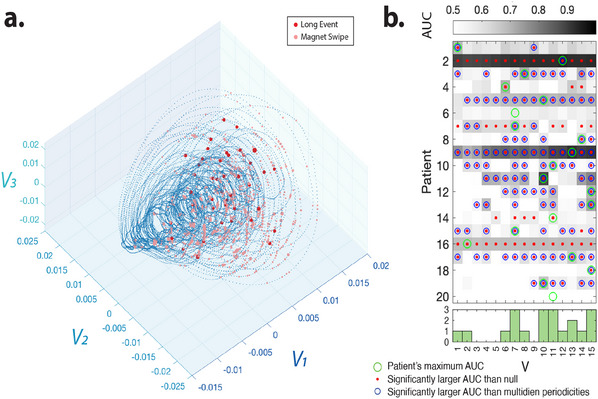 Figure 4
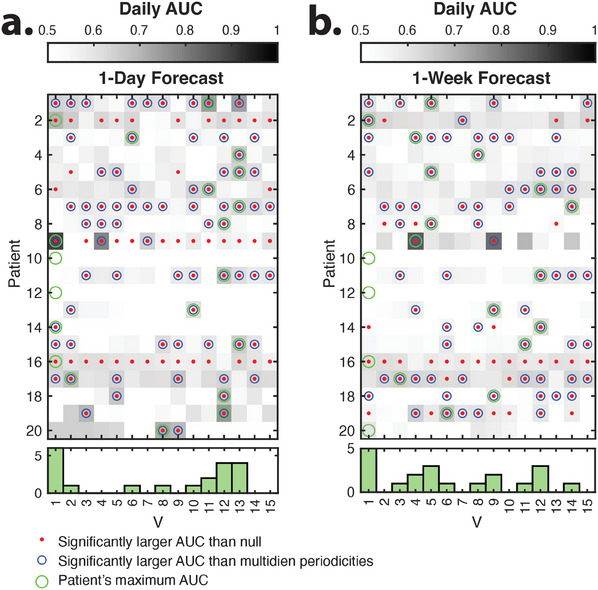 Figure 5
Peer Reviews
No public reviews on file for this paper yet. If you reviewed it on a platform where reviews are public (OpenReview, ICLR, NeurIPS, ICML), you can paste yours below so the community can read it here.
Videos
No videos yet. Explain this paper in a talk, walkthrough, or lecture? Add one.
Taxonomy
TopicsNeural dynamics and brain function · Neuroscience and Neuropharmacology Research · Functional Brain Connectivity Studies