Bypassing the immunosuppressive effects of CA125/MUC16 via re-engineered rituximab (NAV-006) to improve its antitumor activity in vivo
Luigi Grasso, Bradford J Kline, Nicholas C Nicolaides

TL;DR
A modified version of rituximab, NAV-006, was developed to overcome the immune-suppressing effects of CA125/MUC16, improving its effectiveness in treating lymphoma in mice.
Contribution
NAV-006 is a re-engineered rituximab variant that bypasses CA125/MUC16's immunosuppressive effects, showing improved antitumor activity in vivo.
Findings
NAV-006 showed enhanced CDC and ADCC activities unaffected by CA125/MUC16.
NAV-006 demonstrated improved in vivo antitumor activity in a human lymphoma model.
CA125/MUC16 suppressed the immune effector functions of newer antibody-based treatments like obinutuzumab and tafasitamab.
Abstract
The monoclonal antibody rituximab functions through complement-dependent cytotoxicity (CDC) and antibody-dependent cellular cytotoxicity (ADCC) and is used to treat non-Hodgkin’s lymphoma. Elevated serum CA125/MUC16 levels, present in some follicular lymphoma patients, have been shown to correlate with reduced efficacy of rituximab. Previous studies revealed that CA125/MUC16 binds to rituximab, diminishing its CDC and ADCC. A rituximab variant, NAV-006, was engineered to counteract CA125/MUC16’s immunosuppressive effects. NAV-006 demonstrated enhanced CDC and ADCC activities and was unaffected by CA125/MUC16. In the present study, NAV-006 showed improved in vivo antitumor activity compared to rituximab in a human lymphoma model with reconstituted CA125/MUC16. Additionally, CA125/MUC16 bound to newer antibody-based lymphoma treatment agents, including obinutuzumab and tafasitamab,…
Genes, proteins, chemicals, diseases, species, mutations and cell lines named across the full text — each resolved to its canonical identifier and authoritative record.
Click any figure to enlarge with its caption.
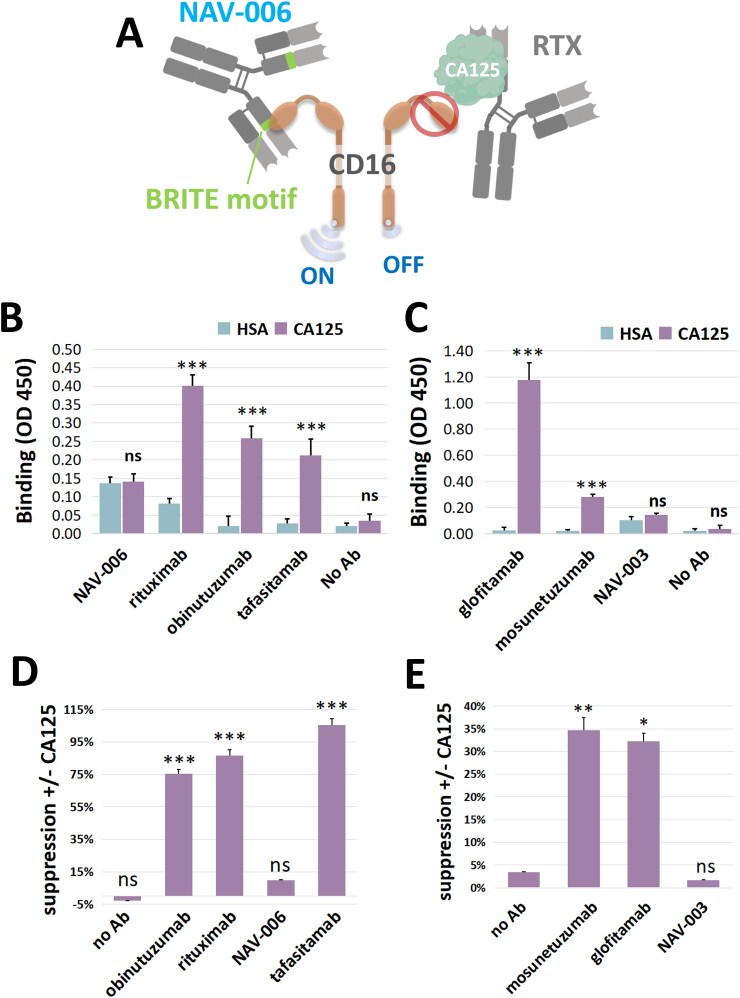 Figure 1
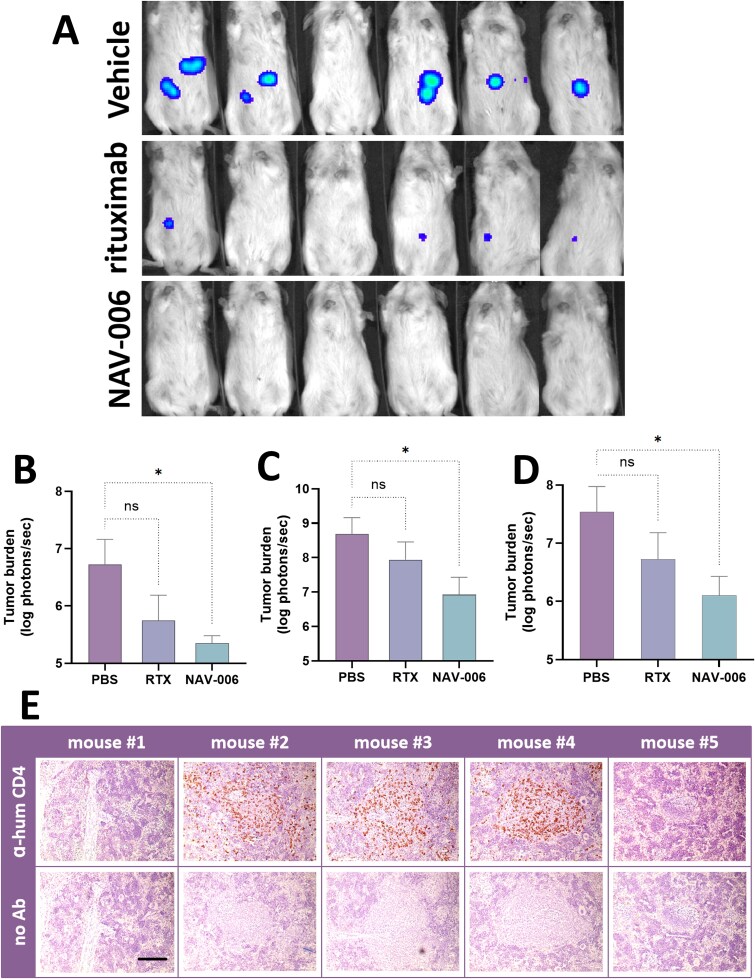 Figure 2
Peer Reviews
No public reviews on file for this paper yet. If you reviewed it on a platform where reviews are public (OpenReview, ICLR, NeurIPS, ICML), you can paste yours below so the community can read it here.
Videos
No videos yet. Explain this paper in a talk, walkthrough, or lecture? Add one.
Taxonomy
TopicsMonoclonal and Polyclonal Antibodies Research · Lymphoma Diagnosis and Treatment · CAR-T cell therapy research