Isolation, structural elucidation, and integrated biological and computational evaluation of antidiabetic labdane diterpenes from Curcuma zedoaria rhizomes
Tho Huu Le, Diem Ngoc Thi Lu, Hai Xuan Nguyen, Phu Hoang Dang, Truong Nhat Van Do, Nguyen Thien Han Le, Thang Quoc Truong, Minh Hien Nguyen, Mai Thanh Thi Nguyen

TL;DR
Researchers isolated and tested compounds from Curcuma zedoaria rhizomes, finding two with strong potential as safe antidiabetic drugs.
Contribution
Discovery of a new norditerpene and identification of its and another compound's strong antidiabetic potential.
Findings
Zedolabdin A (CZ1) and coronarin C (CZ4) showed potent α-glucosidase inhibition with low IC50 values.
CZ1 and CZ4 exhibited favorable ADMET profiles and structural stability for drug development.
CZ3 showed high toxicity and potential CYP3A4 inhibition, making it less suitable as a drug candidate.
Abstract
The phytochemical investigation of the EtOAc-soluble extract of the rhizomes of Curcuma zedoaria (Berg.) Roscoe led to the isolation of five labdane-type diterpenes, including a previously undescribed norditerpene, zedolabdin A (CZ1), and four known compounds (CZ2–CZ5). The structures of these compounds were elucidated using NMR, HR-ESI-MS, and IR spectroscopy, supported by comparisons with literature data. The anti-α-glucosidase evaluation revealed that all compounds exhibited potent inhibitory activity, with zerumin (CZ3) and coronarin C (CZ4) displaying the most potent inhibition, achieving IC50 values of 6.2 μM and 3.0 μM, respectively, significantly lower than the positive control, acarbose (IC50 = 190.6 μM). Molecular docking and dynamics studies identified coronarin C (CZ4) and zedolabdin A (CZ1) as the most promising candidates for α-glucosidase inhibition, exhibiting strong…
Genes, proteins, chemicals, diseases, species, mutations and cell lines named across the full text — each resolved to its canonical identifier and authoritative record.
Click any figure to enlarge with its caption.
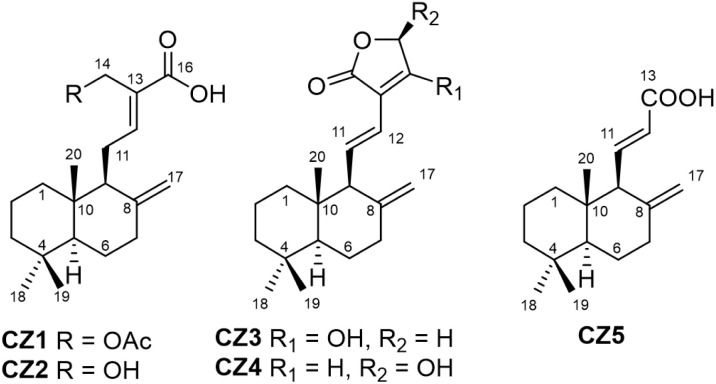 Figure 1
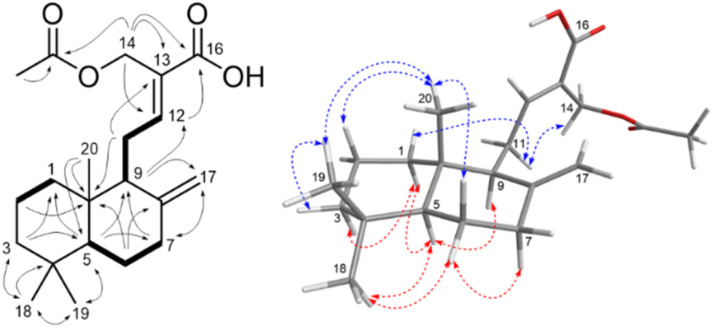 Figure 2
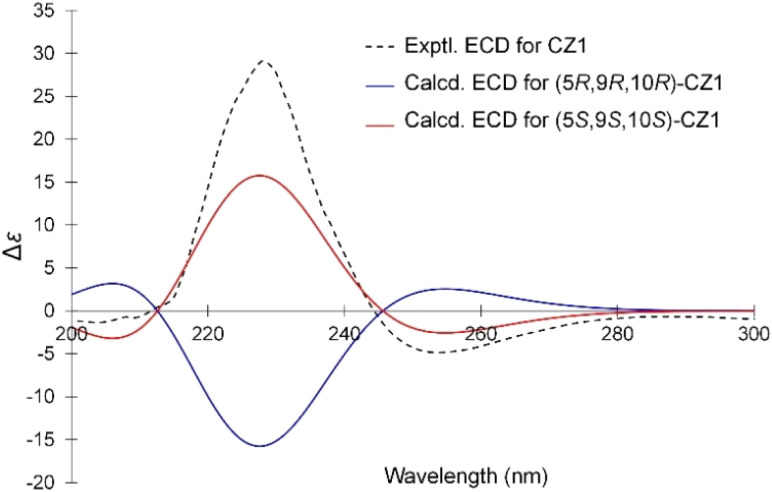 Figure 3
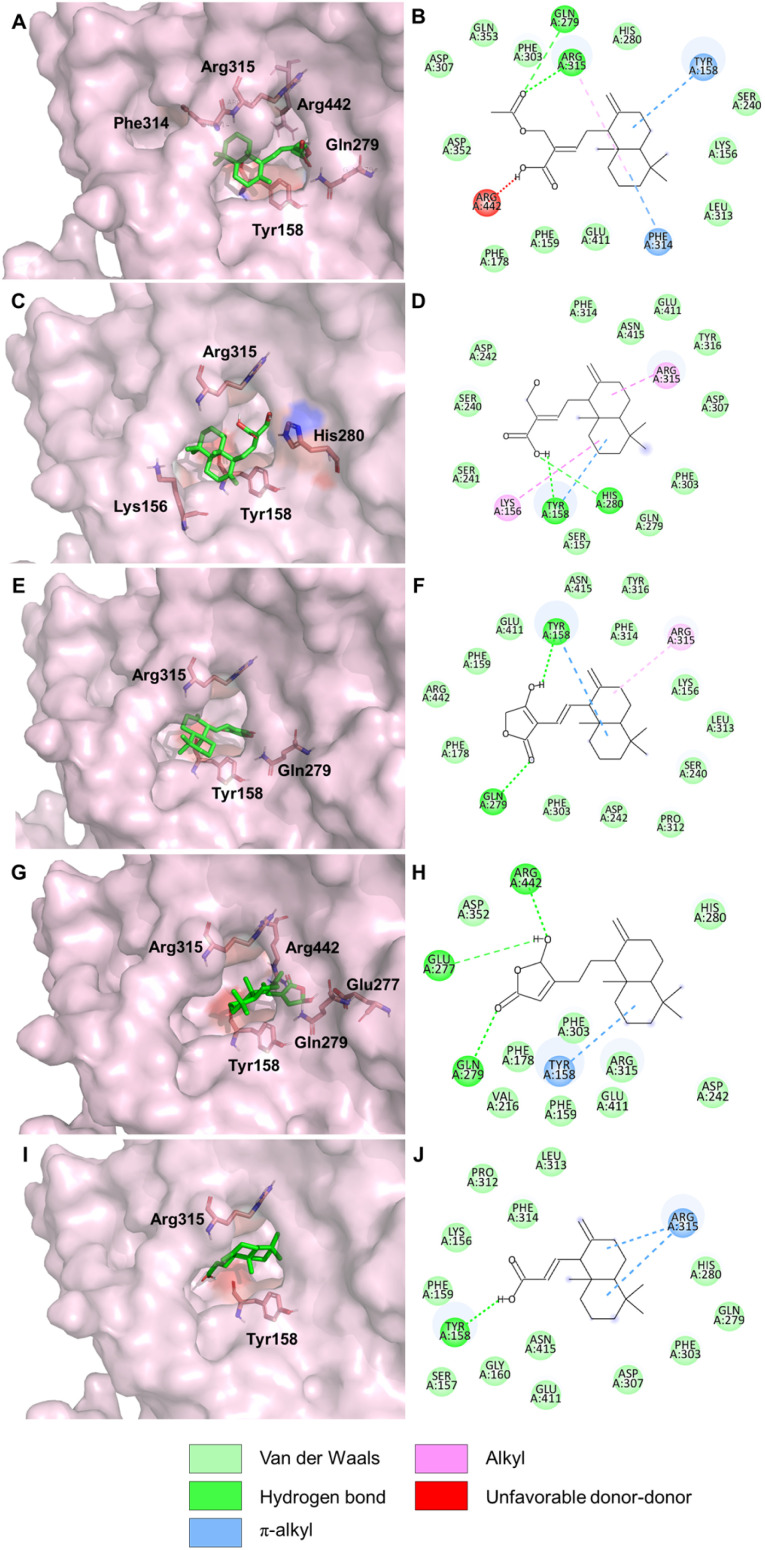 Figure 4
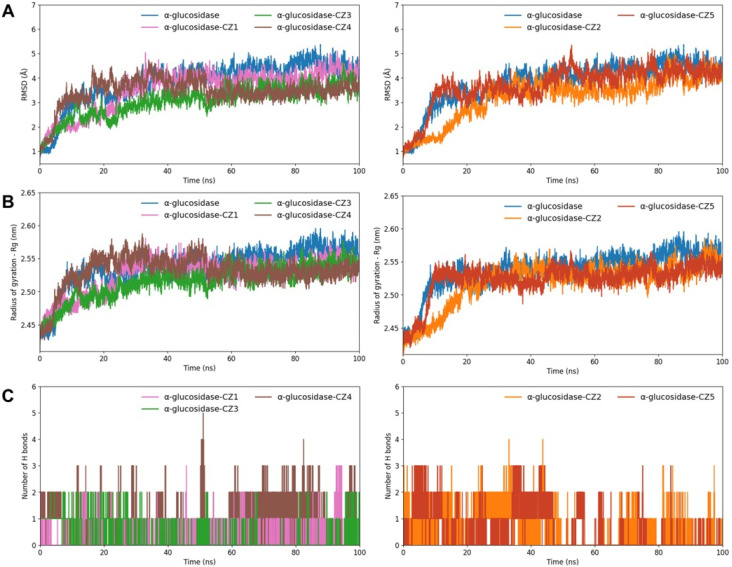 Figure 5
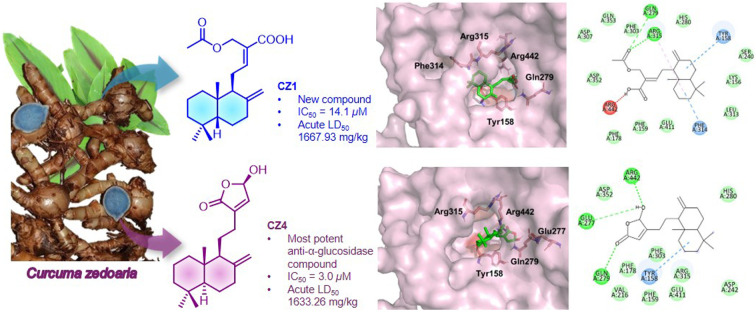 Figure 6
Peer Reviews
No public reviews on file for this paper yet. If you reviewed it on a platform where reviews are public (OpenReview, ICLR, NeurIPS, ICML), you can paste yours below so the community can read it here.
Videos
No videos yet. Explain this paper in a talk, walkthrough, or lecture? Add one.
Taxonomy
TopicsCurcumin's Biomedical Applications · Natural Antidiabetic Agents Studies · Natural product bioactivities and synthesis