Local Landscapes, Evolving Minds: Mechanisms of Neighbourhood Influence on Dual-State Mental Health Trajectories in Adolescence
Christopher Knowles, Emma Thornton, Kathryn Mills-Webb, Kimberly Petersen, Jose Marquez, Sanja Stojiljković, Neil Humphrey

TL;DR
This study explores how neighborhood deprivation affects adolescent mental health, finding that housing and environmental factors can partially explain these effects.
Contribution
The paper identifies specific mechanisms through which neighborhood deprivation influences mental health trajectories in adolescents.
Findings
Neighborhood deprivation increases the likelihood of deteriorating life satisfaction and consistently low life satisfaction trajectories.
Deprivation reduces the likelihood of sub-clinical emotional difficulties, partially mediated by housing and environmental factors.
Community wellbeing factors like equality and housing partially explain the effects of deprivation on mental health.
Abstract
Neighbourhood variation in socioeconomic deprivation is recognised as a small but meaningful determinant of adolescent mental health, yet the mechanisms through which the effects operate remain poorly understood. This study used #BeeWell survey data collected from adolescents in Greater Manchester (England) in 2021–2023 (life satisfaction: N = 27,009; emotional difficulties: N = 26,461). Through Latent Growth Mixture Modelling, we identified four non-linear trajectories of life satisfaction (Consistently High (71.0%), Improving (8.7%), Deteriorating (6.3%), and Consistently Low (13.9%); entropy = 0.66) and three non-linear trajectories of emotional difficulties (Low/Lessening (53.7%), Sub-Clinical (38.3%), and Elevated/Worsening (8.0%); entropy = 0.61). Using a multi-level mediation framework we assessed (1) whether neighbourhood deprivation predicted trajectory class membership and (2)…
Genes, proteins, chemicals, diseases, species, mutations and cell lines named across the full text — each resolved to its canonical identifier and authoritative record.
Click any figure to enlarge with its caption.
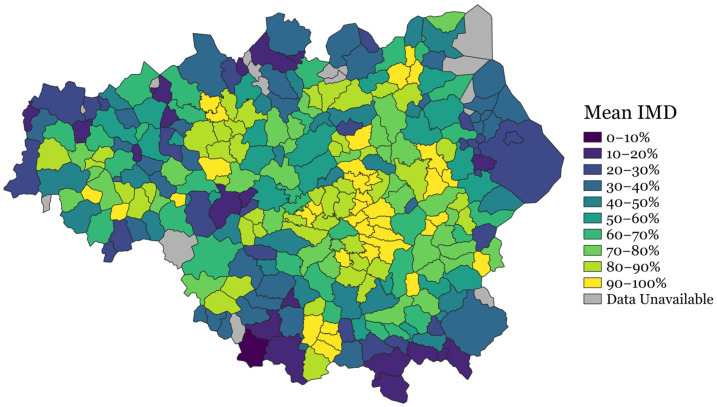 Figure 1
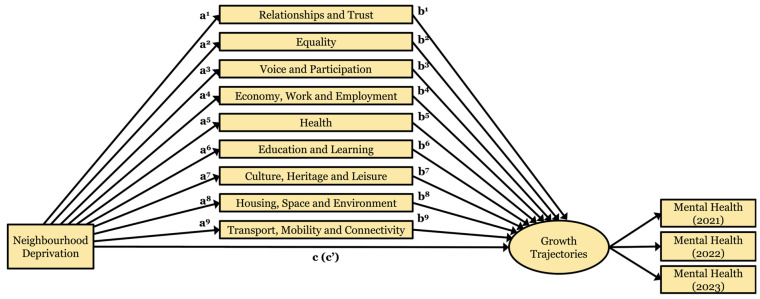 Figure 2
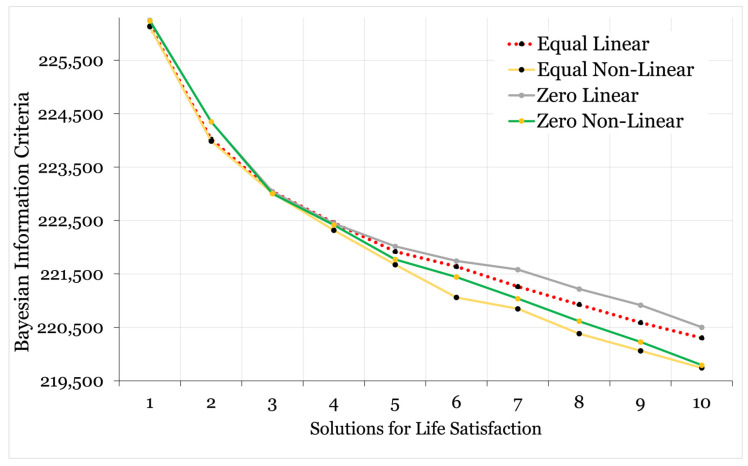 Figure 3
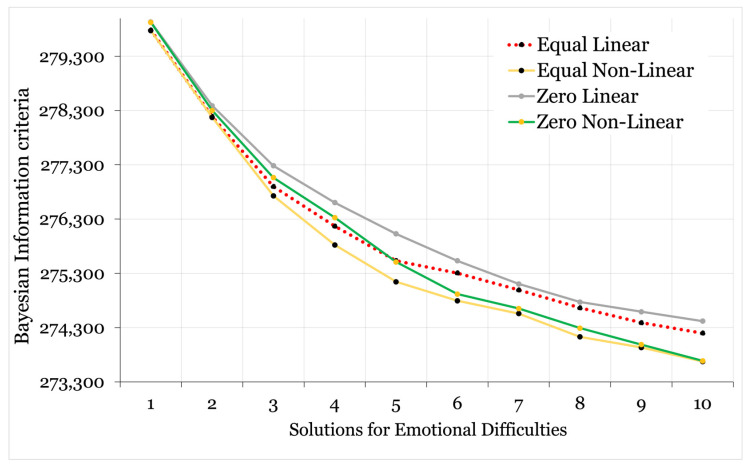 Figure 4
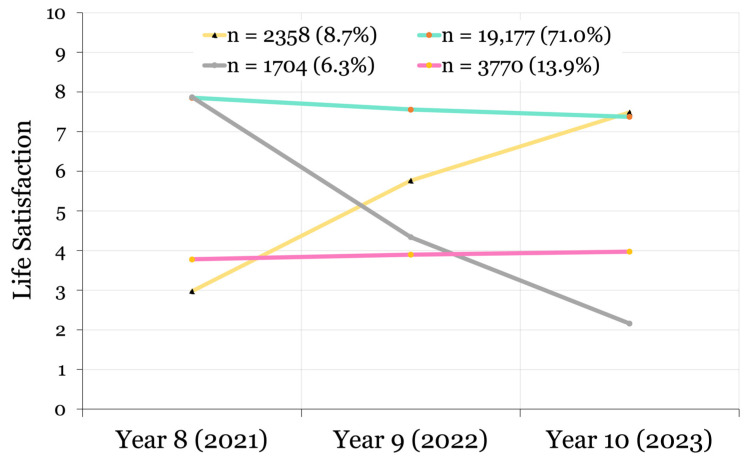 Figure 5
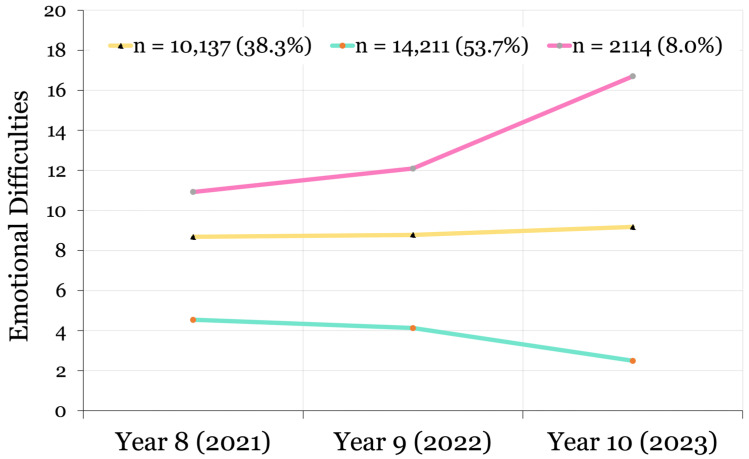 Figure 6
Peer Reviews
No public reviews on file for this paper yet. If you reviewed it on a platform where reviews are public (OpenReview, ICLR, NeurIPS, ICML), you can paste yours below so the community can read it here.
Videos
No videos yet. Explain this paper in a talk, walkthrough, or lecture? Add one.
Taxonomy
TopicsChild and Adolescent Psychosocial and Emotional Development · Homelessness and Social Issues · Early Childhood Education and Development