Thermal biology of Hypogeococcus pungens (Hemiptera: Pseudococcidae) explains its variable performance as a classical biological control agent for Harrisia martinii (Cactaceae) in Australia
Angela E Ezeh, Myron P Zalucki, Michael D Day, Tamara Taylor, Michael J Furlong

TL;DR
This study explains why a mealybug used to control a cactus in Australia works better in some areas than others due to temperature effects on its biology.
Contribution
The study identifies thermal thresholds and performance variations of a biological control agent in different climates.
Findings
Mealybug development and reproduction peak at 25°C, with failure at 15°C and 40°C.
CLIMEX models predict mealybug performance is constrained by extreme temperatures in different regions.
Cold stress limits mealybug effectiveness in southern Queensland.
Abstract
The mealybug, Hypogeococcus pungens Granara de Willink (Hemiptera: Pseudococcidae), was released in Australia as a biological control agent for Harrisia martinii (Labour.) Britton (Cactaceae) in 1975. Although the mealybug successfully established in all released locations, its impact has been variable among regions, possibly as a result of climatic differences. Life-history traits (settling time, survival, development time, female reproduction, adult longevity) were compared at 6 constant temperatures (15 to 40 °C) in the laboratory. The mealybug settled on H. martinii at all temperatures tested, but at 15 °C and 40 °C, insects failed to develop and died. Temperature affected female size, fecundity, and integrated performance, all of which were highest at 25 °C. A linear model that fitted temperature to development time indicated a lower developmental threshold of 14.5 °C for both male…
Genes, proteins, chemicals, diseases, species, mutations and cell lines named across the full text — each resolved to its canonical identifier and authoritative record.
Click any figure to enlarge with its caption.
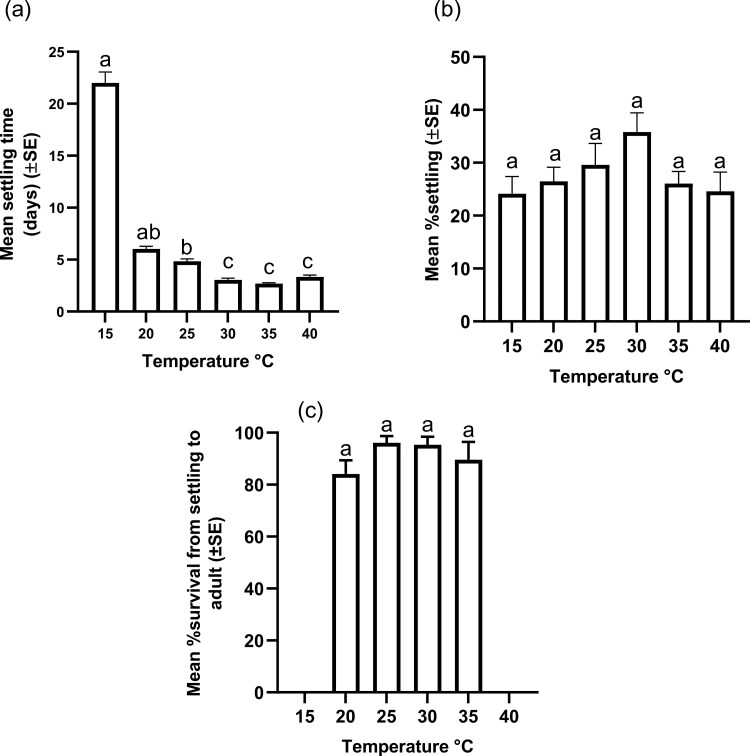 Figure 1
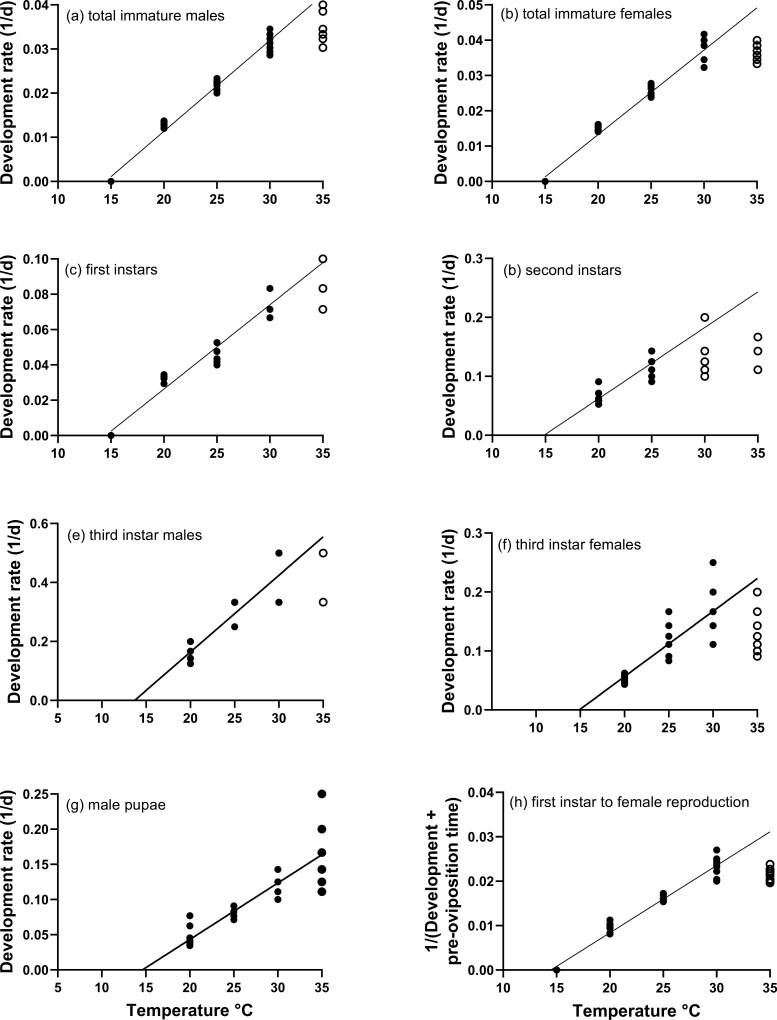 Figure 2
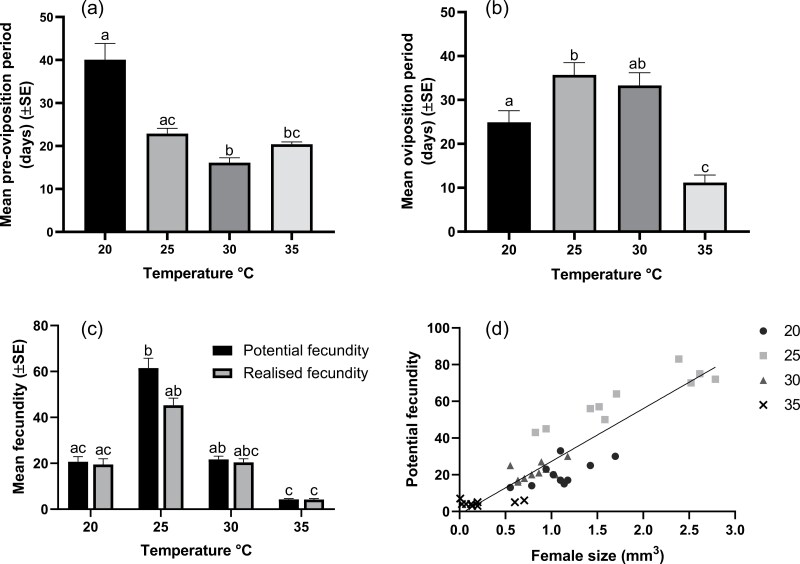 Figure 3
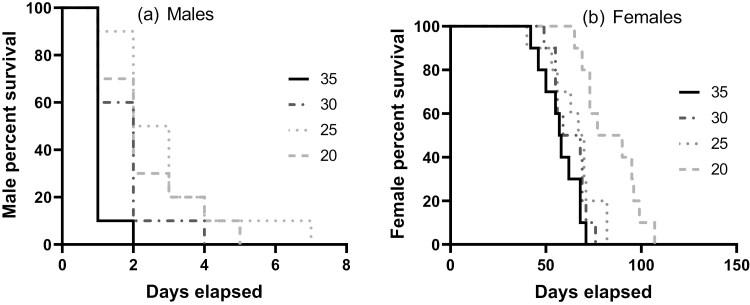 Figure 4
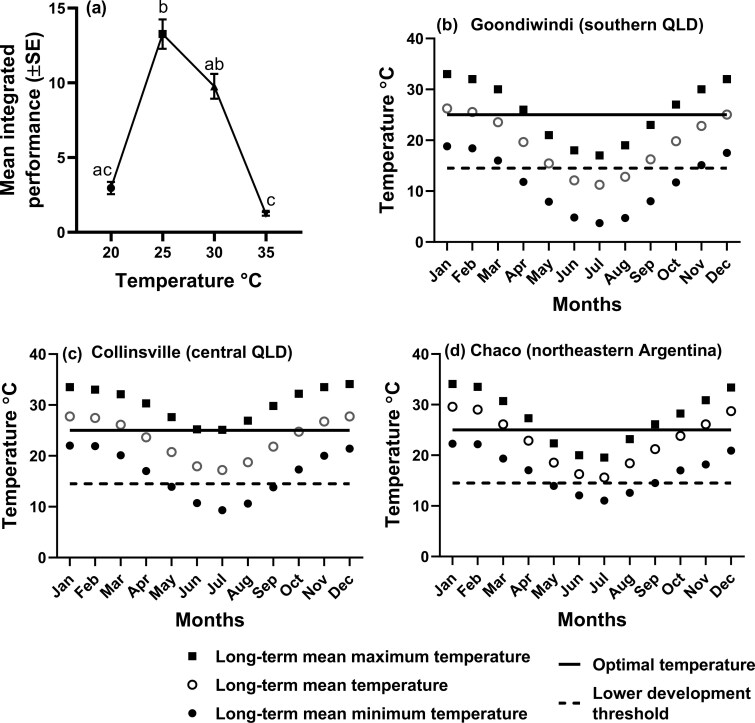 Figure 5
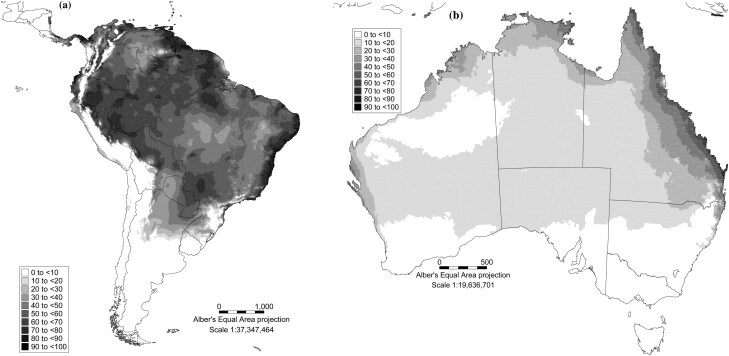 Figure 6
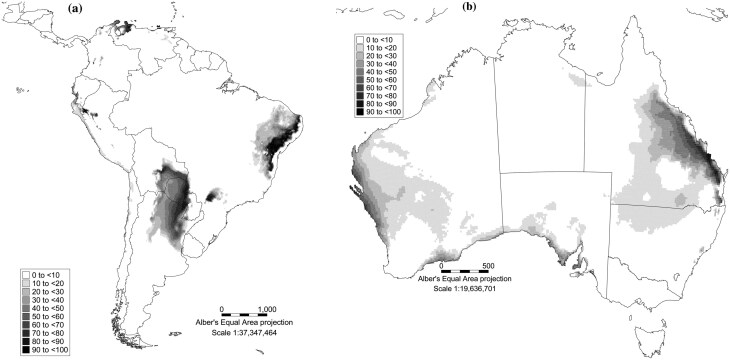 Figure 7
Peer Reviews
No public reviews on file for this paper yet. If you reviewed it on a platform where reviews are public (OpenReview, ICLR, NeurIPS, ICML), you can paste yours below so the community can read it here.
Videos
No videos yet. Explain this paper in a talk, walkthrough, or lecture? Add one.
Taxonomy
TopicsBiological Control of Invasive Species · Insect behavior and control techniques · Research on scale insects